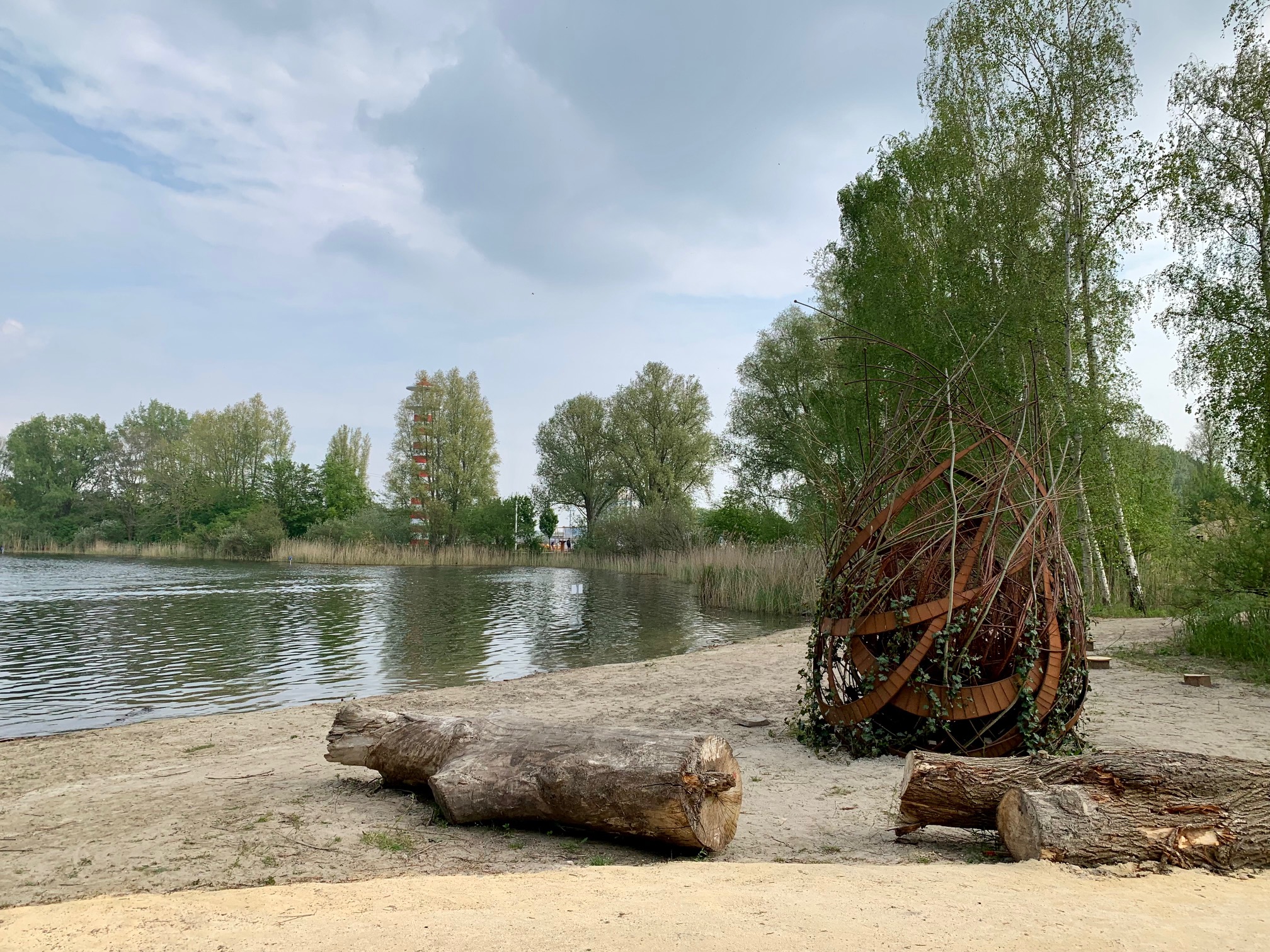
Floriade 2022
The theme was Growing Green Cities. The slogan promised a future where nature and concrete finally reconciled. What Almere actually built, on a 60-hectare plot of reclaimed seabed at the edge of the Weerwater lake, was an expo that lost over 100 million euros, missed its visitor targets by a wide margin, and ended a Dutch horticultural tradition that had run once a decade since 1960. Floriade 2022 is the rare world's fair best remembered for being the last of its kind.
The Bid That Outlived Its Optimism
The pitch arrived in 2012, when ambition was cheap and Dutch cities were lining up to host. Seven regions applied — Boskoop, Groningen, Amsterdam, Almere, and three others — each with a bid book promising a horticultural showcase that would put their corner of the Netherlands on the global map. The Dutch Horticultural Council narrowed the field to four candidates and, at a meeting held inside Keukenhof Castle on 24 September 2012, awarded the expo to Almere. The 2022 event would land in a town that had not existed half a century earlier, built entirely on land pumped dry from the IJsselmeer in the 1960s. The symbolism was almost too perfect: the newest city in the Netherlands would host the world expo about the future of cities and green space.
A Master Plan in Search of Visitors
MVRDV drew the master plan as a botanical alphabet, each plot of the expo named for a letter and planted accordingly. Erick van Egeraat, Paul de Ruiter, Rene van Zuuk, SeARCH, and Studio RAP designed the pavilions. Winy Maas designed an arboretum. A Doppelmayr cable car ran across the Weerwater — billed as the world's first cable car station built over water — and floated visitors above an expo whose theme of green-city integration was meant to outlast the six-month run. Construction began in February 2020, just as the pandemic was about to drain the world of expo tourists. By the time the gates opened on 14 April 2022, ticket prices were high, the site felt isolated from central Almere, and the public never came in the numbers the financial model required.
The Carousel of Directors
Behind the gardens, the project lived through a slow-motion crisis. Jannewietske de Vries and Jan Willem Griep were named co-directors in 2016. Griep was badly injured in an accident in 2018 and could not return. De Vries left the same year to become mayor of Sudwest-Fryslan. Peter Verdaasdonk replaced her in 2019, then departed one year later. A successor named Cloo took the wheel as the Almere city council openly debated whether to cancel the expo entirely, and left in April 2021 after losing confidence in the council — a departure shadowed by a public dispute over his salary and reduced four-hour work weeks. Sven Stimac was appointed CEO, then exited under an employment conflict. Hans Bakker was the next CEO. Senior managers left throughout. The expo opened on time, but the ship that arrived in port had changed crews so many times that almost no one aboard had been there when it set sail.
Hortus, or What Comes After
Almere built the expo with a quiet second purpose: when the gardens came down, the site was supposed to become a neighborhood. The original plan called for 660 homes under the name Hortus, with some of the expo's permanent buildings — the Winy Maas arboretum among them — retained as community amenities. Half of the housing was already standing before the gates opened, an unusual arrangement that made the expo a kind of staged previewing of the suburb to come. The financial wreckage made the conversion more urgent rather than less. After the operating loss became public, the Dutch Horticultural Council announced there would be no eighth Floriade, ending a tradition that had visited Rotterdam, Amsterdam, Zoetermeer, Haarlemmermeer, and Venlo across six decades. By 2024 the city had bought back the land and redesigned the neighbourhood entirely, with plans now calling for 1,500 homes — two-thirds social and affordable — replacing the original developer's scheme. The trees stayed. The expo did not.
What Almere Inherited
There is something fitting about Almere — a city designed from scratch on land that was lake bottom in 1968 — being the place where the Dutch finally stopped trying to stage a national garden. The Floriade has always carried a particular Dutch self-image: a country that fought back the sea now choosing what to grow on the ground it kept. Cancelling future editions does not erase that idea. But it does close one of the longer-running experiments in Dutch public horticulture, and it leaves Weerwater with an arboretum, a cable car station above the water, and a new neighbourhood rising where the pavilions once stood. The Growing Green Cities theme will be tested for real here, just not in the way the planners imagined.
From the Air
Coordinates 52.36N, 5.23E, at the western edge of Almere on the Weerwater lake. Recommended viewing altitude 1,500-3,000 feet to see the expo grounds, Weerwater, and the IJmeer in one frame. Visual landmarks: the A6 motorway slicing through Almere, the Weerwater itself as a clear oval lake just south of the city center, and the cable-car path across it. Nearest airport: Lelystad (EHLE), 25 km east-northeast. Amsterdam Schiphol (EHAM) is 30 km southwest. Class G airspace at low altitude, with Schiphol's TMA stepping down to 1,500 feet AGL nearby — check the latest charts before any low-level flight.