Florida Museum of Natural History
Ten million butterflies and moths, pressed flat and pinned in rows, fill drawer after drawer inside the McGuire Center for Lepidoptera and Biodiversity. It is one of the largest Lepidoptera collections on the planet, rivaling the Natural History Museum in London. And it is just one department inside the Florida Museum of Natural History, a sprawling institution that holds more than 40 million specimens and artifacts across disciplines ranging from ichthyology to Caribbean archaeology. Chartered by the Florida Legislature in 1917 as the state's official natural history museum, the FLMNH sits on the University of Florida campus in Gainesville, where its collections began as teaching materials at Florida Agriculture College back in the 1800s.
A Rainforest Behind Glass
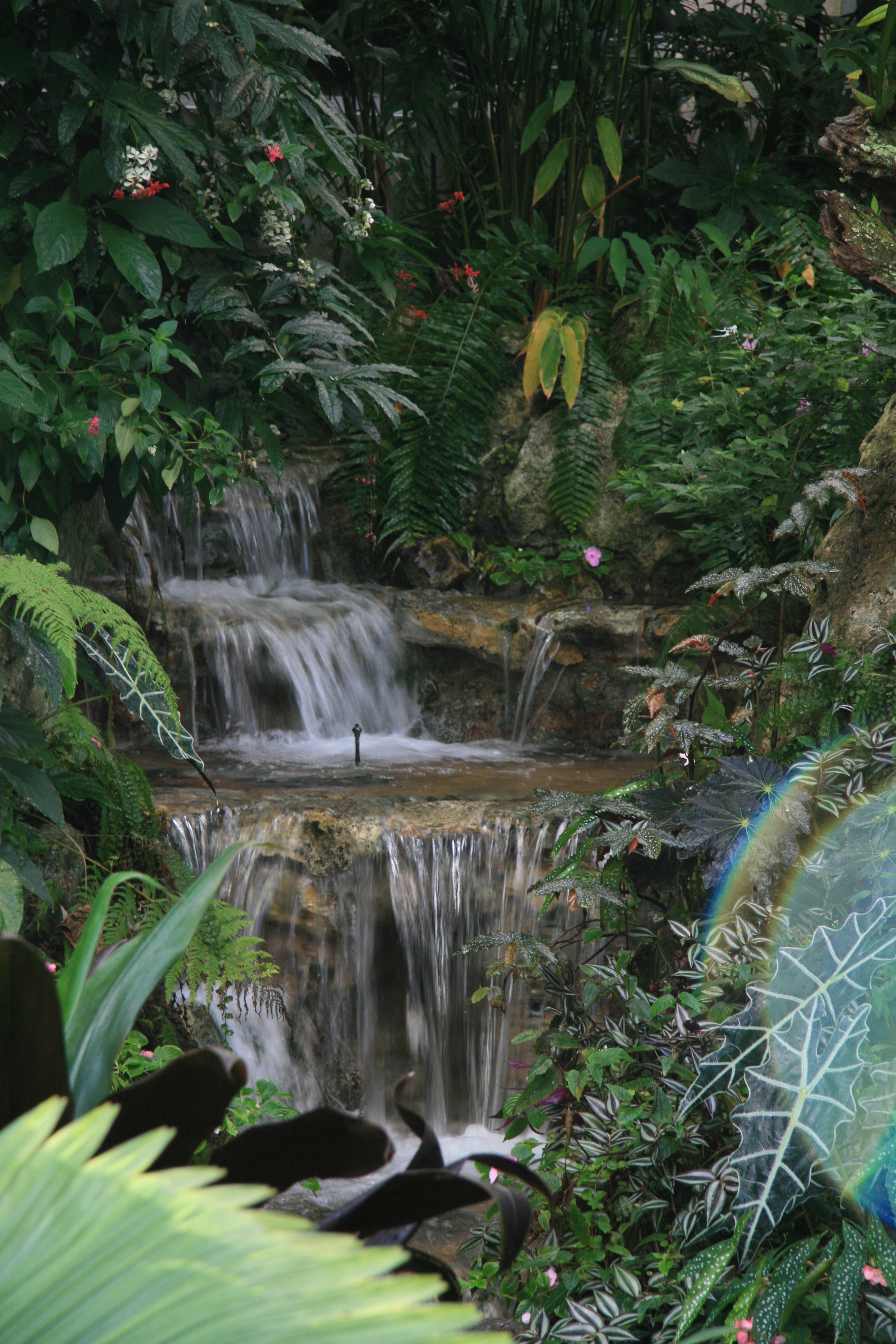
The museum's most beloved attraction is alive. The Butterfly Rainforest is an enclosed outdoor space attached to the McGuire Center where more than 1,000 individual butterflies and moths, representing over 50 species, float among 600 plant species, waterfalls, and a controlled fog system. The butterflies arrive as chrysalises from around the world and are released as adults. Every weekday at 2 p.m., visitors gather for a live butterfly release, watching newly emerged wings unfurl and take flight for the first time. Beyond the rainforest, Powell Hall's permanent exhibits offer free admission to galleries exploring Florida's flora, fauna, fossils, and the peoples who have called the peninsula home. The museum shares its Cultural Plaza with the Samuel P. Harn Museum of Art and the Curtis M. Phillips Center for the Performing Arts, making this corner of the UF campus a concentrated hub of culture.
Walking Through Deep Time
The Florida Fossils: Evolution of Life and Land exhibit is a $2.5 million journey through five geologic epochs, starting when the Florida platform lay entirely underwater during the Eocene. Visitors walk forward through the Oligocene, Miocene, Pliocene, and Pleistocene, encountering creatures that seem pulled from fever dreams: a primitive-toothed whale, a Miocene rhinoceros under attack by saber-toothed predators, a giant ground sloth rearing on its hind legs, and a 500,000-year-old jaguar chasing a peccary. The entrance hall showcases six fossil shark jaws, the largest standing nine feet tall. Over 90 percent of the exhibition's 500 fossils are real, and many were excavated from sites within a short drive of Gainesville. A steel sculpture of the extinct Terror Bird Titanis walleri looms overhead, a reminder that Florida's past contained predators far stranger than any alligator.
The Vaults Behind the Walls
The public galleries are just the visible edge. Dickinson Hall, the museum's main research facility on the east side of campus, contains over 25 million objects across collections in ichthyology, paleontology, botany, herpetology, malacology, mammalogy, ornithology, and archaeology. The fish collection alone holds 2.15 million specimens representing more than 7,000 species, ranked among the ten most important in North America. The herpetology collection is the ninth largest in the country with some 202,000 specimens. The museum co-manages the International Shark Attack File, a global database of documented shark encounters used by researchers worldwide. The bird sound collection, with 20,500 recordings of roughly 3,000 species, is the fourth largest in the world. The ornithology department holds skins of ivory-billed woodpeckers, passenger pigeons, and Carolina parakeets, species that exist now only in museum drawers.
Twelve Thousand Years of Florida's People
The museum's archaeological holdings span 12,000 years of human presence in the Southeast. The South Florida People and Environments exhibit recreates a Calusa fishing village as it may have appeared 500 years ago, complete with a young boy carrying a shark over his shoulder. Visitors walk through a full-scale mangrove boardwalk gallery with 360-degree mural paintings, then encounter 1,000-year-old palm-fiber fishing nets and hand-carved wooden panels depicting ivory-billed woodpeckers. The historical archaeology collections hold more than 2 million excavated specimens, including the largest known systematic collection of Spanish colonial artifacts in the United States, with materials from St. Augustine dating to 1565. The Caribbean Archaeology collection, founded in 1960, draws from excavation sites across more than 20 Caribbean islands, one of the most diverse pre-Columbian artifact collections in North America.
Still Growing
The museum received $8 million in annual research revenue in 2024, and its collections continue to expand. The vertebrate paleontology holdings alone number roughly 400,000 specimens, ranking in the top five nationally. The mollusk collection has grown from 22,174 lots in 1973 to over 400,000 lots today, making it one of the five largest in the United States. Originally called the Florida State Museum, the institution changed its name in 1988 to avoid confusion with Florida State University in Tallahassee. As of early 2025, the public exhibits were temporarily closed for renovations, with a new permanent display called Earth to Florida planned by the Thompson Earth Sciences Institute. The museum has been housed in buildings ranging from the Seagle Building in downtown Gainesville to its current multi-building campus presence, but its mission has remained constant since 1917: making scientific investigations toward the sustained development of natural resources and a greater appreciation of human cultural heritage.
From the Air
Located at 29.64°N, 82.37°W on the University of Florida campus in Gainesville. The Cultural Plaza complex (Powell Hall, McGuire Center, Harn Museum) is visible from the air as a cluster of large buildings on the southwest portion of campus, near the intersection of Hull Road and SW 34th Street. Best identified at 2,000-3,000 feet AGL. Gainesville Regional Airport (KGNV) is approximately 6 nm to the northeast. The UF campus and its surrounding athletic facilities (Ben Hill Griffin Stadium) serve as prominent visual references.