Florida Reef
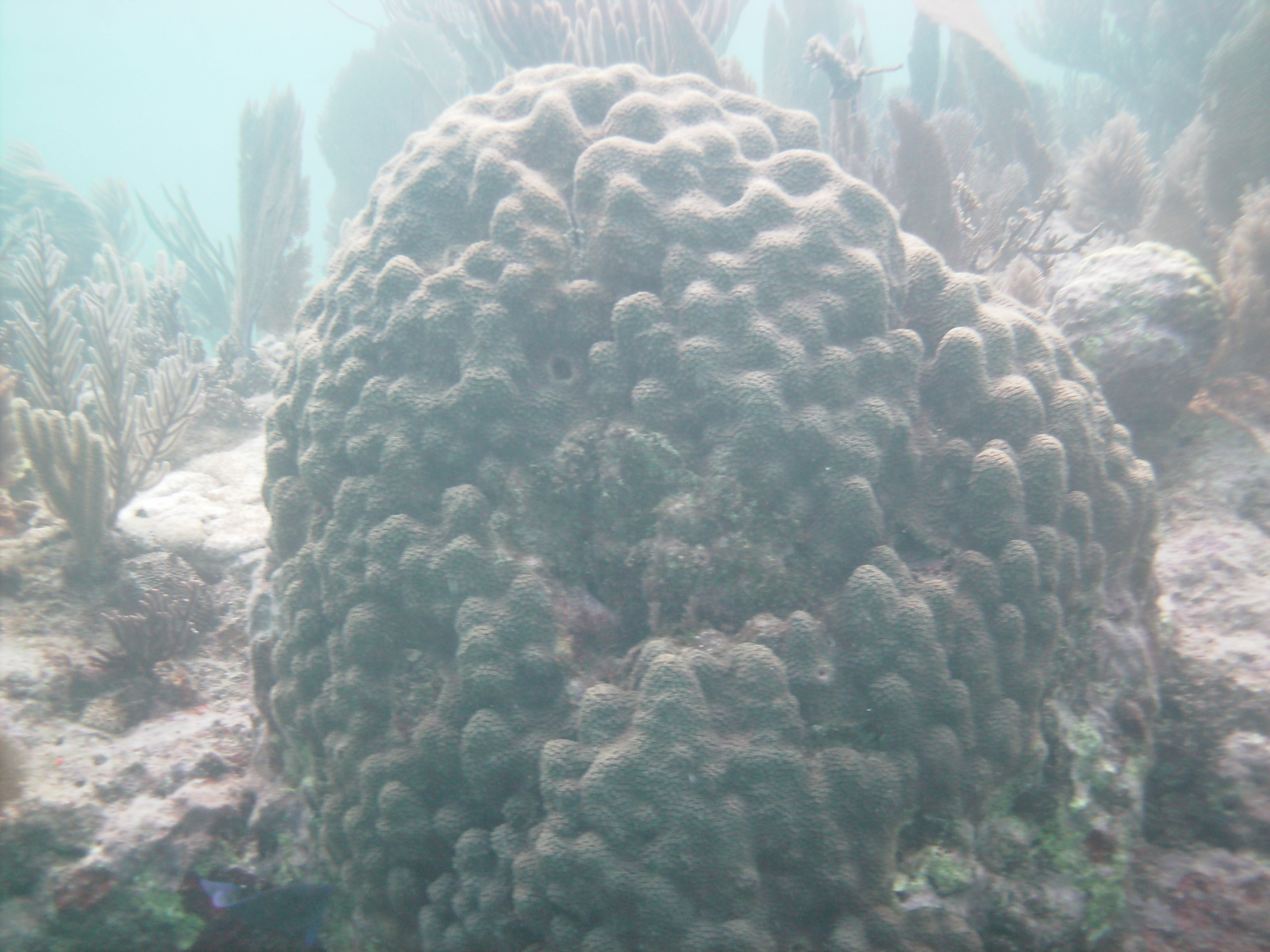
Between 1848 and 1859, at least 618 ships came to grief on the same underwater structure. Their crews cursed it. The salvagers of Key West blessed it - wrecking made their city the richest in Florida. The Florida Reef, stretching 360 miles from Fowey Rocks east of Miami to the Marquesas Keys west of Key West, is the only living coral barrier reef in the continental United States. It is also among the most imperiled. More than 6,000 individual reefs form a great arc concentric with the Florida Keys, sheltering nearly 1,400 species of marine plants and animals, over 500 species of fish, more than 45 species of stony corals, and 35 species of octocorals. The reef system is between 5,000 and 7,000 years old, built grain by grain since sea levels rose after the last ice age. Scientists with NOAA estimate that only about two percent of the original coral cover remains. What took millennia to construct, a few decades of warming water, pollution, and disease have nearly undone.
Architecture of the Living Wall
The Florida Reef is not one reef but a layered system of ridges, channels, and communities. The Hawk Channel separates the reef from the Keys themselves. Closest to shore lies White Bank, a sand ridge carpeted in seagrass beds with scattered patch reefs rising from the bottom. Further seaward, on the edge of the Florida Straits, the outer reefs form the main barrier - a complex of bank reefs with distinct zones. The reef flat, closest to the Keys, is a pavement of coralline algae growing on broken coral skeletons. Beyond it, spur and groove formations alternate ridges of living coral with sandy channels, creating the textured pattern visible from the air on clear days. The forereef slopes into the deep, star coral giving way to plate corals, then sponges and soft corals as light fades. The densest and most spectacular sections lie seaward of Key Largo and Elliott Key, where the long islands shield the reefs from the brackish, turbid, temperature-variable water exchanging with Florida Bay and Biscayne Bay through channels between the Keys.
The Wreckers' Fortune
For much of the 19th century, salvaging shipwrecks was the principal occupation of the Florida Keys. The reef that destroyed vessels also created the economy that sustained an entire community. Key West grew into the biggest and richest city in Florida on the proceeds of wrecking. Many of the reefs still carry the names of the ships they claimed: Fowey Rocks honors HMS Fowey, though she actually wrecked on Ajax Reef. Looe Key takes its name from HMS Looe. Alligator Reef memorializes the USS Alligator. Carysfort Reef bears the name of HMS Carysfort, which ran aground but survived. The danger was so relentless that the United States began building lighthouses almost immediately after acquiring Florida from Spain in 1821. The Cape Florida Light, Dry Tortugas Light, and Key West Light all first burned in 1825. But keeping them operational proved brutal - Seminoles burned the Cape Florida lighthouse in 1836, a hurricane destroyed the Key West and Sand Key lights in 1846, and the Carysfort light ship was repeatedly blown onto the very reef it was meant to mark. Only with the completion of the American Shoal Light in 1880 were navigation lights finally visible along the full length of the reef.
A Reef Unraveling
The numbers are stark. Between 1981 and 1986, staghorn corals declined by 96 percent at Molasses Reef. Between 1983 and 2000, elkhorn corals dropped 93 percent and staghorn 98 percent at Looe Key. A joint monitoring program by the EPA, NOAA, and the Florida Marine Research Institute recorded a loss of 6 to 10 percent of living coral at 40 stations between 1996 and 2000. The first recorded bleaching event on the Florida Reef occurred in 1973; by July 2023, record-breaking early warming caused widespread bleaching and death across the entire system. The threats compound: warming water triggers bleaching, where stressed corals expel the algae that feed them and turn white. White band disease strips tissue from elkhorn and staghorn colonies. Microplastics poison the polyps that build the reef's skeleton. Overfishing removes the herbivorous fish that keep smothering algae in check. The long-spined sea urchin, another critical algae grazer, collapsed across the Caribbean in the 1980s and has barely recovered on the Florida Reef. Thick mats of sandy algae now coat flat reef zones, blocking light and suffocating coral larvae before they can settle.
Planting the Future
Rescue operations are underway at a scale that would have seemed impossible a generation ago. NOAA's Mission: Iconic Reefs aims to restore roughly three million square feet of coral habitat across seven key reef sites in the Florida Keys National Marine Sanctuary by 2040, combining large-scale coral planting, algae removal, and long-term monitoring. Researchers from the Florida Aquarium and the University of South Florida have planted over 1,000 juvenile elkhorn corals genetically selected for stress resistance at seven locations in the Keys. A device called the Coral Defender shields nursery-reared transplants from predatory fish and invertebrates. In 2025, large-scale planting of nursery-grown corals expanded further, with specimens raised in protected tanks until strong enough for the open reef. The odds remain long - only a small percentage of transplants may survive - but those that do carry the genetic resilience needed to seed the next generation. Protection has expanded too: John Pennekamp Coral Reef State Park was established in 1960, Biscayne National Monument in 1968, and the Florida Keys National Marine Sanctuary in 1990, bringing the entire reef under federal or state protection. In 2024, Florida created the Kristin Jacob Coral Aquatic Preserve to shield the reefs north of Biscayne National Park. The reef's estimated asset value stands at $8.5 billion. Its value as a living system is beyond calculation.
From the Air
The Florida Reef stretches 360 miles from Fowey Rocks (25.59N, 80.10W) near Miami to south of the Marquesas Keys (24.50N, 82.10W) west of Key West, forming a great arc parallel to and seaward of the Florida Keys. From altitude, the reef tract is visible on clear days as a color change in the water - the shallow turquoise of the reef crest contrasting with the deep blue of the Florida Straits to the south and the lighter waters of Hawk Channel between the reef and the Keys. Spur-and-groove formations on the outer reef create a textured pattern visible at lower altitudes. The most spectacular sections are off Key Largo, where John Pennekamp Coral Reef State Park begins. Key West International (KEYW) anchors the western end. Marathon (KMTH) provides mid-Keys access. Miami-Homestead (X51) or Miami-Opa Locka (KOPF) serve the northern section. Best viewed at 1,000-3,000 feet on calm, clear days when water clarity reveals the reef structure below. The reef lies about 4 miles seaward of the Keys in most sections.