Flower Garden of Isfahan
In a city famous for its ancient mosques and Safavid palaces, the Flower Garden of Isfahan is a surprise -- a place built not centuries ago but in 1997, yet unmistakably Persian in every detail. Walk through the entrance pavilion and look down from its observation deck: below stretches a floral carpet, thousands of blooms arranged in geometric patterns that echo the hand-knotted rugs Isfahan has exported for generations. The garden occupies 5.5 hectares on the city's south side, and its architects treated the space the way a master weaver treats silk -- every section deliberate, every transition purposeful.
A Carpet Made of Petals
The centerpiece of the garden is its main plant area, where seasonal and permanent flowers have been planted in a design that intentionally mimics a Persian carpet. The pattern shifts with the seasons as different species bloom and fade, so the carpet is never quite the same twice. Granite pathways totaling 5,000 square meters wind through the display, their varied stone shapes adding another layer of geometry underfoot. Ornamental shrubs frame the borders. The effect is deliberate: Isfahan's carpet weavers work from cartoons, detailed drawings that map every knot. Here the cartoons are drawn in soil, and the knots are living plants.
Gathering the Flora of Iran
The garden houses over 400 species of plants drawn from across Iran's remarkably varied geography -- from the humid Caspian coast to the arid central plateau. The rock garden alone contains 250 species arranged across 2,500 square meters of terrain sculpted to resemble Iran's mountainous landscapes. A four-meter waterfall built from river stones tumbles along its eastern edge. The herb garden, covering 1,170 square meters, preserves 132 species of medicinal and culinary herbs, many of them used in traditional Iranian medicine for centuries. In the rose garden, varieties cultivated across Iran bloom in succession, a reminder that the Persian word for flower -- gol -- is also the root of golestan, meaning rose garden, a word that has come to mean paradise itself.
Water and Shelter
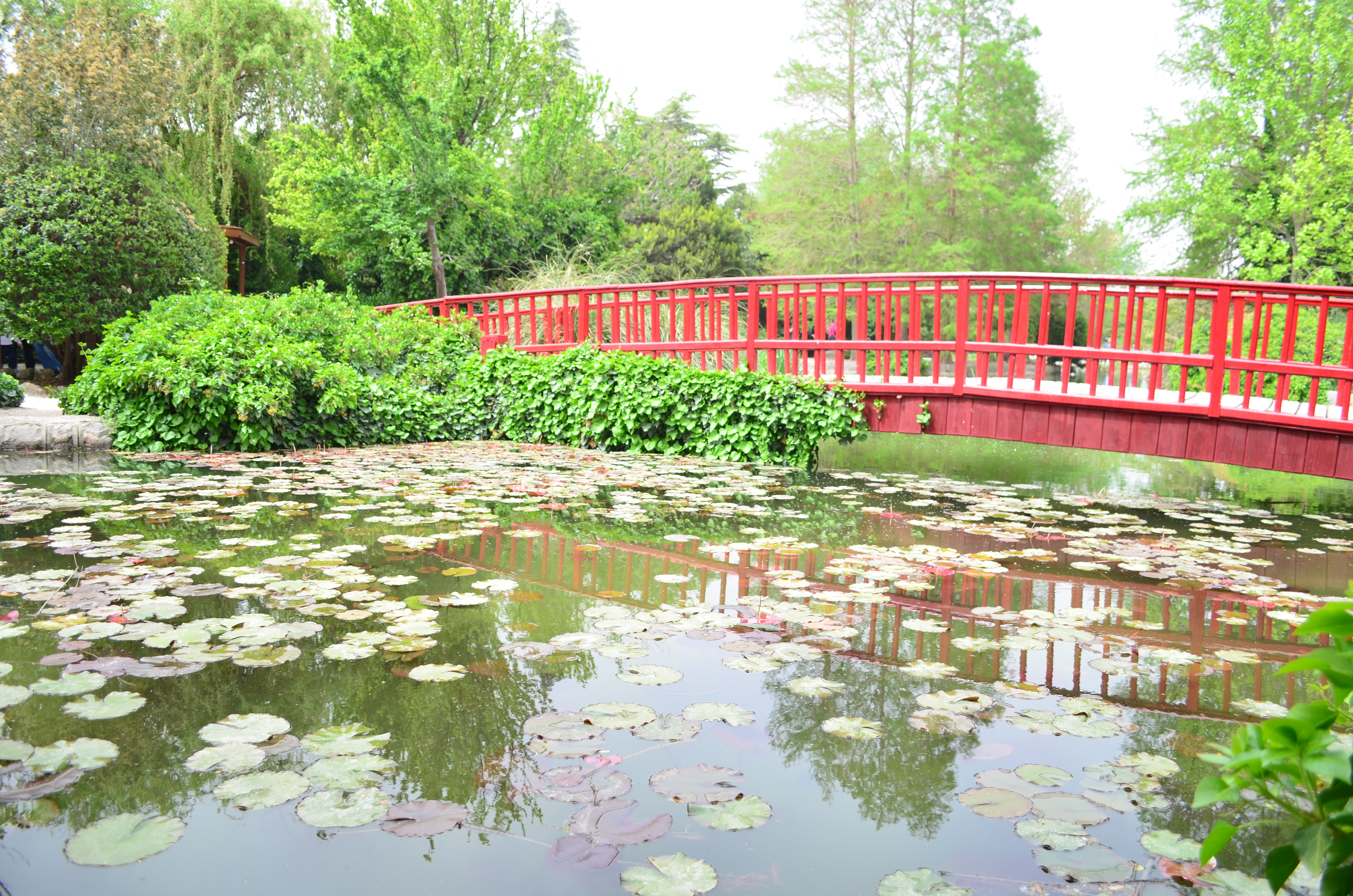
A pond stretching over 3,500 square meters anchors the garden's southeastern corner. It serves a practical purpose, humidifying the air in a city where summer temperatures routinely exceed 40 degrees Celsius, and it supports aquatic plants that would otherwise have no place in Isfahan's semi-arid climate. The 700-square-meter greenhouse on the northeastern side solves a different problem: Isfahan's winters are cold enough to kill tropical and subtropical species. Inside, ornamental plants bloom year-round, maintaining the garden's purpose as a living catalog of Iranian botany even when frost grips the outdoor beds.
Where Isfahan Breathes
The garden functions as more than a botanical collection. Its entrance pavilion doubles as an education center, with a second-floor theater screening films about Iran's plant life. Children's play areas are tucked behind hedgerows, screened from the formal gardens but close enough that families can spend full days here. Isfahan is a city of two million people in one of the most water-stressed regions on Earth, and the Flower Garden stands as both an argument and a demonstration -- proof that green space is not a luxury in the desert but a necessity. The Persian garden tradition stretches back millennia, from the walled paradises of the Achaemenid emperors to the Safavid pleasure grounds that still shade Isfahan's avenues. This modern addition to that lineage trades royal exclusivity for public access, offering anyone who enters a few hours inside a living Persian carpet.
From the Air
Located at 32.64N, 51.70E in the southern part of Isfahan. The garden's 5.5-hectare green footprint contrasts visibly with the surrounding urban fabric. Isfahan Shahid Beheshti International Airport (OIFM) lies approximately 18 km to the east. Best viewed below 5,000 feet AGL. The Zayanderud River runs nearby to the north, serving as a useful navigation reference.