Floyd Bennett Field: New York's Forgotten Runway
Douglas Corrigan filed his flight plan for California, pointed his patched-together Curtiss Robin down Runway 6-24, and took off from Floyd Bennett Field on July 17, 1938. He landed in Dublin, Ireland, twenty-eight hours later, claiming his compass had malfunctioned. The authorities had denied him permission to cross the Atlantic, so he simply went the wrong way on purpose and never admitted otherwise. "Wrong Way" Corrigan became a folk hero overnight, but his stunt was only one chapter in the extraordinary life of an airport that New York City built on a garbage island, watched fail as a commercial venture, and then handed over to the Navy, which used it to hunt German submarines and process twenty thousand aircraft bound for the Pacific Theater.
An Airport Conjured from Sand
Before Floyd Bennett Field existed, Barren Island was exactly what its name suggested: an isolated spit of land in Jamaica Bay that had housed a garbage incinerator, a glue factory, and a few thousand residents who lived among the refuse. When aviation engineer Clarence Chamberlin selected the island as the site for New York City's first municipal airport in 1928, workers pumped sand from the bay floor to fill the channels between Barren Island and several smaller islands, physically connecting them to Brooklyn. The airport was named after Floyd Bennett, the aviator who piloted Richard E. Byrd's plane over the North Pole in 1926 and died of pneumonia during a rescue mission before he could see his dream of an airport on Barren Island come true. His wife Cora remembered him surveying the island and saying, "Some day, Cora, there will be an airport here." When Runway 6-24 was poured, it was the longest concrete runway in the United States. The airport was dedicated on May 23, 1931, before 25,000 spectators, with Charles Lindbergh in attendance and 597 aircraft flying overhead in the largest aerial demonstration the country had ever seen.
The Busiest Airport Nobody Flew From
Floyd Bennett Field became an impossible contradiction: the second-busiest airport in the United States by number of flights in 1933 with 51,828 arrivals and departures, yet a commercial ghost town. That same year, Newark Airport served 120,000 airline passengers to Floyd Bennett Field's 52. The problem was geography. Outer Brooklyn was simply too far from Manhattan, and the Postal Service refused to move its lucrative airmail terminal from Newark. Without airmail, airlines stayed away. Future mayor Fiorello La Guardia fought to rescue the airport, arguing that New York City had an "inalienable right" to appear on airspace maps, but the Post Office Department rejected his bid in 1936. La Guardia's solution was not to save Floyd Bennett Field but to build an entirely new airport in northern Queens, closer to Manhattan. When LaGuardia Airport opened in 1939, Floyd Bennett Field's brief commercial era ended for good.
A Golden Age Launchpad
What Floyd Bennett Field lacked in commercial passengers, it made up for in daring. The airport's modern facilities, unobstructed approaches, and proximity to the Atlantic Ocean made it the departure point of choice for record-breaking pilots during aviation's golden age. In August 1932, James Haizlip set a transcontinental speed record by flying to Los Angeles in ten hours and nineteen minutes. Colonel Roscoe Turner departed the same day and arrived just forty minutes behind. A Focke-Wulf Fw 200 Condor flew nonstop from Berlin in August 1938, covering the distance in under twenty-five hours and smashing Wiley Post's previous record by nearly six hours. The airport hosted Bendix Cup air races, transatlantic attempts that ended in rescue at sea, and flights that launched around-the-world journeys. The last speed records set at Floyd Bennett Field came in May 1969, when British Royal Navy Phantoms made the New York-to-London run in four hours and forty-seven minutes.
From Civilian Tarmac to Submarine Hunter
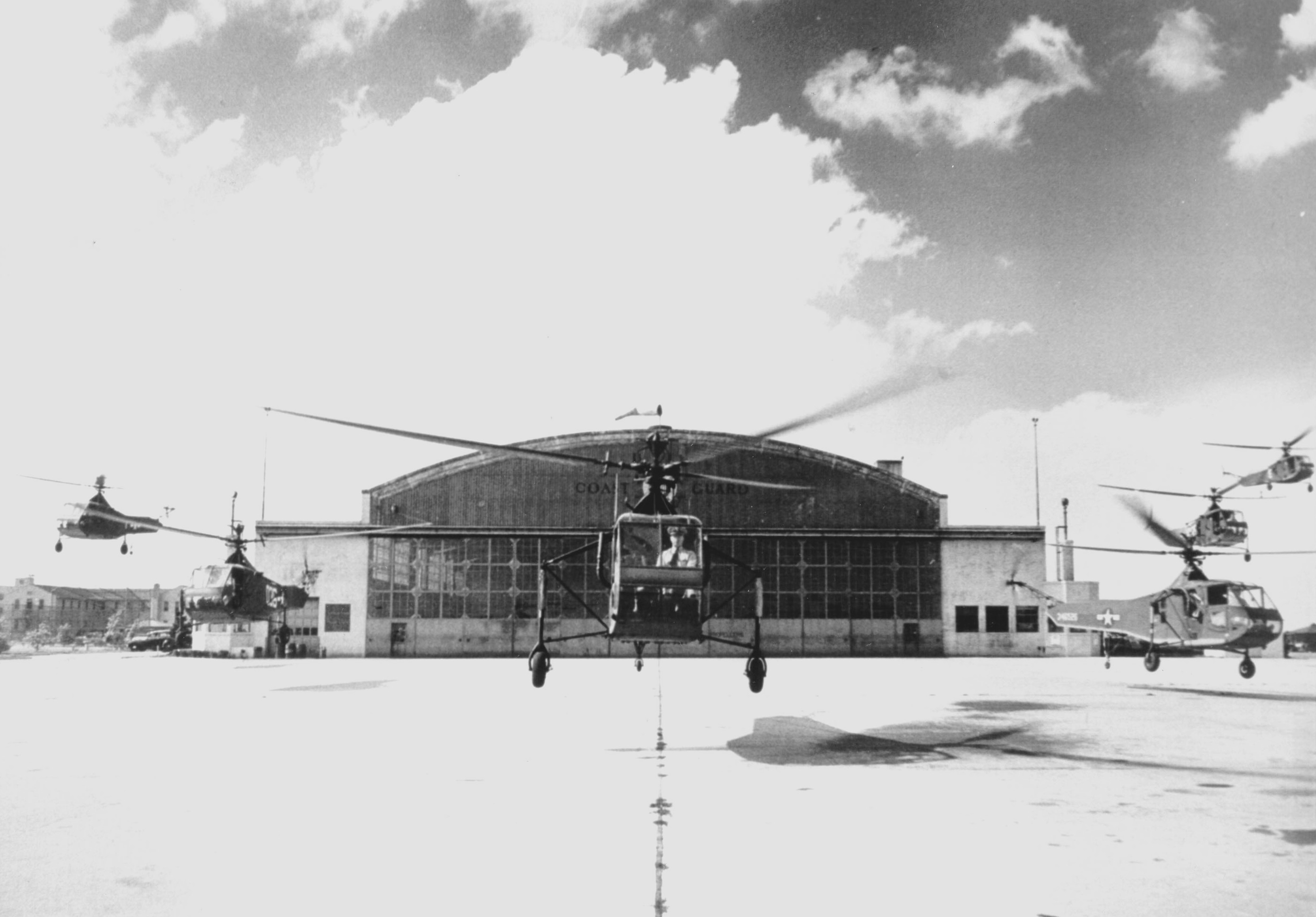
The Navy had been renting hangars at Floyd Bennett Field since 1931, paying one dollar per year. When war loomed, the military took over entirely. On May 26, 1941, all civilian operations ceased, and a week later, Naval Air Station New York opened with an air show attended by thirty thousand people. The audience included future Fleet Admiral Chester Nimitz. During World War II, NAS New York hosted antisubmarine patrol squadrons that hunted German U-boats off the Atlantic coast, processed more than twenty thousand aircraft destined for the Pacific Theater, and recorded over forty-six thousand aircraft movements between December 1943 and November 1945. Navy WAVES served as air traffic controllers and parachute riggers. The Coast Guard tested equipment and trained pilots from its adjacent station on Jamaica Bay. After the war, the field became the largest Naval Air Reserve base in the country, then slowly wound down through the Korean and Vietnam eras until the Navy conducted its last formal inspection on April 4, 1970.
Runways Returning to Grassland
President Nixon supported turning Floyd Bennett Field into a national park, and in October 1972 it became part of the Gateway National Recreation Area. The National Park Service, lacking the funds to maintain the massive infrastructure, let much of the field revert to nature. Grasslands now grow across the runway intersections, managed by a joint National Park Service and Audubon Society project dedicated to restoring the vanished Hempstead Plains ecosystem. The original eight Art Deco hangars still line Hangar Row with their buff-and-brown glazed brick facades, and the neoclassical administration building serves as the William Fitts Ryan Visitor Center. Volunteers from the Historic Aircraft Restoration Project maintain vintage planes in one hangar. The NYPD Aviation Unit still operates helicopters from the field, and hobbyists fly radio-controlled aircraft on a reserved section of runway. In its latest chapter, Floyd Bennett Field served as an emergency staging area after Hurricane Sandy in 2012 and briefly housed a migrant shelter in 2023. The airport that was too far from Manhattan for the airmail contract has found a new identity as a place where the wild edges of Brooklyn push back through the concrete.
From the Air
Floyd Bennett Field (40.591N, 73.891W) sits on the Jamaica Bay shore in southeast Brooklyn, clearly visible from the air as a large open area with distinctive runway patterns. The field's five runways, eight hangars along Hangar Row, and the administration building with its four-story observation tower are identifiable landmarks. Jamaica Bay stretches to the east, and the Marine Parkway Bridge connects to the Rockaway Peninsula to the south. FAA identifier NY22 (NYPD heliport). Nearby airports: KJFK (John F. Kennedy, 8km E), KLGA (LaGuardia, 24km NE), KEWR (Newark Liberty, 28km W). Best viewed at 1,500-3,000 feet AGL. The Belt Parkway runs along the northern boundary.