Flying Heritage & Combat Armor Museum: Where Warbirds Still Fly
Somewhere in Hangar C at Paine Field, a mechanic is working on an Ilyushin Il-2 Shturmovik - the Soviet ground-attack plane that Stalin once declared as essential to the Red Army as bread and air. Most Il-2s were scrapped or left to rust in bogs across Eastern Europe. This one flies. That is the defining quality of the Flying Heritage & Combat Armor Museum: its aircraft are not static displays behind velvet ropes. They are maintained in operating condition by mechanics who work on them five days a week, coaxing wartime engines back to life with a combination of engineering skill and historical obsession. Spread across three hangars at Seattle-Paine Field International Airport in Everett, Washington, the collection spans five nations and includes some of the rarest military machines on Earth.
A Billionaire's Passion Project
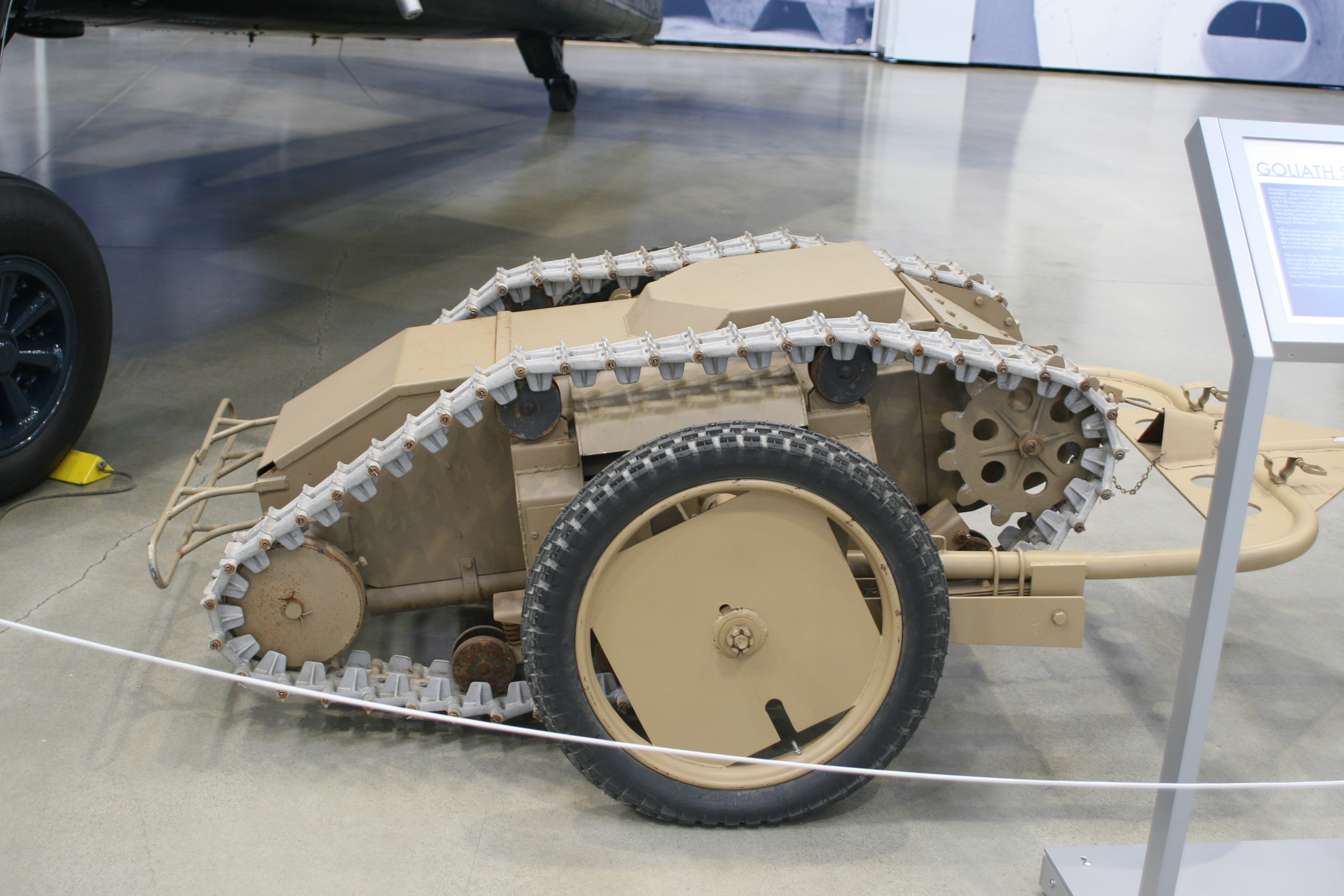
In 1998, Microsoft co-founder Paul Allen began quietly acquiring World War II aircraft. Allen was already known for his eclectic interests - he owned the Seattle Seahawks, founded the Museum of Pop Culture, and bankrolled the first privately funded suborbital spaceflight. But aviation was personal. He insisted on restoring each aircraft to the highest standard of authenticity, using original parts wherever possible and period-correct techniques where originals could not be found. The collection opened to the public in 2004 at an airfield in Arlington, Washington, then moved in 2008 to a renovated historic industrial hangar at Paine Field, just south of Boeing's massive Everett assembly complex. A 22,000-square-foot expansion hangar followed in 2013, and Hangar C opened in 2018, adding over two dozen artifacts. That same year, the museum changed its name from the Flying Heritage Collection to the Flying Heritage & Combat Armor Museum, reflecting its growing inventory of tanks, artillery, and military vehicles.
Five Armies Under One Roof
The aircraft collection reads like a roll call of aviation history's most storied fighters. From the United States: a P-51D Mustang, a P-38J Lightning, a P-47 Thunderbolt, an F6F Hellcat, and an FG-1D Corsair. From Britain: a Spitfire Mk.Vc, a Hurricane, and a de Havilland Mosquito - the legendary "Wooden Wonder" that outran most fighters. From Germany: a Focke-Wulf Fw 190, a Messerschmitt Bf 109 Emil, and a Messerschmitt Me 262 - the world's first operational jet fighter. Japan is represented by a Nakajima Ki-43 Oscar and a Mitsubishi A6M3 Zero. The Soviet collection includes the Il-2 Shturmovik and a Polikarpov I-16, the stubby monoplane that fought over Spain and Mongolia before facing the Luftwaffe in 1941. A V-2 rocket, the weapon that terrorized London, stands among the German exhibits. On the ground floor, tanks from four nations - including an M4 Sherman, a T-34/85, a Panzer IV, and a Hetzer tank destroyer - sit alongside artillery pieces and military vehicles.
A Collection Changes Hands
Paul Allen died in October 2018. The museum continued operating under his estate until the COVID-19 pandemic forced it to close on March 3, 2020. For two years, the hangars sat quiet. Then, in April 2022, the industry magazine Air Classics reported that the collection had been sold. The buyer turned out to be Steuart Walton, grandson of Walmart founder Sam Walton and an avid pilot in his own right. Walton established the Wartime History Museum, a nonprofit, and acquired the aviation artifacts from the FHCAM. The museum reopened on Memorial Day Weekend 2023, ending a three-year absence. Walton kept the collection in Everett rather than relocating it, preserving the museum's relationship with Paine Field - an airport whose identity is already shaped by Boeing's neighboring factory and the steady procession of wide-body jets overhead.
Living Machines
What separates this collection from other aviation museums is the commitment to airworthiness. These are not static monuments. The museum's philosophy holds that a World War II aircraft sitting on its gear with its cowling off, mechanics reaching into its engine bay, tells a story that a polished exhibit behind glass never can. Visitors on any given weekday may find a Storch being inspected, a Corsair's Pratt & Whitney radial engine being test-run, or a Curtiss JN-4D Jenny - the biplane that trained a generation of American pilots - being readied for a weekend flight. The museum hosts activities and features war-conflict simulators, but the real draw is the sound of a Merlin engine turning over in a hangar that smells of hydraulic fluid and aviation gasoline. It is history refusing to be still.
From the Air
Located at 47.899N, 122.280W at Seattle-Paine Field International Airport (KPAE) in Everett, Washington. The museum occupies three hangars on the airport's south side, directly adjacent to Boeing's Everett factory - the world's largest building by volume. From the air, look for the cluster of older hangars south of Boeing's massive green-roofed assembly complex. The museum is on the east side of the field. Best viewed at 1,500-2,500 feet, though active runway operations require caution - Paine Field handles both commercial flights and Boeing test flights. On weekends, you may spot vintage aircraft conducting flights from the field. The Mukilteo waterfront and ferry terminal are visible to the west.