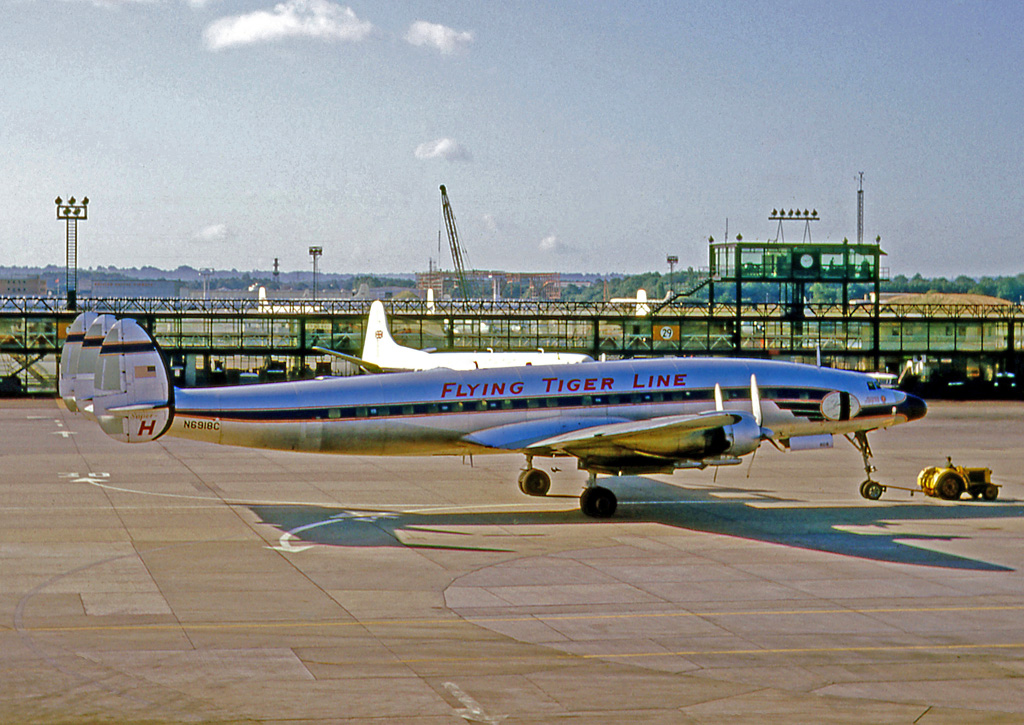
Flying Tiger Line Flight 282
Christmas Eve, 1964. A Lockheed Super Constellation cargo plane, registration N6915C, had just arrived at San Francisco International Airport from Japan, its hold packed with electronic equipment, bolts of fabric, women's scarves, bandannas, purses, and costume jewelry bound for the holiday market. Flying Tiger Line Flight 282 was a routine cargo run -- the kind of unglamorous freight hauling that kept the aviation industry solvent while the passenger airlines got the magazine covers. In the early morning hours of December 24, the plane took off again from SFO. Minutes later, it was down.
The Last Cargo Run
The Super Constellation was a workhorse of the postwar aviation era, a four-engine propeller aircraft that had served both military and commercial operators since the late 1940s. By 1964, jets were rapidly displacing propeller aircraft on passenger routes, but cargo carriers like Flying Tiger Line continued to fly the older planes, squeezing the last economic value from airframes that had been designed for a different era. Flight 282's cargo manifest told the story of trans-Pacific commerce in the 1960s: consumer electronics, textiles, novelty items, all manufactured cheaply in Japan and shipped by air to American markets in time for Christmas.
Crash at SFO
The crash occurred shortly after takeoff from San Francisco International Airport. Three crew members were killed. The Civil Aeronautics Board investigated the accident and released its findings in report SA-382, documenting the circumstances that led to the loss of the aircraft. The crash was one of several aviation incidents in the Bay Area during the 1960s, a decade when increasing air traffic volumes, aging aircraft, and evolving safety standards created conditions for accidents that would become less common as regulation and technology improved.
The Forgotten Freight Carriers
Flying Tiger Line was one of the original all-cargo airlines, founded by veterans of the Flying Tigers, the American Volunteer Group that flew for China against Japan during World War II. The airline specialized in military and commercial freight, connecting the United States to Asia through a network of cargo routes that operated largely invisible to the flying public. Flight 282's Christmas Eve crash was a reminder that aviation's risks were not limited to passenger service -- every night, crews flew aging aircraft across oceans and over mountains to deliver the goods that filled American stores, accepting hazards that rarely made headlines until something went wrong.
From the Air
The crash occurred near San Francisco International Airport (KSFO) at approximately 37.624°N, 122.465°W. The crash site is southwest of the airport, in the hills above Pacifica. Best observed from the SFO approach pattern. Nearest airport: KSFO (at the crash location). The approach and departure corridors of SFO's runways pass near the crash area.