Foam Fotografiemuseum Amsterdam
The opening exhibition was called Dutch Delight, and the joke was on the country's most famous export. For centuries, Dutch painters from Vermeer onward had argued that the light here was different - softer, slower, somehow more honest. Foam opened on 13 December 2001 with a show that put that claim to the lens. More than 7,000 people came to see how photographers handled Dutch light. The museum closed for renovation almost immediately, gutted the three Keizersgracht canal houses it had taken over, and came back six months later as one of Europe's important contemporary photography museums. The light is still here. The cameras are still pointed at it.
The Building With Three Lives
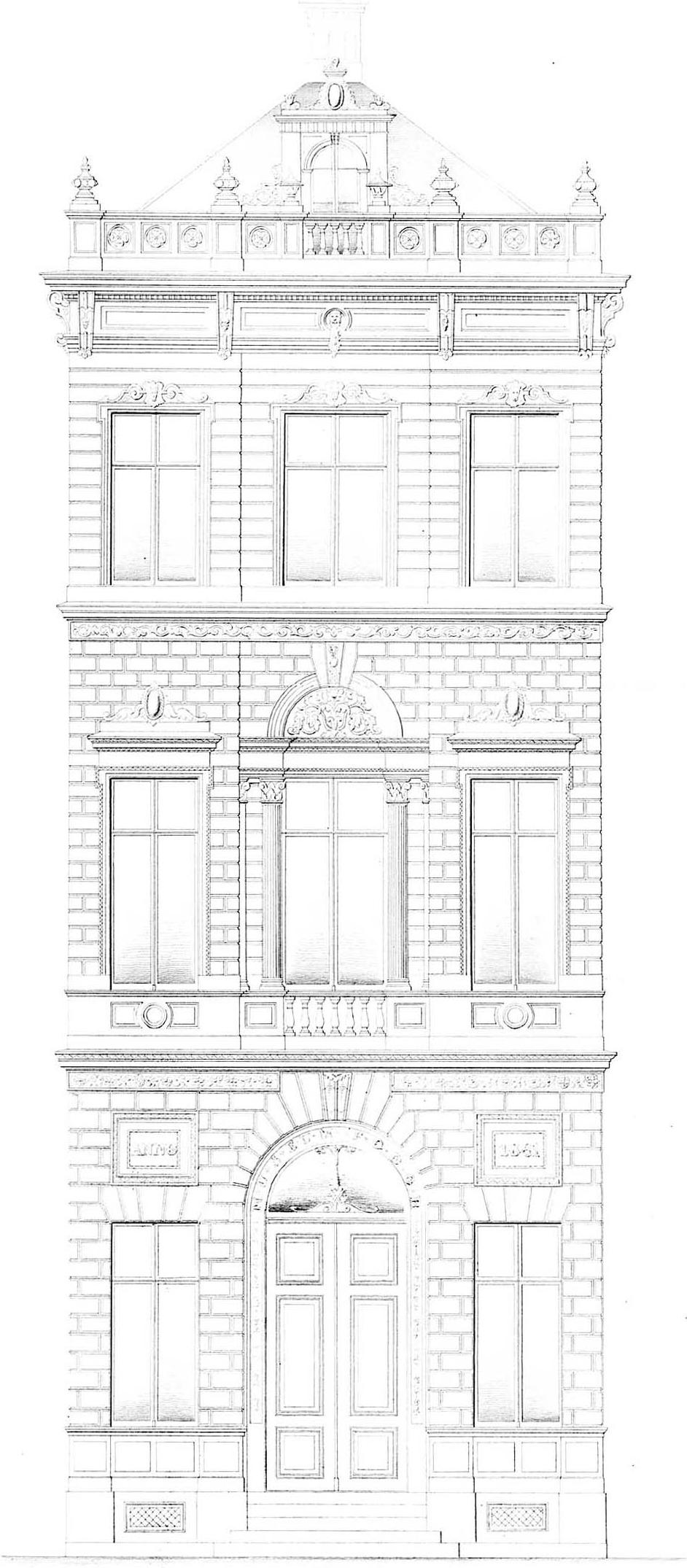
The structure behind Foam was paid for, originally, by a nineteenth-century collector named Carel Joseph Fodor (1801-1860), who bought Keizersgracht 611 and later the adjacent warehouse and house at 609. In his will, Fodor turned the warehouse into a museum that would carry his name. Museum Fodor opened in 1863 and ran for more than 130 years as an art museum, closing in 1994. The Nederlands Vormgevingsinstituut - the Netherlands Institute for Design - moved in next, occupying the buildings between 1994 and 2001. Then came Foam, which received its operating permission from the Amsterdam city council in November 2001 and opened just a month later. After the rushed Dutch Delight show, architects BenthemCrouwel reworked all three buildings into a single modern museum. The official opening came on 6 June 2002 with an exhibition called Regie: Paul Huf - a tribute to one of the museum's founders, who had pushed for its creation alongside the pioneering Hungarian-Dutch photographer Eva Besnyo. About 8,000 people came through the doors. A museum had been launched.
Four Shows at a Time
Foam's signature is the layered exhibition program. Four large shows run simultaneously, each typically lasting about three months. They are anchored by retrospectives of major figures - Henri Cartier-Bresson's full career, Richard Avedon's photographs from 1946 to 2004, the controversial glamour and provocation of Helmut Newton in summer 2016. Alongside the big retrospectives, sixteen or so shorter exhibitions run each year - smaller projects, work by less-established photographers, presentations of new developments in the medium. The mix is intentional. A visitor in a single afternoon might see Helen Levitt's mid-century New York street photography, August Sander's monumental survey People of the 20th Century, Malick Sidibe's Malian portraits, Pieter Hugo's confrontational South African work, and a debut show by someone in their twenties whose name will not become famous for another decade. Foam wants you to see how photography pulls from itself - how the documentary tradition feeds the portrait tradition feeds the street tradition feeds whatever happens next.
Foam_3h and the Paul Huf Award
On the lower floor below the library, Foam runs a project space called Foam_3h, where small shows by young photographers are given a public stage. Recent presentations have included Control by Emilie Hudig and A Place to Wash the Heart by Monieka Bielskyte. It is a deliberate piece of infrastructure: a way for the museum to take chances on photographers whose careers are still being decided, in a setting where being wrong about an artist costs less than betting a main gallery on them. The same instinct drives the Paul Huf Award, established in 2007 - a prize given annually to a photographer under the age of 35, named for the museum's co-founder. The award was at one time sponsored by KLM, which renamed it accordingly. The prize money matters, but so does the platform. A young photographer who wins the Paul Huf Award gets a Foam exhibition and lands on the radar of curators across Europe. Many winners have gone on to become some of the most distinctive voices in the medium.
The Magazine, the Bookshop, the Whole Apparatus
A museum like Foam is more than its galleries. Inside the building you will find Foam Editions, a commercial gallery selling photography prints, and a bookshop that doubles as a research library for the field. Three times a year, Foam Magazine publishes - each issue built around a theme and combining work by established image-makers with work by emerging photographers, alongside essays and interviews by experts in the field. The magazine has won several awards for its graphic design and editorial quality, and it is widely read inside the photographic community as a barometer of where the medium is heading. The whole apparatus - museum, magazine, project space, prize, bookshop, gallery - functions as an ecosystem. Foam is not just a place to look at photographs. It is a piece of infrastructure that the medium itself runs on. Walk in for an Avedon retrospective, walk out with a magazine that introduces you to twelve photographers whose names you did not know an hour ago. That is the trade Foam wants to make with every visitor.
From the Air
Located at 52.364 N, 4.894 E on the Keizersgracht in the Grachtengordel canal belt of central Amsterdam. Geohash u173z. The museum sits across the Keizersgracht from Museum Van Loon, putting two of the city's most interesting smaller museums within view of each other across a single canal. Schiphol Airport (EHAM) is 13 km southwest. Approaches over central Amsterdam offer clear views of the canal belt's distinctive horseshoe pattern. The three knitted-together canal houses that form Foam present a uniform Dutch facade from the street, but only the renovated interior reveals the building's modern reorganization.