Folger Shakespeare Library
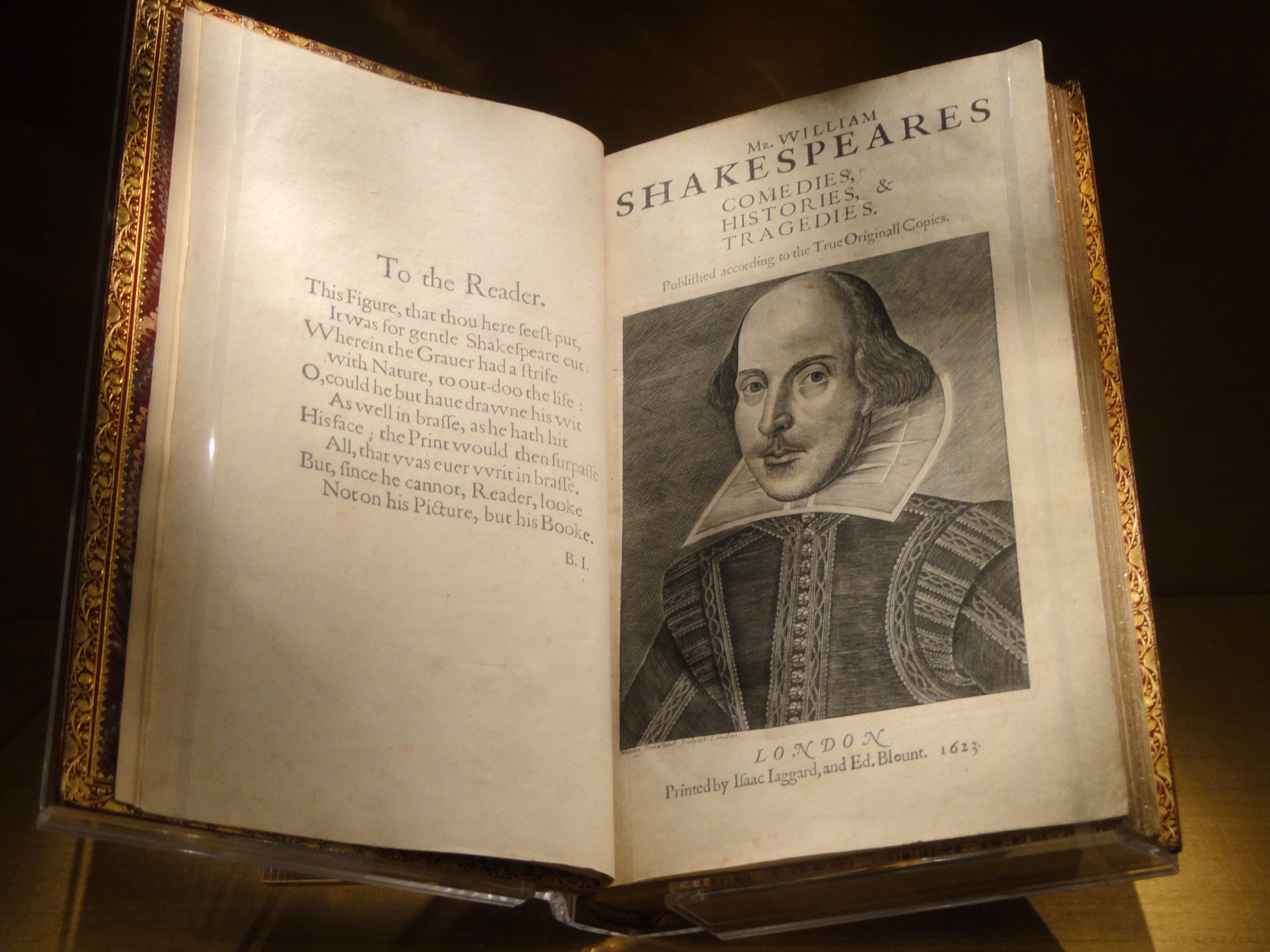
Eighty-two copies of Shakespeare's First Folio sit in a single building on Capitol Hill. Only 235 are known to survive worldwide, and more than a third of them live here, in a white marble temple that looks neoclassical from the outside and thoroughly Elizabethan within. The Folger Shakespeare Library is a place of contradictions by design: a modern research institution dressed in Tudor oak paneling, a private collection endowed by an oil magnate and administered by a small Massachusetts college, a hushed scholarly sanctum that also stages rock-musical adaptations of Greek tragedy. It opened on April 23, 1932, the anniversary believed to be Shakespeare's birthday, and it has spent nearly a century proving that the Bard's work is not a relic but a living conversation.
The Collector and His Partner
Henry Clay Folger was a Standard Oil of New York executive, a graduate of Amherst College and Columbia University, and a Shakespeare obsessive. His collecting began in 1889 with the purchase of a 1685 Fourth Folio, and it never stopped. By the end of World War I, he and his wife Emily Jordan Folger were searching for a site to house their vast collection. They chose a parcel adjacent to the Library of Congress, then occupied by townhouses. Folger spent years quietly buying each lot. Congress passed a resolution in 1928 allowing the land to be used for his project. The cornerstone was laid in May 1930, but Folger died shortly afterward. The stock market crash of 1929 had diminished his estate, and it was Emily who supplied the funds to finish the building. She remained involved in the library's administration until shortly before her death in 1936, ensuring that the institution reflected her husband's vision and her own scholarly rigor.
Marble Without, Oak Within
Architect Paul Philippe Cret gave the Folger a stripped neoclassical exterior of white marble, designed to harmonize with the monumental buildings of Capitol Hill. Nine street-level bas-reliefs by sculptor John Gregory depict iconic scenes from Shakespeare's plays, progressing from A Midsummer Night's Dream on the left to Henry IV, Part 1 on the right. An aluminum statue of Puck by Brenda Putnam once stood in the west garden; after decades of weathering caused Puck's right hand to turn up across the street at the Library of Congress, the original was moved indoors. Step inside, however, and the neoclassical shell gives way to Tudor warmth: oak paneling, plaster ceilings, stained-glass windows. The reading room features a large stone fireplace that has never been lit and a stained-glass window by Nicola D'Ascenzo depicting the Seven Ages of Man soliloquy from As You Like It. The 260-seat Elizabethan Theatre, modeled loosely on the Fortune Playhouse and the Globe, carries the famous line painted on its ceiling: "All the world's a stage."
A Treasury Beyond Shakespeare
The Folger's collection extends far beyond its 82 First Folios and 229 early modern quartos. The library holds more than 250,000 books spanning from the mid-fifteenth century to the present, including over 18,000 English books printed before 1640 and 35,000 early modern continental volumes. Among the manuscripts are treasures that have nothing to do with the Bard: Henry VIII's childhood copy of Cicero's De officiis, inscribed in the young prince's own hand with "Thys boke is myne Prynce Henry"; thirteen letters from John Donne detailing his personal crisis after marrying Anne More without her father's permission; George Eliot's list of quotations compiled while writing Middlemarch; and the Macro Manuscript, which contains the earliest known staging diagram for any play in England. During World War II, 30,000 of the collection's most precious items were transported under armed guard to Amherst College's Converse Library, where they sat out the war safe from any potential attack on Washington.
Where Shakespeare Breathes
The Folger is not a mausoleum. Under director O.B. Hardison in the 1970s, the institution opened its doors to performance, poetry, and public engagement. The Folger Theatre Group became the library's first professional company once the Elizabethan Theatre met D.C. fire code. The Folger Consort, an early music ensemble, began performing in 1977. The O.B. Hardison Poetry Series has hosted luminaries from Octavio Paz and Gwendolyn Brooks to Seamus Heaney and Rita Dove. The PEN/Faulkner Reading Series brings contemporary fiction authors to the building. Elementary students perform in the Emily Jordan Folger Children's Shakespeare Festival each spring. After a major renovation that closed the building from 2020 to 2024, the Folger reopened with a new learning lab, outdoor gardens featuring a Juliet balcony, and a reimagined great hall with a cafe called Quill and Crumb. The renovation made official what the institution has always understood: Shakespeare belongs to everyone who walks through the door.
From the Air
Located at 38.89N, 77.00W on Capitol Hill in Washington, D.C., directly east of the U.S. Capitol building and adjacent to the Library of Congress. The white marble exterior is visible amid the cluster of government buildings. Nearest airport: KDCA (Ronald Reagan Washington National Airport), approximately 3 nautical miles south-southwest. The National Mall, U.S. Capitol dome, and Library of Congress Jefferson Building are major visual landmarks for orientation. Best viewed at 2,000-3,000 feet AGL approaching from the southeast along the Anacostia River corridor.