Foreign Concessions in Tianjin
Nine flags once flew over Tianjin's riverfront. Between 1860 and 1943, Britain, France, Japan, Germany, Russia, Austria-Hungary, Italy, Belgium, and the United States each governed their own walled-off districts along the Hai River, complete with separate prisons, schools, barracks, and hospitals. The result was a city unlike any other in China -- a five-square-mile patchwork where you could cross a street and move from French colonial architecture to Japanese commercial blocks to Russian Orthodox spires, each zone operating under its own foreign law on Chinese soil.
Gateway to the North
Tianjin's fate as a concession city was written by geography. Sitting at the intersection of the Grand Canal and the Hai River, the city served as the gateway between Beijing and the sea, connecting the imperial capital to the Bohai Bay. When British and French forces extracted trade privileges through the 1860 Peking Convention, Tianjin was an obvious prize. Its strategic importance only grew when the Kaiping Tramway linked the port to the Tangshan coal fields, creating the railroad spine that would eventually connect all of northern China and Manchuria. Between 1895 and 1900, seven more nations claimed their own districts, transforming a Chinese port into an international experiment in colonial governance.
An Emperor in Exile
Among the most improbable residents of the concessions was Puyi, the last emperor of the Qing dynasty. Forced from the Forbidden City in 1924, Puyi settled in the Japanese concession, living there until 1931 when the Japanese army took him to Dalian to serve as a puppet ruler of Manchukuo. During his years in Tianjin, his imperial concubine Wenxiu did something unprecedented in Chinese dynastic history: she divorced him. The former ruler of four hundred million people was served divorce papers in a foreign concession of his own former empire -- a moment that captures the absurdity and dislocation of the era in a single domestic act.
The Largest and the Last
Russia claimed the largest concession, securing its territory on the left bank of the Peiho River on December 31, 1900. Even before the treaty was signed, the Russian general in Tianjin had already placed boundary markers by right of conquest during the Boxer Rebellion. The justification in the agreement was characteristically blunt: Russian trade was "on the increase." Japan's concession, established in 1898 after the First Sino-Japanese War and expanded after the Boxer Rebellion, proved the most consequential. By 1937, the Imperial Japanese Army had occupied all of Tianjin except the foreign concessions. Those fell in 1941, and the Japanese concession became the last to end, ceasing to exist only with Japan's capitulation in 1945.
Echoes in Stone
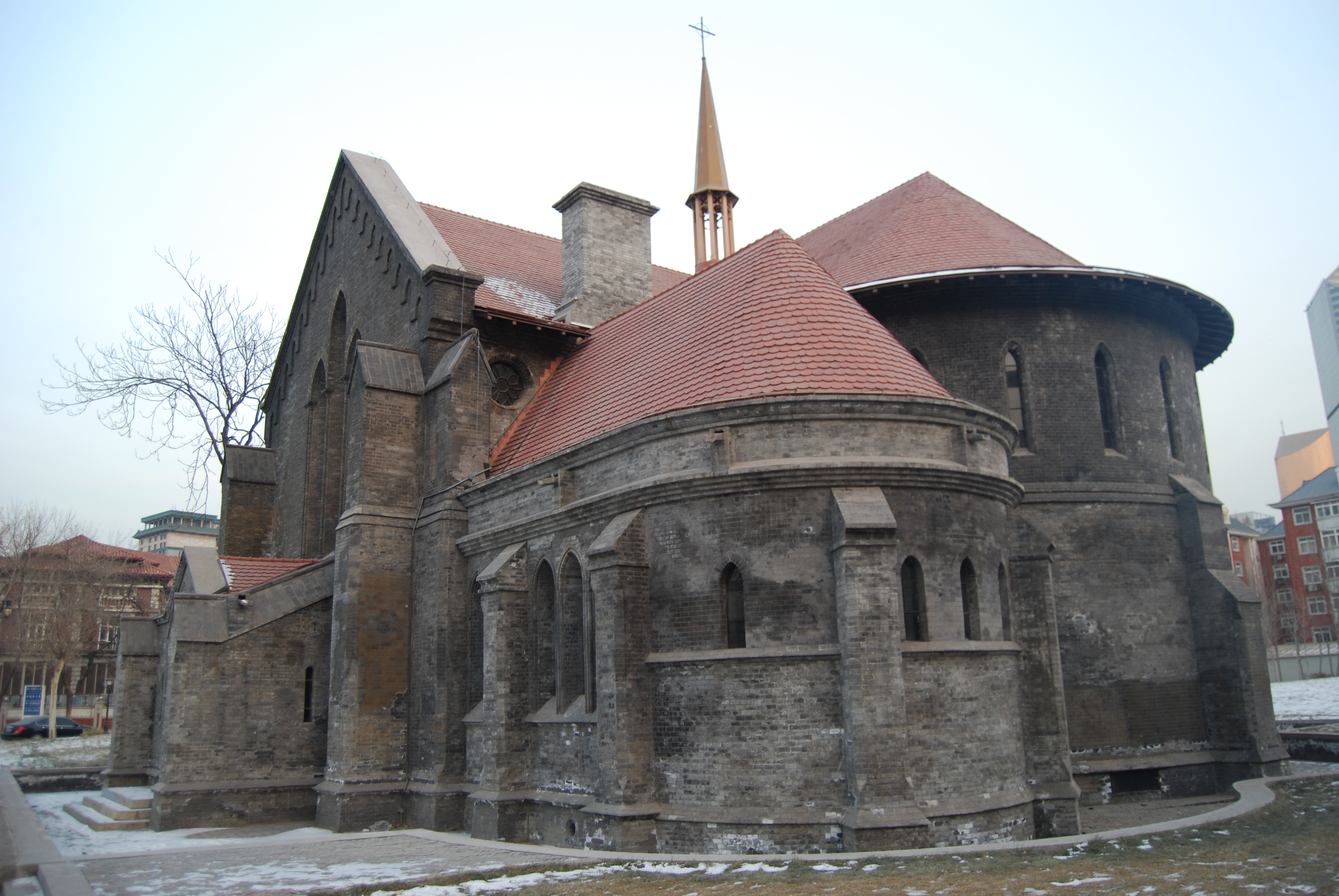
Today the concession districts survive as some of Tianjin's most architecturally distinctive neighborhoods. Walking through the former Italian quarter, visitors encounter Mediterranean arcades and piazzas transplanted to the North China Plain. The former British concession along Victoria Road retains its Victorian and Edwardian facades. These buildings, designed to make European colonists feel at home, now serve as restaurants, boutique hotels, and museums that document the strange era when a Chinese city operated under nine different legal systems simultaneously. The architecture tells a story that no single narrative can contain -- of imperial humiliation and cosmopolitan ambition, of exploitation and inadvertent modernization, all compressed into a few square miles along a northern Chinese river.
From the Air
Located at 39.13°N, 117.21°E along the Hai River in central Tianjin. From altitude, the concession districts are visible as blocks of European-style architecture south and east of the old Chinese city center. Nearest major airport is Tianjin Binhai International (ZBTJ), approximately 15 km east. Beijing Capital International (ZBAA) is about 120 km northwest. Best viewed at 3,000-5,000 feet for architectural detail of the historic districts along the river.