Forest Park (St. Louis)
New Yorkers like to brag about Central Park. St. Louisans smile and point out that Forest Park is 500 acres larger. But size is the least interesting thing about this 1,371-acre green expanse in the heart of the city. In 1904, twenty million people visited Forest Park for the Louisiana Purchase Exposition -- the World's Fair that introduced the world to the ice cream cone, the hot dog bun, and iced tea. That same year, the park hosted the third Olympic Games, the first held in the United States. Today, five major cultural institutions sit within its boundaries, and every one of them charges no admission. Forest Park is the rare urban park that is simultaneously a museum campus, a fairground ghost, and a neighborhood backyard.
Twenty Million Visitors
The 1904 Louisiana Purchase Exposition transformed Forest Park into the most ambitious world's fair ever staged. Over seven months, twenty million visitors walked through elaborate exhibit palaces, technological demonstrations, and cultural displays spread across the park's western half. The fair celebrated the centennial of the Louisiana Purchase, though it opened a year late. It introduced Americans to dozens of innovations and novelties that would become staples of daily life. The only permanent structure built for the fair that still stands is the Palace of Fine Arts, now the Saint Louis Art Museum. The fair also hosted the 1904 Summer Olympics, a chaotic affair that included events like greased-pole climbing and mud fighting alongside traditional sports. The Olympics were so poorly organized that they are sometimes called the 'worst Olympics ever,' but they established the precedent of America hosting the Games.
Five Institutions, No Admission Fee
Forest Park houses the Saint Louis Art Museum, the Saint Louis Zoo, the Saint Louis Science Center, the Missouri History Museum, and the Muny -- the nation's oldest and largest outdoor musical theater. What makes this concentration remarkable is that every institution except the Muny offers free general admission, funded by a regional tax district that St. Louis voters have repeatedly renewed. The zoo welcomes three million visitors annually. The art museum holds 34,000 objects spanning five thousand years. The Science Center draws families with interactive exhibits. The Missouri History Museum preserves the region's story from indigenous peoples through the present. The Muny, which opened in 1917, seats 11,000 under the stars in a natural amphitheater and reserves 1,500 free seats for every performance.
From Wilderness to Playground
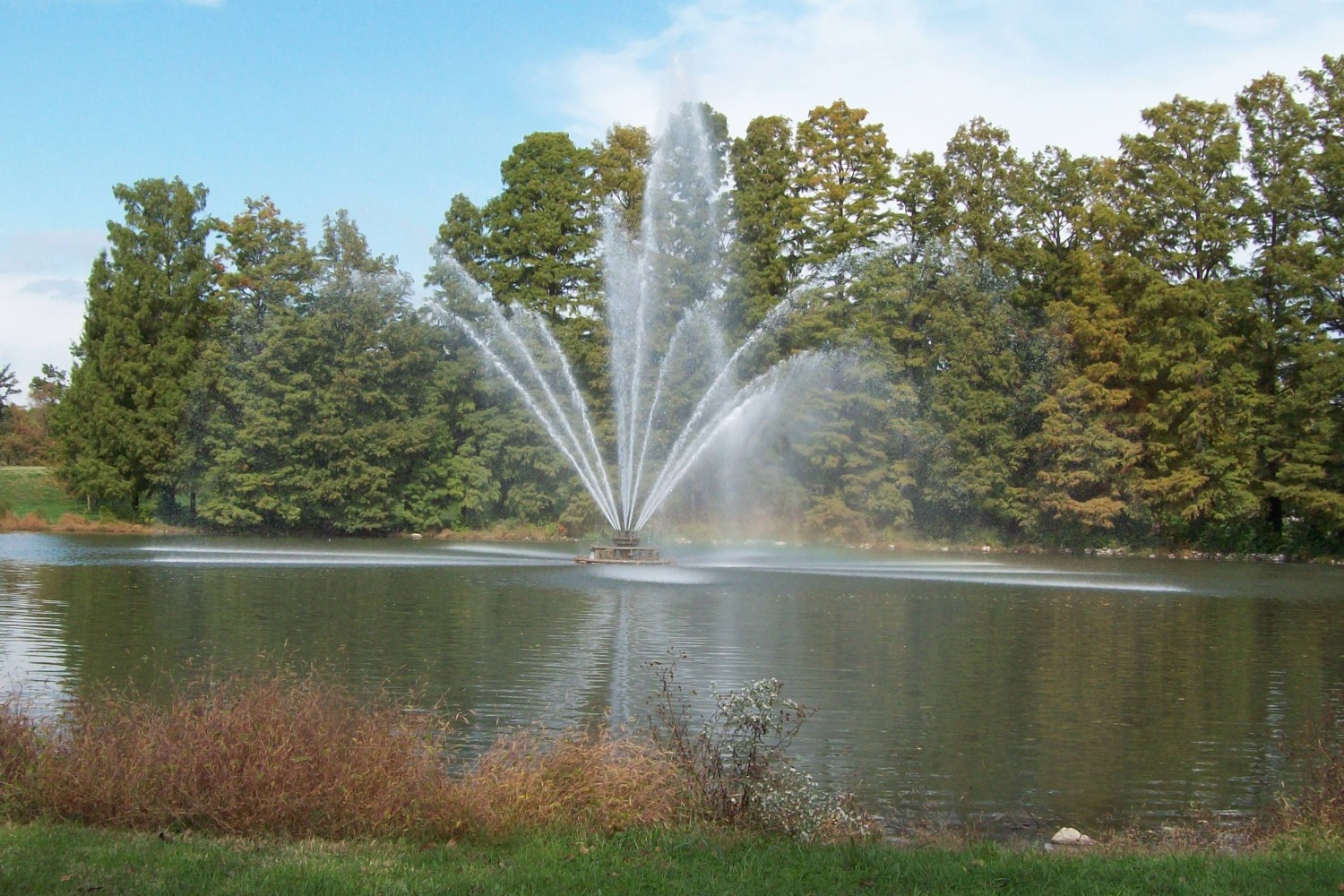
The land that became Forest Park was dedicated in 1876, the same year as the nation's centennial. Early visitors found dense forest and rough terrain -- more wilderness than park. Landscape architects gradually transformed it with roads, lakes, and open meadows while preserving substantial tree canopy. The park's designers drew inspiration from the English landscape garden tradition, creating vistas and natural-looking water features that disguise careful engineering. Major renovations followed the 1904 World's Fair, which had left parts of the park scarred by construction. Through the 20th century, Forest Park evolved into a comprehensive recreation destination with golf courses, tennis courts, a boathouse, cycling paths, and playing fields. The park's main loop trail draws joggers, cyclists, and walkers year-round.
The Park That Defines a City
Forest Park functions as St. Louis's central gathering space in ways that go beyond recreation. Seasonal events fill the calendar: the Balloon Glow lights up the sky with dozens of hot-air balloons, Shakespeare in the Park brings theater to the lawns, and holiday light displays transform the winter landscape. The park bridges some of the city's geographic and demographic divides, sitting at the boundary between the Central West End, the Delmar Loop, and several residential neighborhoods. Washington University's Danforth Campus borders the park's western edge. The planned Brickline Greenway aims to create a continuous path from Forest Park to the Gateway Arch, physically connecting the city's two greatest public spaces. For a city that has endured decades of population decline and neighborhood fragmentation, Forest Park remains the one place where all of St. Louis meets.
From the Air
Located at 38.639°N, 90.285°W in the heart of St. Louis. Forest Park is clearly visible from altitude as a large green rectangle west of downtown, approximately 1,371 acres. The Saint Louis Art Museum on Art Hill and the park's lakes are identifiable features. Washington University's Gothic campus borders the western edge. The park sits between I-64 (south) and Delmar Blvd (north). Nearest airports: KSTL (St. Louis Lambert International, 10 nm NW), KCPS (St. Louis Downtown, 8 nm SE). The Gateway Arch is 5 nm east along the planned Brickline Greenway corridor.