Fork Union Military Academy
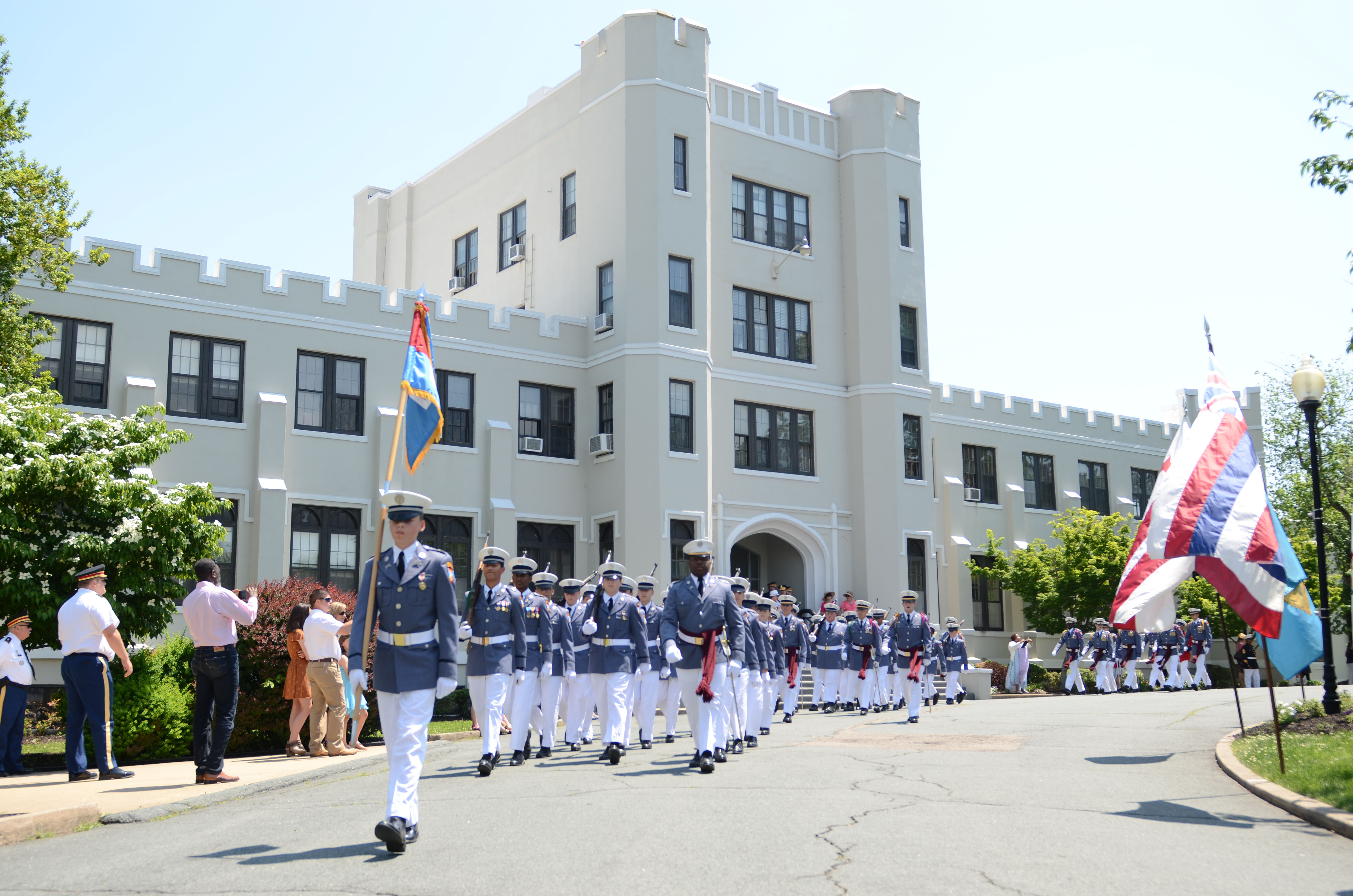
The crest tells you what matters here: crossed swords, a book, and a star. Body, mind, and spirit. Since 1898, Fork Union Military Academy has etched that trinity into young men on a campus nestled in the rolling Piedmont hills of central Virginia, about sixty miles west of Richmond. What started as a nineteen-student academy founded by Baptist minister Dr. William E. Hatcher has become one of the most storied military boarding schools in the country, a place where a Pearl Harbor survivor once taught mathematics, where the founder of a billion-dollar sportswear company learned discipline, and where a single football program has sent at least 117 players to the NFL.
Nineteen Boys and a Baptist Minister
Dr. William E. Hatcher opened Fork Union Academy in October 1898 with little more than conviction and a handful of students. The school grew quickly enough that by 1902, a military structure was adopted to impose order on the expanding enrollment, giving the boys uniforms, ranks, and daily drill. In 1913, the academy became all-male and took its current name, Fork Union Military Academy. That same year, the Baptist General Association of Virginia began supporting the school, a relationship that endures to this day. The campus spread across the Virginia countryside, its buildings named for the people who shaped it: Hatcher Hall for the founder's family, Wicker Science Center for two presidents who led the school across four decades, and the Guy E. Beatty Library for a generous benefactor. While the academy holds no direct ties to any military branch, its system of ranks, uniforms, and chain of command has structured daily life for more than a century.
One Subject at a Time
Fork Union's most distinctive academic feature is the One Subject Plan, a curriculum unlike anything at a conventional high school. In the upper school, cadets from ninth grade through the postgraduate year study a single subject at a time, spending all day with one teacher before moving to the next course. No juggling six classes a day, no switching gears between calculus and literature before lunch. The approach demands total immersion, an academic version of the military focus that governs the rest of cadet life. Both standard and advanced diplomas are offered, and graduating classes routinely earn millions of dollars in scholarship offers. The postgraduate year draws particular attention, giving young men who need an additional year of academic and athletic development a structured environment to prepare for college.
The Pearl Harbor Connection
Among Fork Union's most remarkable figures was not a student but a teacher. Samuel G. Fuqua, a U.S. Navy Rear Admiral, was the highest-ranking officer to survive the attack on the USS Arizona on December 7, 1941. For his actions that morning, he received the Medal of Honor. In the late 1950s, Fuqua came to Fork Union as a mathematics instructor, a man who had stood on the burning deck of a battleship now standing at a chalkboard in rural Virginia. He was not the school's only Medal of Honor connection. Alumnus Earle Davis Gregory, a World War I soldier, became the first Virginian to receive the Medal of Honor and was called the "Sergeant York" of Virginia. The school's military heritage extends through generals, admirals, and Air Force commanders, including John T. Chain Jr., former Commander in Chief of Strategic Air Command.
Friday Night Legends
Walk the campus and the evidence is everywhere: the football helmet on display, the trophy cases, the quiet pride of a program that has produced at least 117 NFL players. At least 12 Fork Union alumni have been first-round draft picks since 1954, seven have been selected to the Pro Bowl, and a dozen have competed in the Super Bowl. The postgraduate football program, led by head coach Frank Arritt, has long served as a launching pad for athletes who need one more year before college ball. But football is only part of the story. The outdoor track team won 20 consecutive VISAA state championships through 2008. Basketball has its own proud lineage, and cadets compete in baseball, lacrosse, wrestling, soccer, swimming, and more. The alumni roster reads like a cross-section of American success. Harold Roe Bartle, a former Kansas City mayor, gave the Kansas City Chiefs their name. Kevin Plank founded Under Armour. Jerry Richardson founded the Carolina Panthers. Actor Billy Campbell walked these same paths. From a nineteen-student academy to a pipeline that feeds the highest levels of sports, business, and military service, Fork Union's Piedmont campus punches well above its weight.
From the Air
Located at 37.761N, 78.260W in Fluvanna County, Virginia, in the rolling Piedmont region approximately 60 miles west of Richmond. The campus is visible at 3,000-4,000 feet AGL as a cluster of buildings in a rural setting. Nearest airports: Charlottesville-Albemarle (KCHO) 25 nm northwest, Louisa County/Freeman Field (KLKU) 20 nm northeast, Richmond International (KRIC) 55 nm east. The James River runs to the south, and the Blue Ridge Mountains form the western skyline.