Fort Abraham Lincoln
On the morning of May 17, 1876, the 7th Cavalry rode out of Fort Abraham Lincoln in columns so long that the dust took hours to settle. Lieutenant Colonel George Armstrong Custer led them west toward the Little Bighorn, and roughly half would never return. But this patch of Missouri River bluffs near present-day Mandan, North Dakota, holds a story far older than Custer. Centuries before the first soldier arrived, the Mandan people built a fortified village on sloping ground above the river, a place they called Miti-ba-wa-esh, where earth lodges sheltered over a thousand people and trade goods moved between nomadic and agricultural peoples across the northern plains.
The Village on Sloping Ground
Long before the cavalry post existed, the Mandan established On-A-Slant Village in the late 16th century at the confluence of the Missouri and Heart Rivers. Unlike most Plains tribes, the Mandan lived in permanent communities, building roughly 86 earth lodges that housed an estimated 1,000 to 1,500 people. The village was an economic hub where nomadic tribes came to exchange animal skins for agricultural products. A defensive ditch and palisade encircled the settlement, protecting its wealth. For two centuries the village thrived, until a devastating smallpox epidemic in 1781 killed the majority of inhabitants. The survivors moved north to join the Hidatsa along the Knife River. Among the notable figures born here was Sheheke, a Mandan chief who would later accompany Lewis and Clark back to Washington, D.C. in 1806. The artist-documented chief Mato-tope, painted by both George Catlin and Karl Bodmer, also grew up at this site.
Custer's Restless Garrison
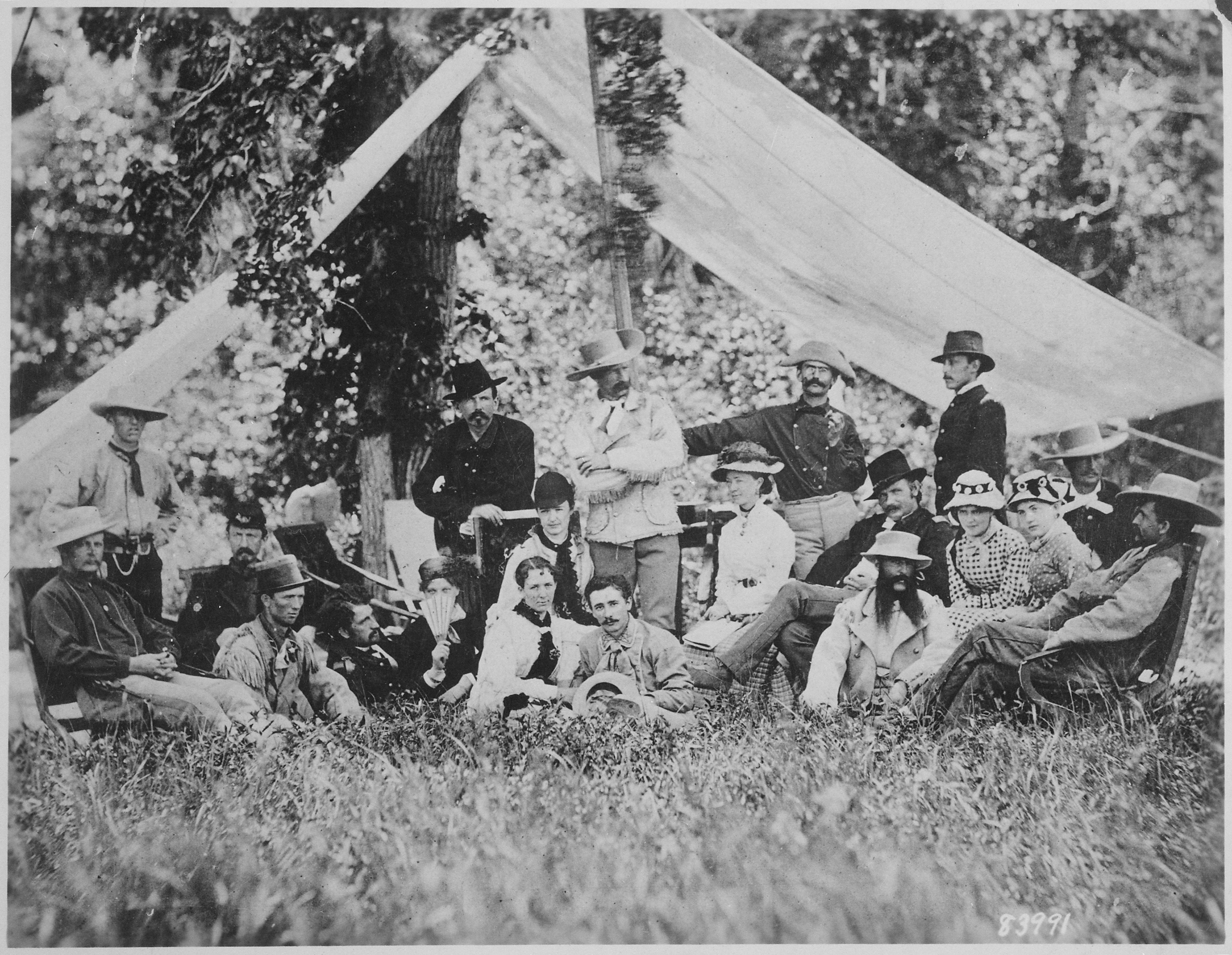
The military arrived in June 1872, establishing an infantry post originally called Fort McKeen. By November of that year it was renamed Fort Abraham Lincoln and expanded with a cavalry post accommodating six companies. Among its 78 permanent wooden structures were barracks, officer's quarters, cavalry stables, a hospital, and a telegraph office. Water was hauled from the Missouri in wagons. The fort's primary mission was protecting crews building the Northern Pacific Railway. Custer and his wife Libbie arrived in 1873, making this their home. Their first house burned down in February 1874 and was rebuilt. For three years, Fort Lincoln was one of the most important military posts on the northern frontier, a staging ground for expeditions into contested Sioux territory that would culminate in the Great Sioux War of 1876.
The Ride That Ended Everything
When Custer led the 7th Cavalry out of Fort Lincoln in the spring of 1876, the objective was to force non-treaty Lakota and Cheyenne bands back to their reservations. The campaign ended at the Battle of the Little Bighorn on June 25, where Custer and over 260 of his soldiers were killed. The news reached the fort's remaining families and garrison with devastating effect. Without its most famous commander, Fort Lincoln continued to operate but gradually declined in strategic importance as the Northern Pacific Railway reached Montana in 1883. The Army formally abandoned the post in 1891. Within a year, local residents had stripped the fort for its nails and lumber, and the once-busy garrison crumbled into the prairie.
Reconstruction and Living Memory
In 1907, President Theodore Roosevelt signed the deed transferring the fort's land to the state of North Dakota, creating Fort Abraham Lincoln State Park. Today the Custer House and seven other major fort buildings have been reconstructed, including barracks, the makeshift theater where soldiers once staged performances, and a stable. Guides dressed as 1870s laundresses and soldiers lead tours every half hour, and during summer months melodramas originally performed at the fort in the 1870s are revived in the rebuilt granary. Six earth lodges at On-A-Slant Village have also been reconstructed, where interpreters introduce visitors to Mandan culture and the village's two centuries of history. The park offers 95 campsites, horseback tours, hiking trails, and fishing along the Missouri, making it a place where military history, indigenous heritage, and prairie recreation converge.
From the Air
Fort Abraham Lincoln State Park sits at 46.77N, 100.85W on the west bank of the Missouri River, roughly 7 miles south of Mandan, North Dakota. From the air, look for the reconstructed earth lodges and fort buildings along the bluffs above the river. The nearest airport is Bismarck Municipal Airport (KBIS), about 8 miles to the northeast. At lower altitudes, the confluence of the Missouri and Heart Rivers is a clear landmark. Best viewed at 2,000-3,000 feet AGL for structure detail.