Fort Bayard Historic District
On January 24, 1877, Corporal Clinton Greaves of the 9th Cavalry Regiment rode into a fight with Apache raiders somewhere in the New Mexico Territory. By the time the smoke cleared, his actions had earned him the Medal of Honor, one of many acts of extraordinary courage performed by the African American soldiers stationed at Fort Bayard. They called themselves the Buffalo Soldiers, and this remote post in the high desert became one of their most storied garrisons. What happened here after the Apache Wars ended proved equally remarkable: the frontier fort transformed into a pioneering medical facility that saved thousands of lives and, decades later, held German prisoners of war within its walls.
Where the Buffalo Soldiers Served
Company B of the 25th United States Colored Infantry Regiment established Fort Bayard in 1866, tasked with protecting miners and settlers in this rugged corner of New Mexico Territory. They were joined by troopers from the 9th Cavalry Regiment, forming one of the most important Buffalo Soldier garrisons in the Southwest. These men patrolled vast distances, maintained communication lines, and engaged Apache warriors in countless skirmishes across terrain that offered no mercy to the unprepared. The fort's roster eventually read like a who's who of American military history: General George Crook served here around 1885, and a young second lieutenant named John J. Pershing arrived in 1886. Black Jack Pershing, as he would later be known, oversaw installation of a heliograph system that linked Fort Bayard to an Army communications network stretching from Arizona to Texas.
From Battlefield to Sanatorium
Geronimo's surrender in 1886 ended the Apache Wars, and Fort Bayard suddenly faced an uncertain future. Located too far from the Mexican border to serve as a strategic garrison, the post seemed destined for closure. Then U.S. Army Surgeon General George Miller Sternberg noticed something unusual in the medical records: soldiers stationed at Fort Bayard enjoyed remarkably good health. The high altitude, dry climate, and clean air made it an ideal location for treating a disease that was ravaging America. In 1900, Fort Bayard became the Army's first tuberculosis sanitarium and research center. Lectures on tuberculosis treatment delivered at the fort remain archived at the National Library of Medicine, testimony to the groundbreaking medical work conducted in these adobe buildings.
A Century of Transformation
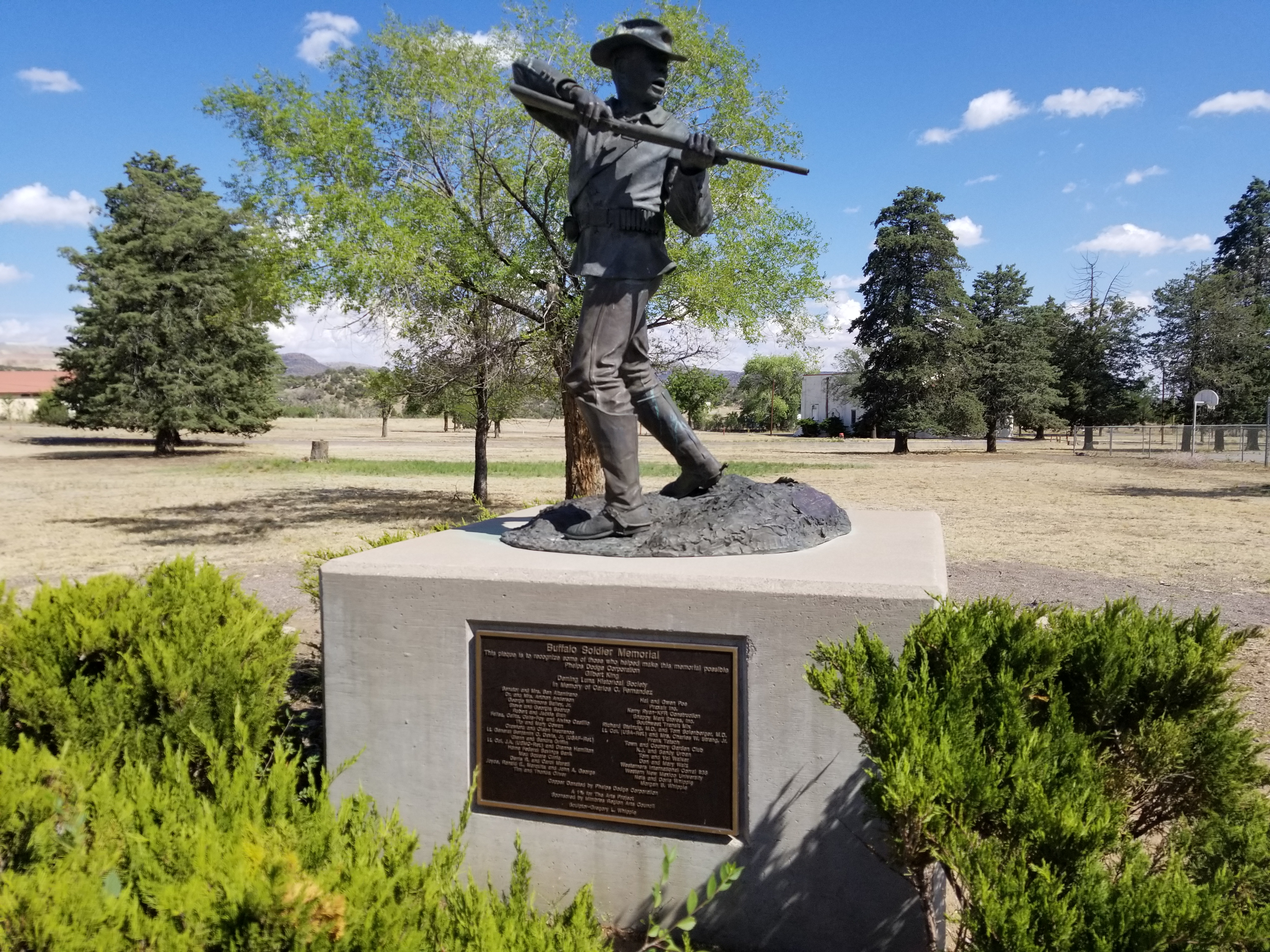
The Army transferred Fort Bayard to the U.S. Public Health Service in 1919 to operate Hospital No. 55, a veterans' tuberculosis facility. By 1922, it had joined the Veterans Bureau. But the fort's military chapter had one more act to play: during World War II, German prisoners of war occupied the grounds from 1943 to 1945. Today, the New Mexico Department of Health operates the Fort Bayard Medical Center as a long-term care nursing facility. Of the original 19th-century fort, only scattered landscaping elements and the national cemetery survive. A monument to the Buffalo Soldiers stands on the old parade field, erected in 1992 to honor the men who built this post and defended it through decades of conflict.
The Names That Remain
The fort takes its name from Brigadier General George Dashiell Bayard, who fell mortally wounded at the Battle of Fredericksburg in 1862, never seeing the western outpost that would carry his legacy. Fifteen square miles of land were designated the Fort Bayard Military Reservation by presidential order in 1869, creating a federal presence that persists to this day. The stories of those who served here live on: Clinton Greaves and his Medal of Honor, Pershing and his heliograph towers, the unnamed Buffalo Soldiers who rode out into hostile territory and the tuberculosis patients who found hope in the mountain air. Fort Bayard witnessed over a century and a half of American history, from frontier warfare to cutting-edge medicine to the global conflict of World War II.
From the Air
Located at 32.80N, 108.15W at approximately 6,100 feet elevation in Grant County, New Mexico. The historic district lies just north of the intersection of US Route 180 and NM State Road 152, near the town of Bayard. From the air, look for the orderly layout of buildings and the adjacent Fort Bayard National Cemetery with its distinctive rows of white headstones. Grant County Airport (KSVC) in Silver City is 12nm to the southwest. The Gila National Forest rises to the north and east. Clear conditions predominate; expect afternoon cumulus development in summer months.