Fort Belknap Indian Reservation
The French traders got the name wrong. They watched the Aaniiih people make the sign language gesture for waterfall, passing their hands over their stomachs to describe the cascading water. The Frenchmen interpreted this as "big belly" and called them Gros Ventre. The Aaniiih actually called themselves the White Clay People, named for the white clay along the Saskatchewan River that they used in ceremony. They share this Montana reservation with the Nakoda, the Generous Ones, whose name the Chippewa rendered as Assiniboine, meaning "one who cooks with stones."
Last of the Wild Herds
Between the Bear Paw Mountains and the Little Rocky Mountains, in the lush valley of the Milk River, the last wild buffalo herd in the continental United States roamed through the final decades of the 19th century. The Aaniiih and Nakoda had followed these massive animals for generations, living the nomadic life of the northern Plains. Buffalo was their staff of life: food, clothing, shelter, tools, everything they needed came from the animals they hunted. When the herds vanished, so did a way of life that had sustained these peoples for centuries. The reservation established in 1888 comprised only a fraction of their ancestral territory, which once stretched across all of north-central and eastern Montana and into North Dakota.
Names and Histories
The Nakoda split from the Yanktonai Sioux in the 17th century, migrating from the Minnesota woodlands onto the northern plains alongside their allies, the Plains Cree. They heated rocks and placed them in rawhide containers to boil water and cook food, a practice that gave them their Ojibwe name. Today they live on both the Fort Belknap and Fort Peck reservations in Montana, as well as on several reserves in Saskatchewan and Alberta, where they are known as Stoney. The reservation itself takes its name from William W. Belknap, President Grant's Secretary of War, who was later impeached for corruption. The irony of naming Indigenous lands after a disgraced official lingers in the Montana air.
Treaties and Territories
In October 1855, near the confluence of the Judith and Missouri Rivers, the Blackfoot Confederacy signed an agreement promising peace with other tribes and with American citizens. The Nakoda had already signed the Treaty of Fort Laramie in 1851, along with the Lakota, Dakota, Mandan, Arikara, Hidatsa, Cheyenne, and Arapaho. These treaties established sacred territories across the northern Plains. What followed was the familiar story: vast homelands reduced to small reservations, communal lands divided into individual allotments under the Dawes Act, those allotments fractured among thousands of descendants until 75 percent of the land at Fort Belknap became a maze of fractionated ownership.
The Return of the Animals
A century after the buffalo vanished from this landscape, they are coming back. The tribes received bison in 2013 and have reintroduced them to the local range. The Fort Belknap Indian Community Grassland Restoration Project, a partnership with the Bureau of Land Management, is rebuilding the prairie ecosystem. In December 2021, thirty swift foxes from Colorado were released on the reservation, returning a species that had been absent for fifty years. Black-footed ferrets, among the rarest mammals in North America, have also been reintroduced. The tribes are reassembling the biological community that sustained their ancestors, healing the land by returning its original inhabitants.
The View from Here
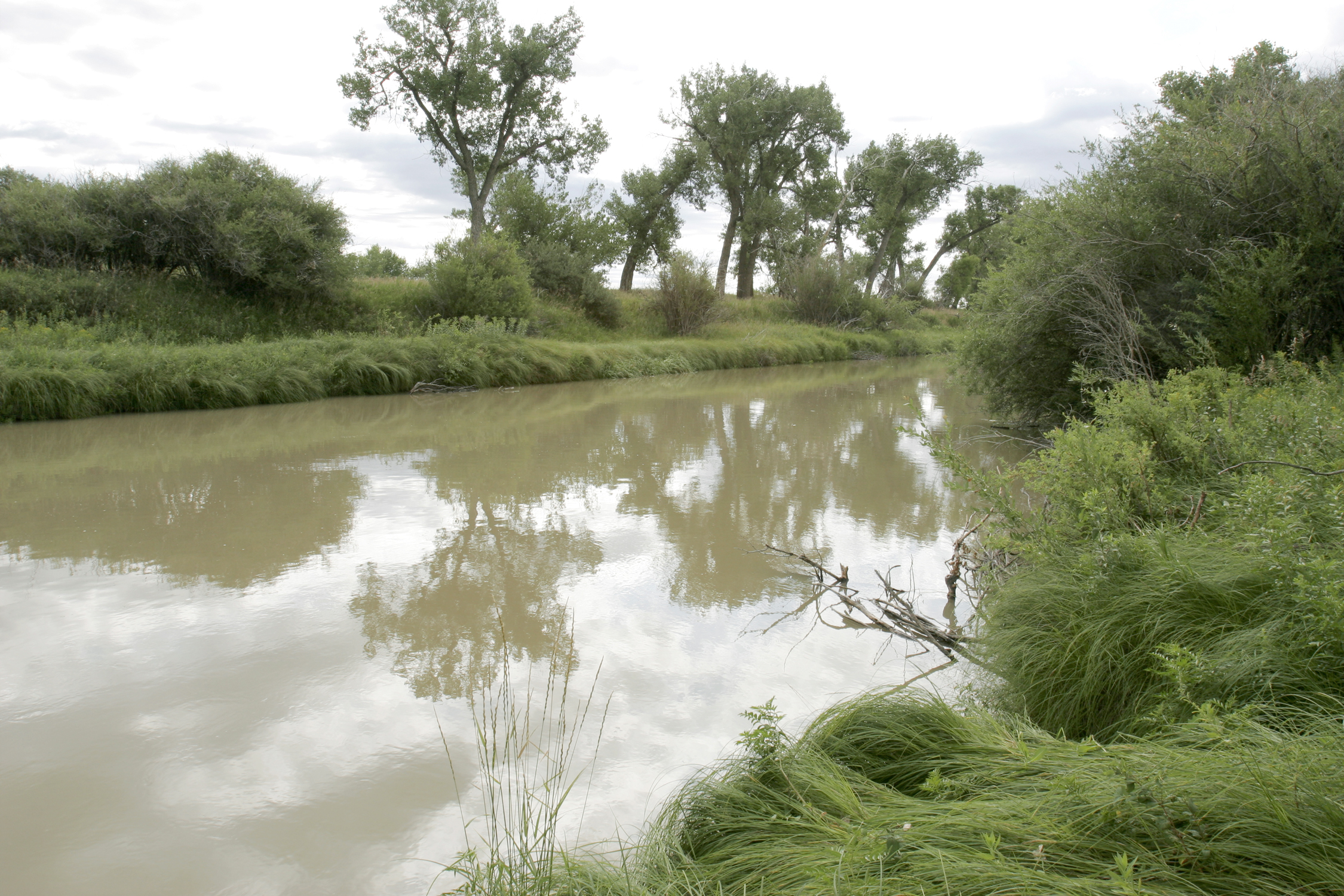
Fort Belknap Agency sits at the reservation's northern edge, just south of Harlem across the Milk River. The Little Rocky Mountains rise to the southwest, and the Bear Paw Mountains loom to the west, the same ranges that once cradled the last wild buffalo. The reservation covers nearly a million acres of Montana prairie and foothill country. Notable Aaniiih people include the poet Minerva Allen, the anthropologist George Horse-Capture who curated at the National Museum of the American Indian, and James Welch, whose novel Winter in the Blood captured the stark beauty and quiet tragedy of reservation life. Theresa Lamebull, who died in 2007, may have been the oldest Native American ever recorded. The land endures, the people endure, and now the animals are returning.
From the Air
Located at 48.20°N, 108.60°W in north-central Montana, with Fort Belknap Agency near the northern boundary south of Harlem. The reservation covers approximately 650,000 acres between the Little Rocky Mountains (southwest) and Bear Paw Mountains (west). The Milk River flows along the northern edge. Best viewed at 5,000-8,000 feet AGL. Nearest commercial airport is Great Falls International (KGTF), approximately 140 miles southwest. Havre City-County Airport (KHVR) is closer at about 50 miles northwest.