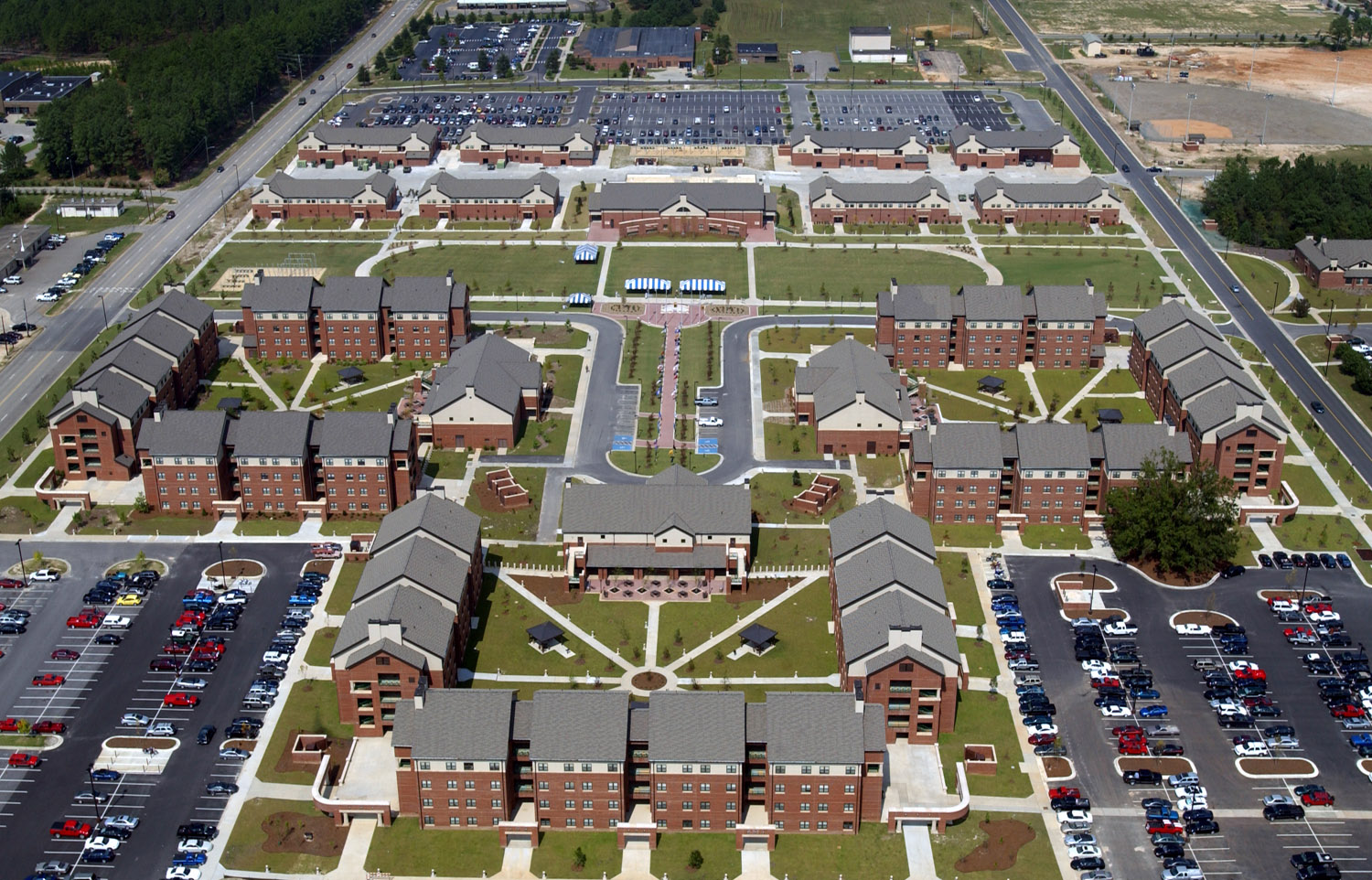
Fort Bragg
The name on the sign has changed three times, but the paratroopers still jump. Fort Bragg, North Carolina, is home to more than 52,000 military personnel -- the 82nd Airborne Division, the Army's Special Operations Command, Delta Force, and the Green Berets all operate from this sprawling installation in the Carolina Sandhills. It is one of the largest military bases on Earth, and its identity crisis over the past few years tells a peculiarly American story about memory, naming, and who deserves to be honored.
An Artillery Camp in the Pines
In 1918, Major General William J. Snow went looking for terrain suitable for artillery training -- flat enough to fire, wooded enough to conceal, with water, rail access, and mild winters. He found it in the longleaf pine country between Fayetteville and Southern Pines. Camp Bragg rose from the sand, named for Braxton Bragg, a West Point artillerist who had become a Confederate general. Six million dollars built cantonments, ranges, and an airfield where balloons spotted for the guns. The camp nearly died in 1921, when the War Department ordered it closed. Brigadier General Albert J. Bowley fought the closure, eventually persuading the Secretary of War to visit. The order was rescinded. By September 1922, Camp Bragg became Fort Bragg -- a permanent post.
Where the Airborne Was Born
World War II transformed the installation. After the war, the 82nd Airborne Division settled in permanently, and Fort Bragg became synonymous with jumping out of airplanes. The Psychological Warfare Center opened in 1952, followed by the 10th Special Forces Group. In 1961, President John F. Kennedy visited and officially authorized the Green Berets to wear their distinctive headgear. The "Iron Mike" statue, a bronze paratrooper frozen mid-stride, was dedicated the same year. During Vietnam, more than 200,000 young men passed through basic combat training here between 1966 and 1970, and the base population peaked at 57,840. Through Grenada, Panama, Desert Storm, Afghanistan, and Iraq, Fort Bragg has been the departure point for America's rapid deployment forces -- the place where soldiers draw their parachutes and board the transports.
A Name Changed, Changed Back, and Changed Again
In 2021, Congress established the Naming Commission to strip Confederate names from military installations. Fort Bragg was recommended for renaming to Fort Liberty, a change that took effect in a public ceremony on June 2, 2023, at a cost of over six million dollars. The new name lasted less than two years. On February 10, 2025, Secretary of Defense Pete Hegseth directed the Army to restore the name Fort Bragg -- but this time honoring Private First Class Roland L. Bragg, a World War II paratrooper who had trained at the base before fighting in the European theater. During the Battle of the Bulge, Roland Bragg earned the Silver Star for gallantry and the Purple Heart, distinguished for saving a fellow soldier's life by commandeering an enemy ambulance under fire. The second renaming took effect on February 14, 2025, at an estimated cost of six to eight million dollars.
Butterflies and Woodpeckers on the Firing Range
Fort Bragg harbors an unlikely secret: it is the only place on Earth where the endangered Saint Francis' satyr butterfly is known to exist. The small brown butterfly clings to wetland habitats near abandoned beaver dams and sedge-lined streams inside the base perimeter. In 1990, the endangered red-cockaded woodpecker forced a more dramatic confrontation between conservation and military readiness. Training stopped, ranges closed, and troops temporarily relocated. Eventually, the Army and conservationists reached an agreement: white stripes painted on trees marked protected habitat, and training restrictions were calibrated around nesting sites. The woodpecker population has more than doubled, growing from 200 clusters to 493, and most training restrictions have since been lifted. A 1.1 megawatt floating solar plant, installed on Big Muddy Lake for 36 million dollars, adds another unexpected footnote to a place better known for parachutes than photovoltaics.
The Weight of the Place
Fort Bragg carries the full weight of American military history -- its triumphs and its tragedies. The 1994 Green Ramp disaster killed 24 members of the 82nd Airborne during a routine training preparation. In 2016, the base hosted the first-ever Major League Baseball game on an active military installation, a temporary stadium built on a disused golf course for a Braves-Marlins matchup. Actress Martha Raye is buried here, honored for her USO work during World War II and Vietnam. Actress Julianne Moore and NFL Hall of Famer Chris Hanburger grew up on the base. Two airfields -- Pope Field and Simmons Army Airfield -- keep the skies busy with C-130 transports, Army aviation helicopters, and special operations aircraft. Fort Bragg is not just a base; it is a small city with its own schools, lakes, churches, and history that stretches across every American conflict since World War I.
From the Air
Fort Bragg is located at 35.139N, 78.999W in the Carolina Sandhills region of North Carolina. The installation covers a vast area visible from altitude as a patchwork of training ranges, pine forests, and cleared zones between Fayetteville and Southern Pines. Two airfields operate on base: Pope Field (KPOB) on the eastern side and Simmons Army Airfield (KFBG) centrally located. Expect military traffic including C-130s, rotary wing, and parachute operations. Fayetteville Regional Airport (KFAY) lies approximately 10nm to the southeast. Best viewed from 3,000-5,000 feet AGL for scale appreciation. The installation boundary is clearly visible where developed areas give way to military reservation pine forests.