Fort D. A. Russell (Texas)
In 1911, the U.S. Army established Camp Albert in the high desert outside Marfa, Texas, a base for cavalry and air reconnaissance units sent to protect West Texas from Mexican bandits in the turbulent years following the Pancho Villa raid. Over the next 35 years, the installation would expand through two world wars, house German prisoners of war, and train chemical mortar battalions. Then, in 1946, it was abandoned. Three decades later, minimalist artist Donald Judd would acquire the decommissioned fort and transform its barracks and artillery sheds into one of the most remarkable art museums in the world.
From Camp Albert to Fort Russell
The base began as Camp Albert in 1911, positioned to guard the U.S.-Mexican border during the Mexican Revolution. Cavalry units and early air reconnaissance patrols operated from the remote post, watching for incursions by Mexican bandits. During World War I, the installation expanded and was renamed Camp Marfa, becoming headquarters for the Marfa Command that replaced the Big Bend District. In 1924, a patrol called the Mounted Watchmen was established to deter unauthorized border crossings. Finally, in 1930, the base received its permanent name: Fort D. A. Russell, honoring Civil War General David Allen Russell, killed at the Battle of Opequon in 1864. The name had been freed when the original Fort D. A. Russell in Wyoming was renamed Fort Francis E. Warren.
World War II and the POW Murals
The Great Depression temporarily closed the post in 1933, but it was reactivated in 1935 as home base for the 77th Field Artillery. During World War II, Fort Russell expanded dramatically, serving as an air base, a Women's Army Corps installation, a training facility for chemical mortar battalions, and a staging area for troops guarding the border. The nearby Marfa Army Airfield was constructed as a pilot-training facility. German prisoners of war were housed in a camp on the base, and in 1945, two POWs named Hans Jurgen Press and Robert Humpel painted murals in Building 98, the bachelor officer quarters. These haunting artworks, created by enemy combatants far from home, survive today as some of the most significant POW art in America. Shortly after V-J Day, the Army closed the fort during demobilization, and in 1949, most of the land was divided and sold to local citizens.
Donald Judd's Vision
In the late 1970s, minimalist artist Donald Judd, frustrated by the temporary nature of museum exhibitions in New York, sought a permanent home for large-scale art installations. Under the auspices of the Dia Art Foundation, he acquired the former Fort D. A. Russell and began converting the military buildings into exhibition spaces. The decommissioned barracks and artillery sheds provided exactly what Judd wanted: vast, simple spaces where art could be installed permanently rather than rotated through temporary shows. Originally conceived to display works by Judd, John Chamberlain, and Dan Flavin, the museum expanded to include pieces by Carl Andre, Ilya Kabakov, Roni Horn, Claes Oldenburg, Coosje van Bruggen, David Rabinowitch, and John Wesley. Judd's museum opened to the public in 1986 as the Chinati Foundation, named for the nearby Chinati Mountains.
Two Histories Preserved
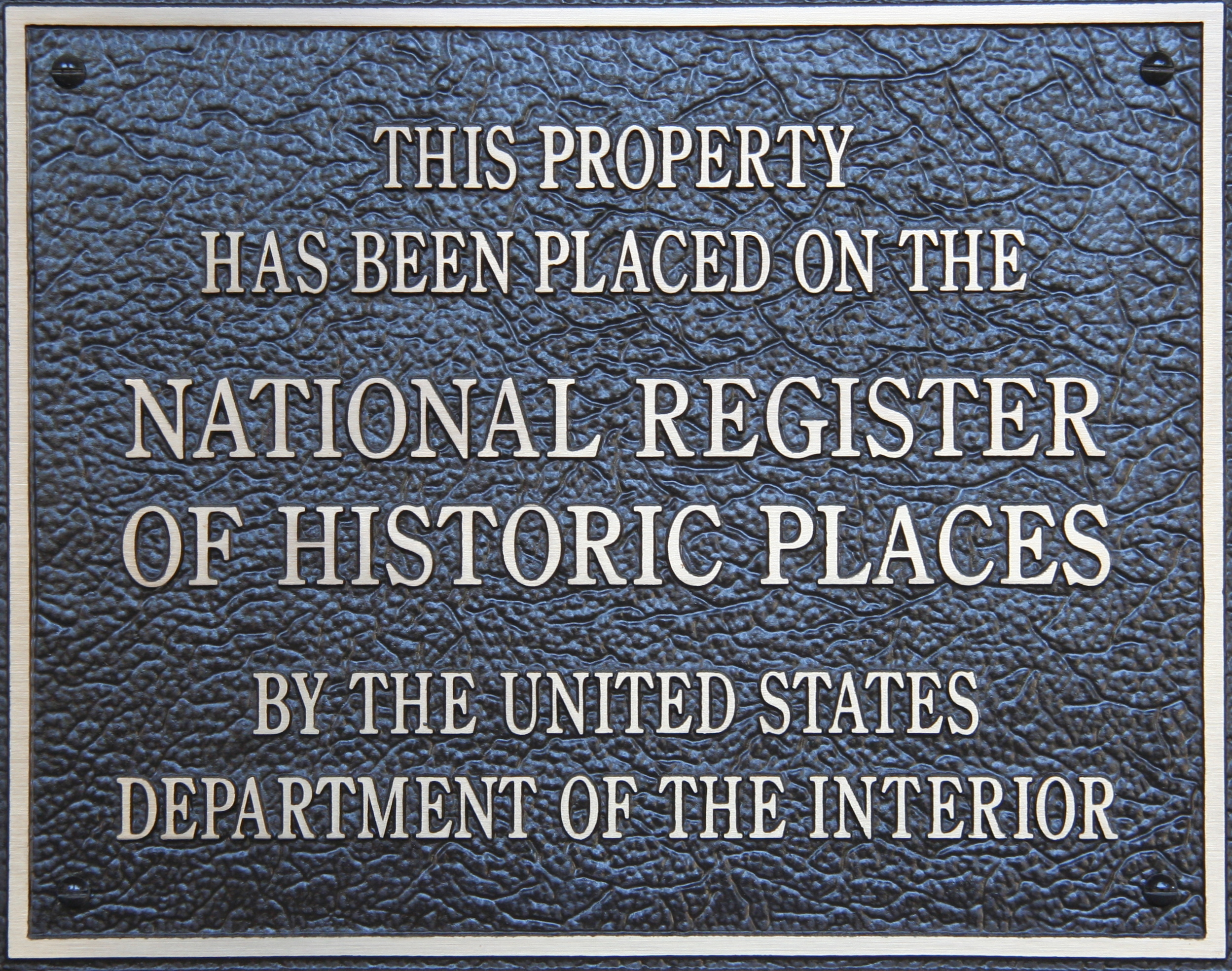
Today, Fort D. A. Russell exists as two intertwined historic sites. The Chinati Foundation draws art lovers from around the world to experience minimalist and contemporary art in the stark West Texas landscape. Meanwhile, the International Woman's Foundation operates Building 98, preserving the World War II German POW murals and running an artist-in-residency program. The foundation was responsible for placing Fort D. A. Russell on the National Register of Historic Places and has maintained the base museum since 2002, working to preserve the installation in near-original condition. From frontier cavalry post to POW camp to world-class art museum, the fort embodies an improbable American journey through the twentieth century.
From the Air
Fort D. A. Russell is located on the southwest edge of Marfa, Texas, at approximately 30.30°N, 104.03°W, at an elevation of about 4,850 feet MSL. The former military installation covers a substantial area visible from the air as a grid of low buildings spread across the desert terrain. Nearest airport: Marfa Municipal Airport (KMRF), approximately 3 nm northeast. The former Marfa Army Airfield, now closed, was located nearby. The Chinati Foundation buildings are distinguishable by their military-style architecture converted for art use. The Rio Grande lies approximately 60 miles to the south.