Fort De Soto Park: Five Islands, Five Centuries
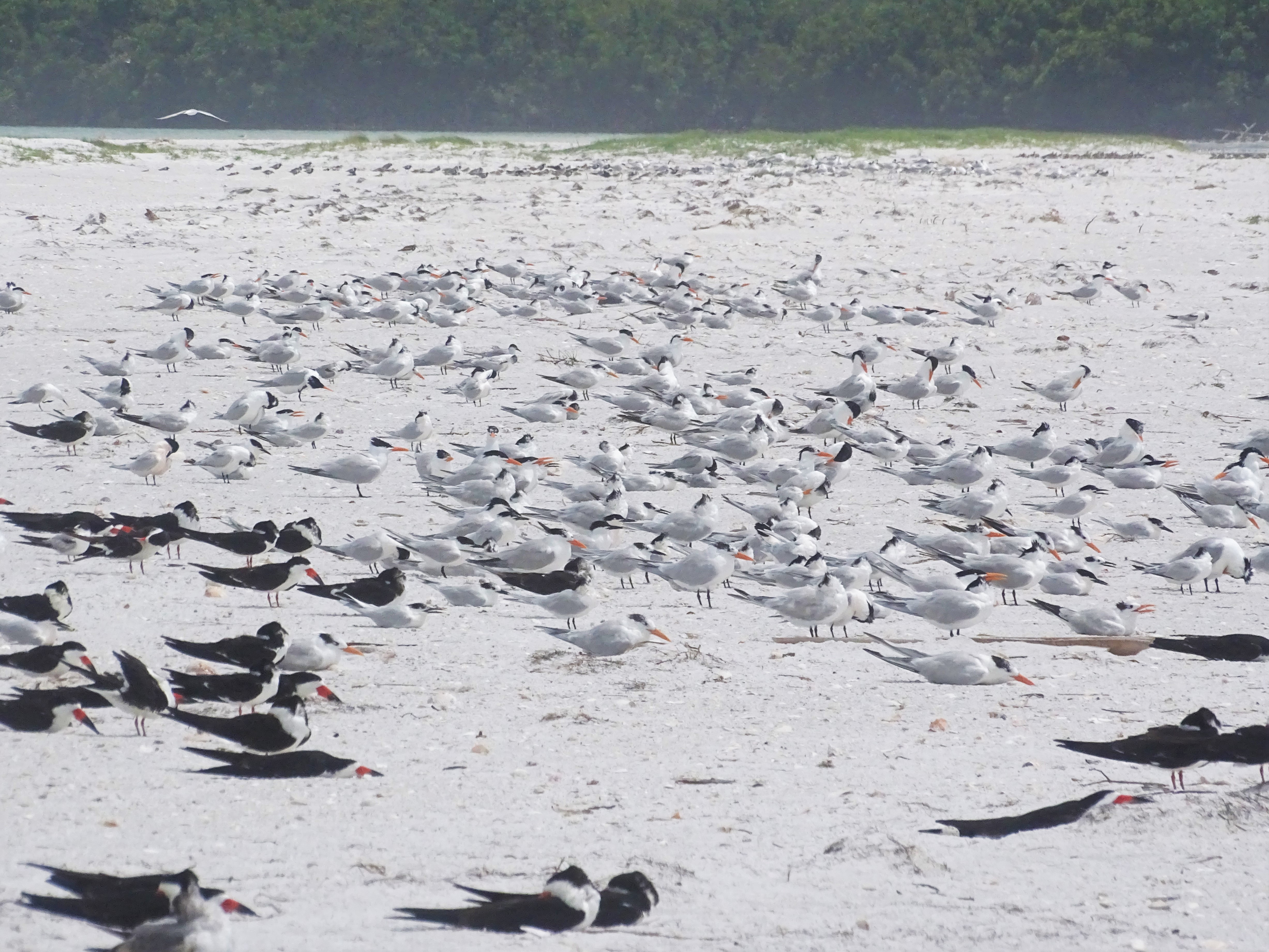
Percy Roberts was a plumber from St. Petersburg with a simple plan: lease an abandoned military island, run a passenger boat to it, and serve fried mullet dinners. In January 1939, Pinellas County granted him access to Mullet Key, the main island of what would become Fort De Soto Park. The Mullet Key Lodge thrived for exactly two years before the U.S. Army Air Corps took the island back as a World War II bombing range. That story captures something essential about this place: every time someone lays claim to these five barrier islands at the mouth of Tampa Bay, something larger intervenes. The Tocobaga harvested shellfish here for five centuries. Spanish conquistadors arrived. The military built forts, then abandoned them, then built them again. A county bought the land, lost it to the Army, and bought it back. Today 328 species of birds share the islands with over a million annual visitors, and the 12-inch mortars of Battery Laidley still point at a sky that never sent an enemy fleet.
Shells and Conquistadors
The Tocobaga lived on Mullet Key and the surrounding barrier islands from roughly 1000 to 1500 CE, harvesting fish, clams, conch, oysters, and whelks from the Gulf of Mexico, supplemented by game and gathered plants. In 1529, the Spanish explorer Panfilo de Narvaez investigated the barrier islands after his expedition landed between what is now St. Pete Beach and Clearwater. Ten years later, Hernando de Soto came ashore near the southern part of Tampa Bay, beginning the Spanish conquest of Florida. The islands that now bear his name sat at the crossroads of that conquest. After the Civil War, the Board of Engineers for Fortifications recommended maintaining the military reservation on Mullet Key. The island was surveyed in 1876, and the reservations of both Egmont Key and Mullet Key were made permanent by executive proclamation in 1882.
The Guns of Tampa Bay
Fortifications finally arrived with the Spanish-American War. Fort De Soto was built on Mullet Key and Fort Dade on neighboring Egmont Key, mounting a formidable array of coastal artillery. Battery Laidley held eight 12-inch mortars. Batteries Bigelow and others added 3-inch guns on masking pedestal mounts. The forts were designed to command the entrance to Tampa Bay's shipping channel. They never fired a shot in anger. By 1922, the Army announced deactivation. The harbor defenses were reduced to caretaker status by 1924. Tropical storms and hurricanes battered the buildings; Battery Bigelow was destroyed in a 1932 storm. The Army tried to sell the post but found no buyers. In September 1938, Pinellas County purchased Mullet Key for $12,500. The four 12-inch M1890 mortars and two 6-inch Armstrong guns that remain at Fort De Soto today are the only weapons of their type still standing in the United States.
The Mullet Key Lodge
Percy Roberts saw opportunity where the Army saw surplus. With financing from Charles R. Carter, president of the Bee Line Ferry Company, Roberts put the passenger boat Hobo into daily service from Pinellas Point. He converted a building left by the Quarantine Service into lodging: austere but functional, with bacon and eggs for breakfast, sandwiches at lunch, and family-style fried mullet for supper. A screened-in porch offered cold beverages and Gulf breezes. A cleared strip of land served as a runway for visitors who preferred to fly in. Columnist Rube Allyn of the St. Petersburg Times praised the venture, writing that the commissioners had done a fine thing opening up the vast uninhabited reaches of Mullet Key and the old fort to exploration parties. But by December 1940, the War Department wanted the island back for a bombing range. The government repurchased Mullet Key in June 1941 for $18,404, turning it into a sub-post of MacDill Field.
America's Best Beach
After the war, the renamed U.S. Army Air Forces sold Mullet Key and four adjacent islands back to Pinellas County for $26,495.54. The county designated the land a recreational area immediately. In 1962, the Pinellas Bayway toll road connected the islands to the mainland, and Fort De Soto Park opened on December 21. It was officially dedicated on May 11, 1963. The Quartermaster Storehouse Museum, a recreation of the 1900-1906 original, opened on November 11, 2000, built by park staff using historical photographs and Army engineering reports, with exhibits including recovered artifacts, a practice bomb, and an interactive display highlighting the mortars of Battery Laidley. North Beach has been named among America's Top 10 Beaches multiple times by Dr. Beach, and in 2005 it claimed the number one spot. The park offers seven miles of multi-purpose trails, two fishing piers, camping, kayak trails, and a ferry connection to Egmont Key State Park.
The Shifting Sand
Mullet Key is a barrier island with an unusual shape: two arms joined at a right angle, one facing the Gulf of Mexico and shaped by wave energy, the other facing the Tampa Bay entrance channel and shaped by tidal flow. The five islands of the park constantly change as waves, currents, and storms rework the sand. In the late 1970s, a shoal off the north end of Mullet Key emerged as a new barrier island called South Bunces Key, grew rapidly, became vegetated, and then attached to Mullet Key at both ends. By 2016, storms had erased it entirely. A new shoal called Outback Key has recently formed in a similar location and connected to the main island. Over 328 bird species have been documented here, including endangered loggerhead sea turtles that nest on the beaches. The park sits at a crossroads of geology, ecology, and history, its sand always moving, its story always adding another chapter.
From the Air
Located at 27.62°N, 82.74°W on five barrier islands at the mouth of Tampa Bay, south-southwest of St. Petersburg. From altitude, the distinctive right-angle shape of Mullet Key is clearly visible, with the Gulf arm running north-south and the channel arm running east-west. Fort De Soto's battery emplacements and the park's piers are identifiable at lower altitudes. The Sunshine Skyway Bridge spans Tampa Bay to the northeast. Egmont Key and its lighthouse are visible to the southwest across the shipping channel. Nearby airports include Albert Whitted Airport (KSPG) approximately 12 nm to the north-northeast, St. Pete-Clearwater International (KPIE) about 18 nm north, and Tampa International (KTPA) roughly 22 nm northeast. Active shipping traffic transits the channel between the islands.