Fort Douglas
The German sailors of the SMS Cormoran had sailed from Qingdao, China, in 1914. They stopped at Guam hoping for coal but found only detention. When America entered World War I in 1917, they became prisoners of war shipped to a place none could have imagined: a military fort three miles east of Salt Lake City, surrounded by mountains and desert, about as far from the sea as any spot on the continent. Some of those sailors died there and still rest in a special section of the Fort Douglas Cemetery, their graves marked among soldiers who fought wars these Germans never knew.
Connor's Watchpost
Colonel Patrick Connor established Camp Douglas on October 26, 1862, with Union volunteers from California and Nevada. The official mission was protecting the overland mail route and telegraph lines along the Central Overland Route. But Connor positioned his camp on a bench overlooking Salt Lake City for another reason: to keep watch over Brigham Young and the Mormon settlers. The federal government trusted neither the Saints nor their prophet during the uncertainties of the Civil War. Senator Stephen A. Douglas, who had famously debated Lincoln, lent his name to the outpost. Connor's men would soon march north to commit one of the worst massacres in Western history at Bear River, killing hundreds of Shoshone. A monument in the cemetery commemorates soldiers killed in that violence, though it says nothing of the Shoshone dead.
Rails and Regimental Colors
The fort's importance grew on May 10, 1869, when the Union Pacific and Central Pacific railroads joined at Promontory Summit, completing the Transcontinental Railroad. Fort Douglas suddenly sat along the main artery connecting East and West. Through the efforts of Utah Senator Thomas Kearns, the camp earned regimental status and the name Fort Douglas. At its peak, the post sprawled across 10,525 acres. The 38th Infantry called it home from 1922 until August 1940, when the world's gathering storm demanded their presence elsewhere.
Bombers Over the Benches
After Pearl Harbor, Fort Douglas transformed into an Army Air Field working alongside Salt Lake City Municipal Airport. The 7th Bombardment Group flew B-17 Flying Fortresses from here, their engines rumbling over the Wasatch Front. But fears of Japanese attack on the mainland soon pulled the Ninth Service Command Headquarters away to the Presidio of San Francisco, and Fort Douglas shifted to ground force operations. Between 1962 and 1973, the Deseret Test Center evaluated chemical and biological weapons in Buildings 103 and 105, though no tests occurred on the base itself. The Cold War brought its own strange missions to this Civil War outpost.
The Cemetery Endures
The cemetery predates the fort's permanent buildings, established in 1862 about a mile south of the parade grounds. In 1864, soldiers constructed a red sandstone wall around it with a steel gate at the north end. Utah Governor James D. Doty lies here, buried in 1865. German POWs from World War II rest in their own section. The National Cemetery Administration took over in 2019, though no new burials are permitted. Hurricane-force winds during the 2020 Utah windstorm knocked down large trees and damaged historic headstones, a reminder that even the dead need protection from the elements. The cemetery database maintained by the Utah History Research Center catalogs who rests in this ground.
From Garrison to Campus
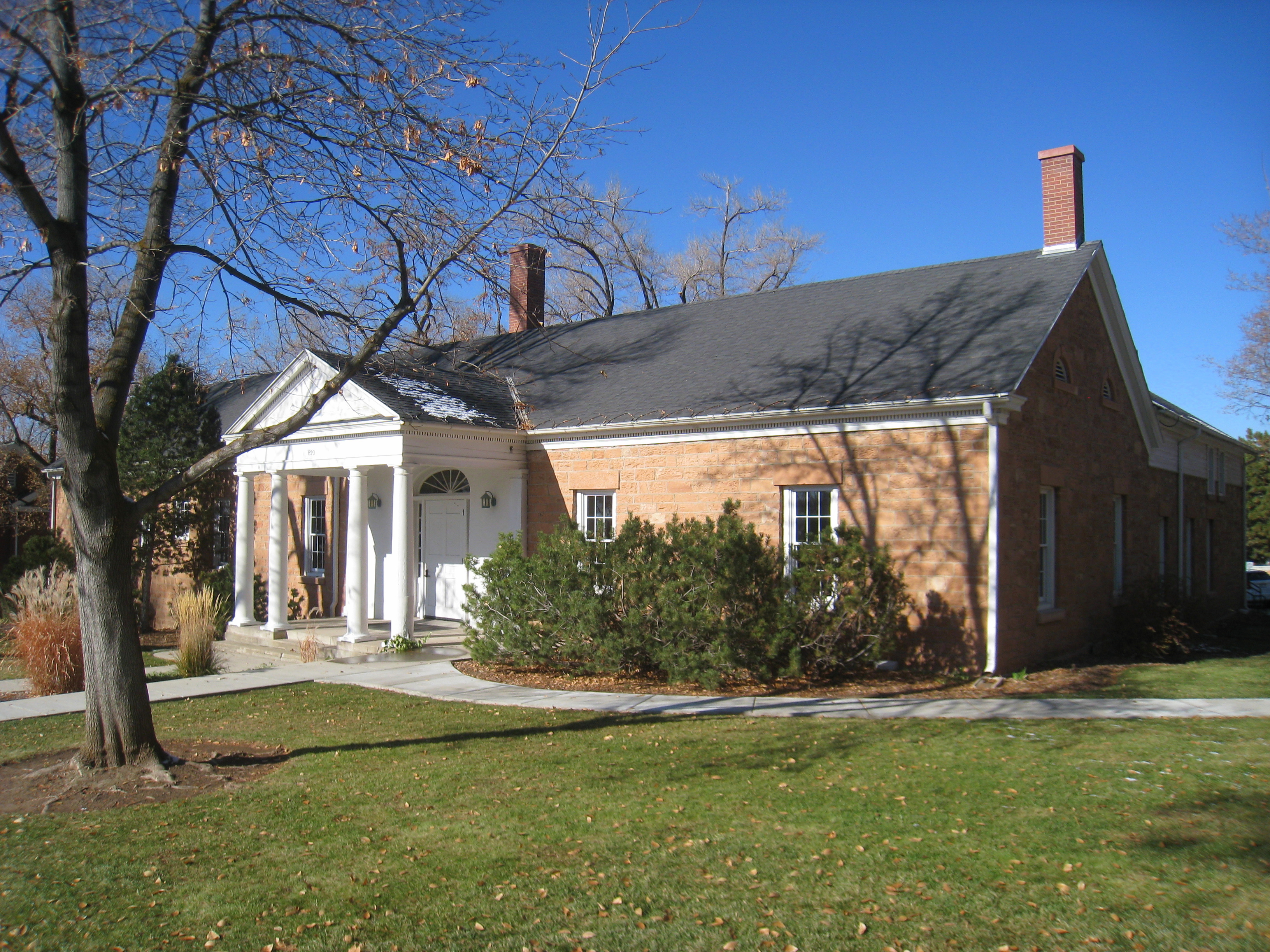
Fort Douglas officially closed on October 26, 1991, exactly 129 years after its founding. Most of the land transferred to the University of Utah, whose campus had grown up beside it. The Fort Douglas Military Museum now occupies two former barracks buildings, named for Major General Michael B. Kauffman, who founded the museum and spent much of his career here. A National Historic Landmark since 1975, the fort's surviving structures serve the university while preserving the architecture of frontier military life. The Stephen A. Douglas Armed Forces Reserve Center still operates on 51 acres, but groundbreaking for a new facility at Camp Williams occurred in August 2024. By 2026, those final acres will pass to the university, ending 164 years of military presence on this bench above Salt Lake City.
From the Air
Fort Douglas sits at 40.7653N, 111.8331W on the eastern bench of Salt Lake City, adjacent to the University of Utah campus. From altitude, identify it by the historic red-roofed buildings clustered near the university's Rice-Eccles Stadium. The cemetery lies about a mile south of the main fort area. Best viewed from 3,000-4,000 feet AGL. Nearest airport is Salt Lake City International (KSLC), 8 miles northwest. The Wasatch Range rises immediately to the east, with peaks exceeding 11,000 feet providing dramatic terrain.