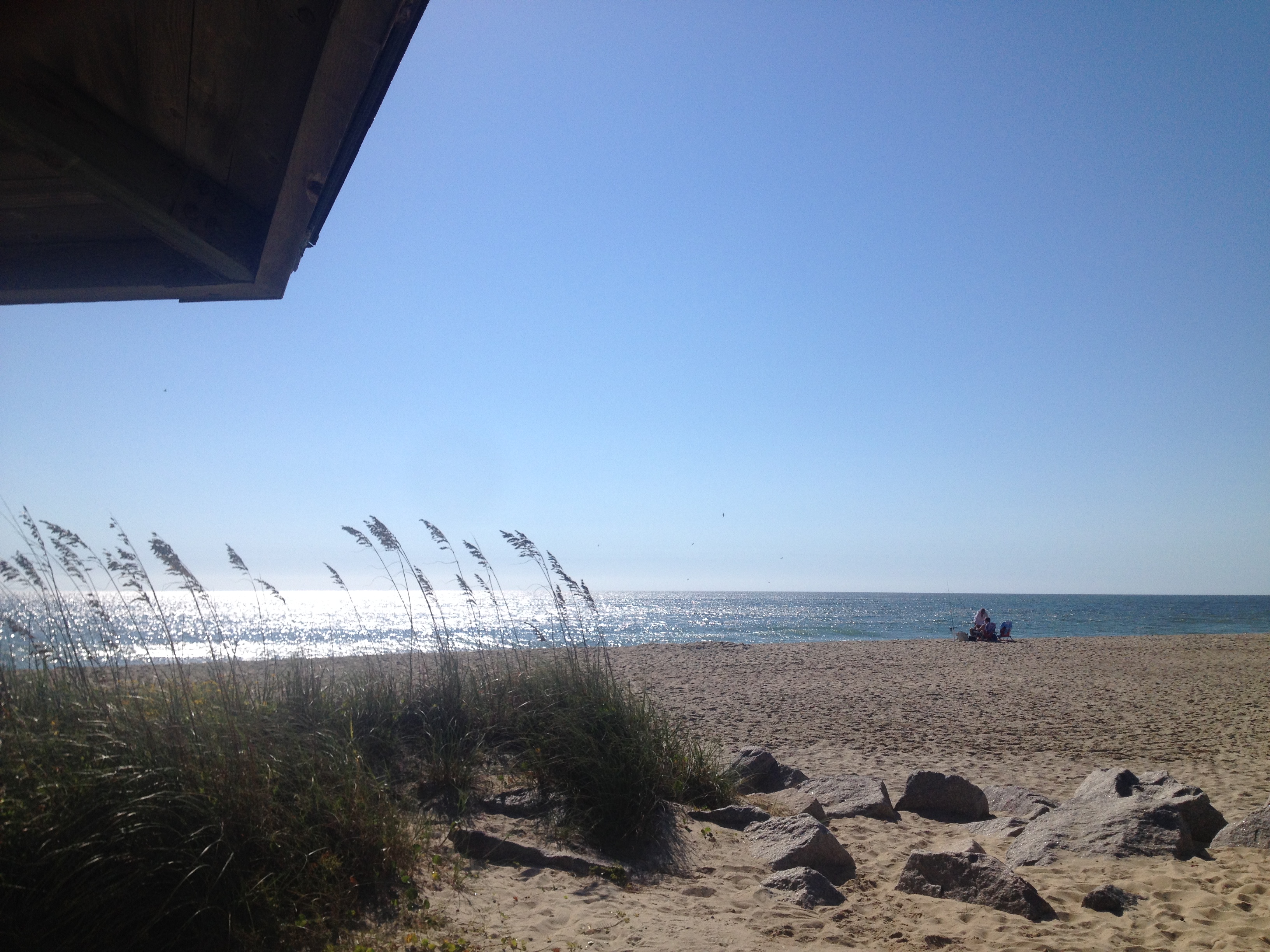
Fort Fisher
They called it the Southern Gibraltar, and also the Malakoff Tower of the South -- a compliment borrowed from the legendary Russian fortress at Sevastopol. But Fort Fisher was built not of stone but of North Carolina sand, and that was precisely its genius. While conventional masonry forts shattered under heavy bombardment, Fort Fisher's immense earthen walls simply absorbed the punishment. For nearly four years, this sprawling fortification at the mouth of the Cape Fear River kept Wilmington open as the Confederacy's last major Atlantic seaport, feeding Robert E. Lee's army through the tightest naval blockade in American history. Its fall in January 1865 was the most decisive battle of the Civil War fought in North Carolina.
A Lifeline Made of Cotton and Gunpowder
Wilmington's value to the Confederacy was simple arithmetic. Sitting twenty miles upstream from the Cape Fear River's mouth, its wharves traded cotton and tobacco for foreign munitions, clothing, and food -- the essentials that kept Southern armies in the field. British blockade runners, mostly fast steamers slipping through from Bermuda, the Bahamas, or Nova Scotia, made the dangerous run past Union patrol ships with regularity. After Norfolk fell in May 1862, Wilmington became the Confederacy's primary Atlantic port. The Cape Fear River offered a critical geographic advantage: it emptied into the ocean through two separate inlets, divided by Smith Island. Confederate pilots could guide incoming blockade runners to whichever inlet the Union navy was not watching, switching course at the last moment. Fort Fisher's heavy guns ensured that Union warships could never get close enough to the shoreline to intercept these runners effectively.
Colonel Lamb's Fortress of Sand
When Colonel William Lamb took command in July 1862, he found a crude collection of batteries hardly worthy of the name fort. What he built over the next two years would become the largest fortification in the Confederacy. The Land Face stretched inland from the shore, a line of fifteen massive sand mounds holding twenty-five heavy guns elevated thirty-two feet above sea level, connected by underground passages impervious to artillery. The Sea Face extended down the coastline, mounting twenty-two more guns behind thick earthen ramparts. Where the two faces met, the Northeast Bastion rose high above the surrounding terrain. The crown jewel was Mound Battery, constructed in the spring of 1863 using hundreds of laborers and a small locomotive to haul sand. A beacon at its summit guided blockade runners through the darkness. The workforce that raised these walls included Confederate soldiers, more than five hundred enslaved Black laborers from nearby plantations, and Lumbee people who were impressed into service on the fortifications.
Two Battles, One Outcome
Fort Fisher's defenses were tested twice in quick succession. In December 1864, Union Major General Benjamin Butler brought nearly sixty warships and thousands of troops for an amphibious assault. His scheme to detonate a powder-laden ship near the fort's walls failed spectacularly when the vessel exploded too far offshore. After two days of bombardment that fired close to 10,000 shells but caused minimal damage, Butler declared the fort impregnable and withdrew -- disobeying Grant's orders to lay siege. He was relieved of command within two weeks. Major General Alfred Terry replaced him for the second attempt in January 1865. This time, fifty-six ships pounded the fort continuously while 8,000 soldiers under Adelbert Ames landed to the north. On January 15, a combined assault of infantry, sailors, and Marines attacked from multiple directions. The fighting raged for six hours inside the fortification itself. General William Whiting, wounded during the battle, surrendered as Commander of the District of Cape Fear. He later died in prison on March 10, 1865.
The Morning After
The aftermath brought one final catastrophe. Shortly after sunrise on January 16, 1865, Fort Fisher's main magazine exploded in a tremendous blast that killed at least 200 men on both sides. Whether drunken Union soldiers celebrating their victory accidentally sparked the detonation or whether the cause lay elsewhere became the subject of a heated official Court of Inquiry. Whatever the cause, the devastation was absolute. With Fort Fisher gone, Wilmington's supply line to Lee's Army of Northern Virginia was severed. The Union occupied Wilmington definitively on February 22, 1865 -- barely two months before Lee's surrender at Appomattox. The fall of the Southern Gibraltar was a death knell the Confederacy could not survive.
Sand and Memory
Today, the sea is slowly reclaiming what soldiers once built. Erosion, the construction of US Route 421, and a World War II landing strip have consumed most of the original sand mounds. Fort Fisher was designated a National Historic Landmark in 1961, the first in North Carolina, and the site now operates as Fort Fisher State Historic Site with a museum, visitor center, and walking trails through the surviving earthworks. A restored 32-pound seacoast cannon stands at Shepherd's Battery and is fired on special occasions. The fort's original 150-pound Armstrong cannon -- once the pride of the Sea Face -- now sits on display at Trophy Point, West Point, New York, nearly 600 miles from the Carolina beach where it once held the Union navy at bay.
From the Air
Fort Fisher is located at 33.97N, 77.92W at the southern tip of Pleasure Island (formerly Confederate Point/Federal Point) where the Cape Fear River meets the Atlantic. The narrow peninsula is clearly visible from the air, with the river channel on the west side and open ocean to the east. Battery Buchanan sat at the very tip. Best viewed at 1,500-3,000 feet AGL for earthwork detail. Wilmington International Airport (KILM) is approximately 15 nm north. Cape Fear Regional Jetport (KSUT) in Southport is about 8 nm west across the river. The Fort Fisher-Southport ferry crossing is visible at low altitude.