Fort Gulick
The building that once held the School of the Americas now operates as the Hotel Melia, its corridors serving tourists instead of soldiers. The transformation is almost too neat a metaphor for Fort Gulick itself -- a U.S. Army installation on Gatun Lake that spent four decades at the center of Cold War strategy in Latin America, then changed hands, changed names, and tried to move on. Built in 1941 on the Atlantic side of the Panama Canal, the fort was named for Major General John W. Gulick, who served as Chief of Coast Artillery from 1930 to 1934 and commanded a brigade in Panama in 1935 and 1936. What grew on these grounds became one of the most debated legacies of American military engagement in the Western Hemisphere.
The School That Trained a Continent
Fort Gulick's most controversial tenant was the U.S. Army School of the Americas, an institution that trained thousands of Latin American military officers in counterinsurgency, military intelligence, and combat tactics. The stated mission was to counter communist influence across the hemisphere. The results were more complicated. Graduates of the school included figures who went on to commit severe human rights violations -- among them Argentine dictator Leopoldo Galtieri and Salvadoran death squad leader Roberto d'Aubuisson, both linked to the deaths or disappearances of thousands of civilians. Critics labeled it the "School of Dictators." Defenders argued the institution promoted stability in a volatile region. The school operated at Fort Gulick until 1984, when it relocated to Fort Benning in the United States, eventually rebranding as the Western Hemisphere Institute for Security Cooperation.
Special Forces on the Isthmus
Beyond the School of the Americas, Fort Gulick served as a key hub for U.S. Special Forces operations throughout Central and South America. The 8th Special Forces Group (Airborne) called the base home from 1962 until its inactivation, operating across the region during some of the Cold War's most intense years. The 3rd Battalion of the 7th Special Forces Group, headquartered at Fort Bragg but forward-deployed to Fort Gulick, carried out missions that ranged from advisory roles to direct action. One of the 8th SFG's most notable operations was training the Bolivian Ranger unit that pursued and ultimately captured Ernesto "Che" Guevara and his guerrillas. The 549th Military Police Company shared the installation as well, their barracks separated from the Special Forces buildings by a mere 20 meters -- close enough to hear reveille from the other side.
Treaties and Name Changes
The Torrijos-Carter Treaties of 1977 set the terms for America's gradual withdrawal from the Canal Zone. Fort Gulick was scheduled for transfer to Panama in August-September 1984. When the handover came, the 549th MP Company, the Provost Marshal's Office, and the 3rd Battalion of the 7th SFG packed up and moved to nearby Fort Davis. The Panamanians renamed the installation multiple times in quick succession -- at one point it bore the name of Manuel Antonio Noriega, the strongman who would later become an American adversary. It eventually settled on Fort Espinar, honoring Jose Domingo Espinar, a figure from Panama's independence movement. During the 1989 U.S. invasion of Panama, American forces briefly retook the base but kept its Panamanian name.
What Remains at Gatun Lake
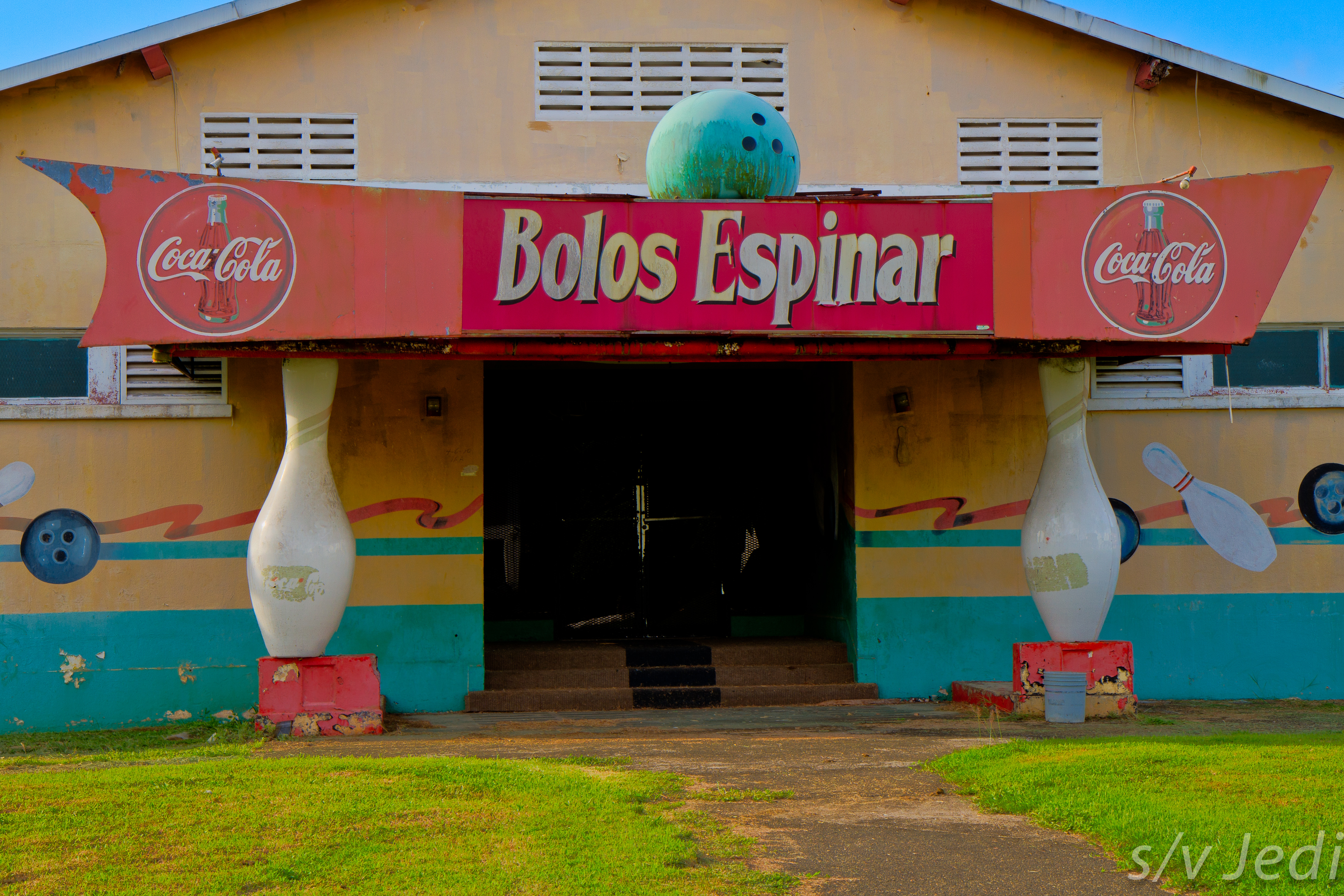
Today Fort Gulick's footprint belongs to the municipal district of Colon. The School of the Americas building has been converted into the Hotel Melia, and the barracks, dependent schools, and post office that once served American military families have either been repurposed or fallen into disrepair. Abandoned bowling alleys and overgrown parade grounds sit alongside the lake where Gatun Dam created one of the world's largest artificial bodies of water as part of the canal's construction. The fort's legacy is inseparable from the broader story of American military presence in Panama -- a presence that lasted nearly a century, shaped the politics of an entire continent, and left behind both infrastructure and deep unresolved questions about the cost of Cold War alliances.
From the Air
Fort Gulick sits at 9.317N, 79.867W on the eastern shore of Gatun Lake, near the Atlantic entrance to the Panama Canal. From 3,000-5,000 feet AGL, the former base's cleared areas and road grid are distinguishable against the surrounding tropical vegetation along the lakeshore. The nearby city of Colon is visible to the northeast. France Field/Enrique Adolfo Jimenez Airport (MPEJ) is the closest airfield, approximately 3 miles to the northeast. Marcos A. Gelabert International Airport (MPMG) in Panama City serves as a general aviation alternative. The area experiences tropical humidity with frequent afternoon convective activity year-round.