Fort Haldane
On Easter Sunday, 1760, an enslaved man known as Tacky led a small group from neighboring plantations to the gates of Fort Haldane. They killed the guards, seized barrels of gunpowder and firearms, and turned the colonial garrison's own weapons into instruments of rebellion. The fort had been built the previous year to keep people like Tacky under control. For one bloody morning, it served the opposite purpose. That reversal -- a fortress designed for oppression becoming a flashpoint for resistance -- is the central tension of Fort Haldane's story, though the fort also holds a quieter distinction as one of the most scientifically innovative military installations of its era.
The Pirate's Lookout
Long before anyone laid masonry on this hilltop near Port Maria in the parish of St. Mary, Sir Henry Morgan recognized what the land offered. The legendary privateer used the elevated position as an observation outpost, scanning the Caribbean horizon for ships and threats more than 150 years before the fort was built. Morgan's instinct proved durable. When Governor George Haldane ordered the fort's construction in 1759, the site's strategic advantage had not diminished: from this hill, the guns could sweep the entire harbor of Port Maria, commanding any vessel approaching the coast. Next door stood Firefly Estate, which Morgan had once called home and which would later belong to the playwright Noel Coward -- a progression from pirate to soldier to artist that mirrors Jamaica's own transformation.
Science at the Cannon's Mouth
Governor Haldane was no ordinary administrator. A decorated veteran of major European battles, he brought deep expertise in artillery and ballistics to the fort's design. He also brought a friend: Benjamin Robins, the English scientist whose work on the mathematics of projectile motion had transformed gunnery from guesswork into science. Robins determined that just two high-accuracy cannons, placed 1,000 feet above sea level, could defend the entire port. The solution was elegant and unprecedented. The cannon carriages were mounted on turntables -- miniature versions of the locomotive turntables that railroads would later use to reverse engines -- allowing the guns to pivot nearly 180 degrees across the horizon. A recoil track absorbed each firing. Two cannons replaced the need for an entire battery, providing coverage that a multi-gun arsenal could barely match.
Tacky's Easter Rebellion
The fort's most consequential moment came barely a year after its completion. Tacky, an enslaved man believed to have been a chief in his homeland in West Africa, organized an uprising that became one of Jamaica's bloodiest rebellions against slavery. After seizing Fort Haldane's weapons that Easter morning, Tacky and his followers were joined by hundreds of other enslaved people and Maroons -- descendants of earlier runaways who had built free communities in Jamaica's mountainous interior. The rebellion raged for five months across the parish. The colonial government eventually crushed the uprising; Tacky himself was killed in a fierce firefight. But the scale and duration of the revolt shook the plantation system to its foundations. Enslaved people had proven they could organize, fight, and sustain a military campaign -- using weapons taken from the very fort built to suppress them.
Wind and Ruin
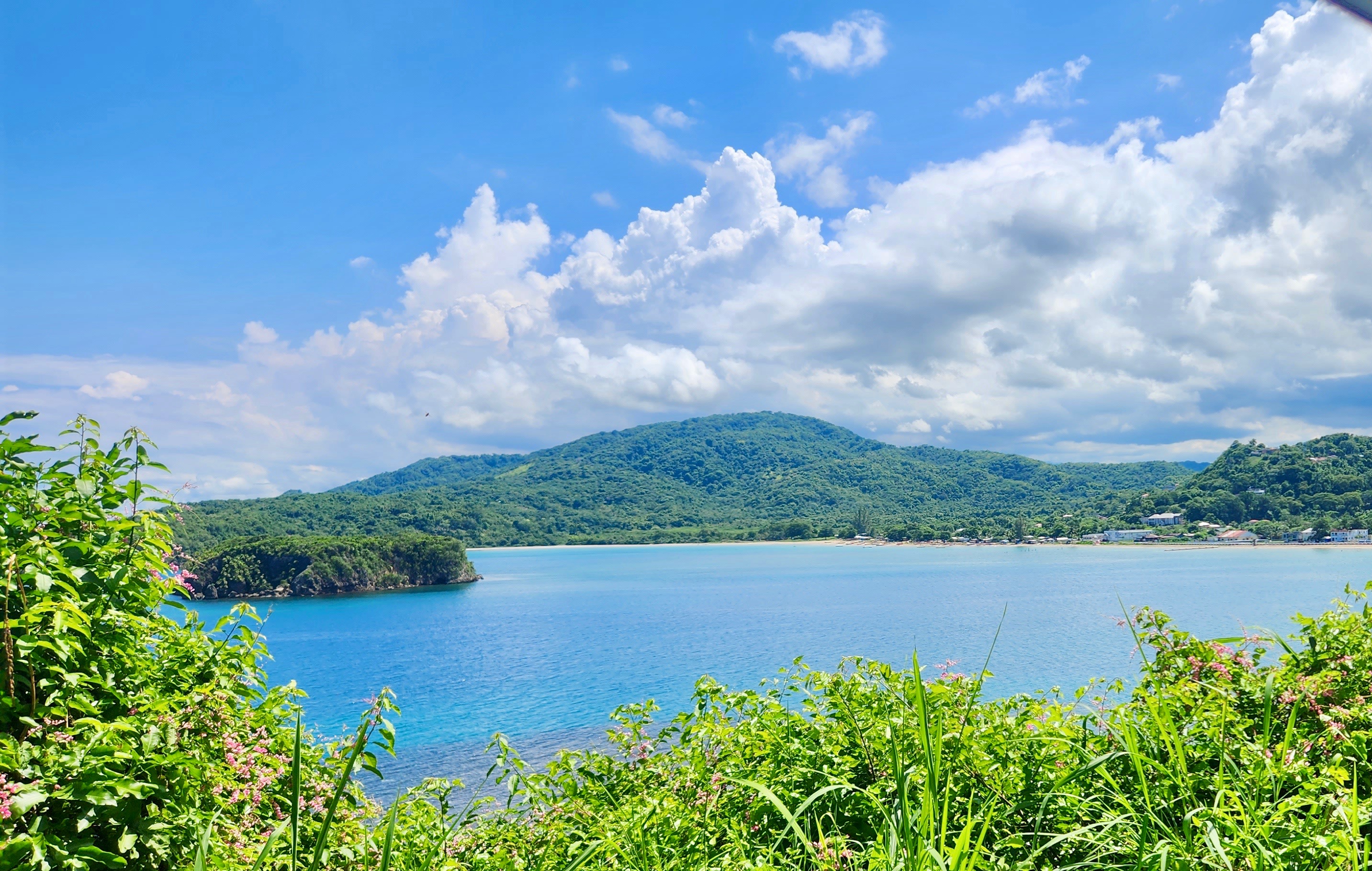
Fort Haldane served actively for just over two decades. In 1780, a hurricane tore through Jamaica's north coast, destroying the storerooms, barracks, and main garrison building. By then, the threat of Spanish attack on the north coast had largely subsided, and colonial authorities saw little reason to rebuild. The garrison relocated to Ocho Rios, and the fort was left to weather and vegetation. Today, two cannons and the ruins of several outbuildings are all that remain of Fort Haldane. The turntable mechanisms that once represented the cutting edge of military engineering have long since corroded. But the hilltop still commands the same sweeping view of Port Maria harbor that drew Henry Morgan centuries ago -- a vantage point that has outlasted every structure built upon it.
From the Air
Located at 18.38N, 76.90W overlooking Port Maria harbor on Jamaica's north coast in St. Mary Parish. Best viewed at 1,500-3,000 feet AGL. The hilltop fort ruins and remaining cannons sit adjacent to Firefly Estate (Noel Coward's former home). Port Maria harbor is visible below and to the north. The town of Oracabessa lies to the west along the coast. Nearest airport: Ian Fleming International Airport (MKBS) in Boscobel, approximately 10 miles west. Ocho Rios is roughly 20 miles further west along the coast. The forested hills of the interior rise sharply to the south.