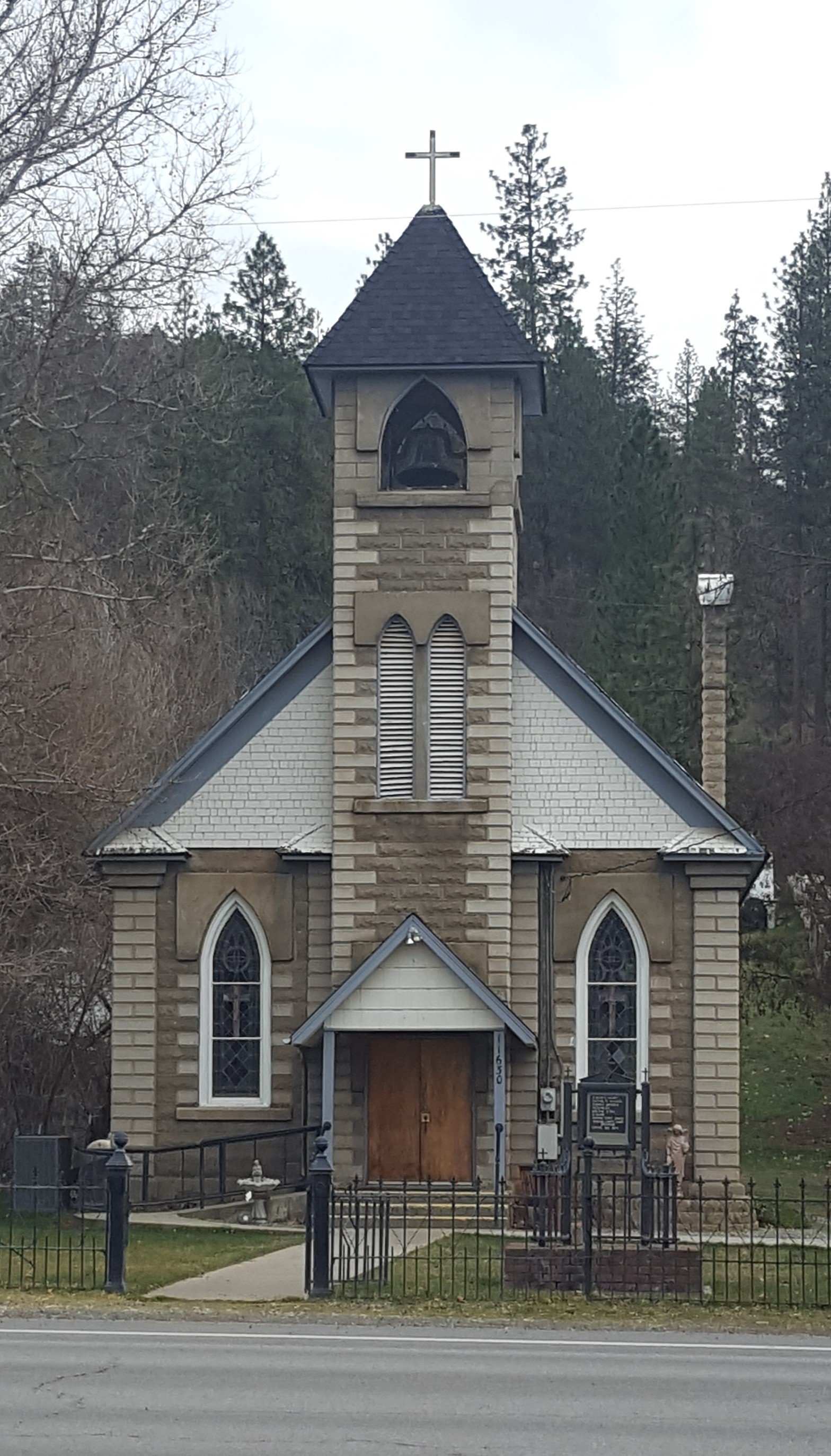
Fort Jones, California
The canary-yellow flowers appear each spring across Scott Valley, their beauty belying their troublesome nature. Locals call it Marlahan Mustard, named for an Irish immigrant family whose shipment of British hay seed carried an unwelcome stowaway: Dyer's Woad, a plant so tenacious that horses and cattle refuse to eat any hay contaminated by it. This botanical invasion, now over a century old, remains a scourge for ranchers, an unlikely monument to the immigrant dreams and mishaps that built Fort Jones, California.
A Fort for the Frontier
On October 18, 1852, Captain Edward H. Fitzgerald of the 1st U.S. Dragoons established a military post in the remote Scott Valley, naming it for Colonel Roger Jones, who had served as Adjutant General of the Army for nearly three decades. The fort was meant to protect the mining camps and stage routes that crisscrossed this wild corner of Northern California. Before the Army arrived, the town's earliest permanent building had already been constructed in 1851 by two entrepreneurs named Brown and Kelly. O.C. Wheelock and Captain John B. Pierce soon bought the structure and converted it into a trading post, bar, and brothel catering to soldiers stationed at the fort. The military post would eventually close, but the town that grew around it endured.
Gold and Immigrants
The California Gold Rush drew fortune seekers from around the world to the mines surrounding Scott Valley. Nearby camps like Hooperville and Deadwood thrived briefly before dwindling gold deposits, devastating fires, and epidemic illness drove miners away. Those who stayed often reinvented themselves as ranchers. Irish and Portuguese immigrants proved particularly tenacious, using their mining earnings to purchase land in the fertile valley. By the early twentieth century, Portuguese families had extensively settled the northern tributaries of the Scott River, along Moffitt and McAddams creeks. Their descendants still work these lands today, raising cattle in the shadow of Mount Shasta.
Frontier Justice
The frontier's dark side surfaced on December 14, 1894, when a Native American man named Billy Dean was lynched in nearby Happy Camp. Dean had been accused of shooting a co-worker near Grinder Creek nine days earlier. Constable Fred Dixon was escorting Dean to the Yreka jail for his protection when the pair stopped at a Happy Camp hotel for the night. At two in the morning, a dozen masked men stormed the room, disarmed the constable, and dragged Dean to a construction site where they hanged him from a derrick. His body remained suspended until 11 a.m. The local newspaper's headline read: 'He Is Now A Good Indian.' The brutal killing exemplified the lawlessness and racial violence that plagued the region for decades.
Literary Legacy
Fort Jones's most prolific resident never sought fame under his own name. Lauran Paine, born Lawrence Kerfman Duby Jr. in 1916, became one of the most productive authors in American literary history, writing over 1,000 books during his lifetime. Hundreds were Western novels published under a bewildering array of pseudonyms: Mark Carrel, Clay Allen, Clint Custer, Buck Standish, and dozens more. Paine made Fort Jones his home for decades, drawing inspiration from the landscapes and frontier history surrounding him. At least one of his stories became a Hollywood motion picture. He died in 2001, leaving behind a body of work that would take a devoted reader years to complete.
The Valley Today
Modern Fort Jones is a quiet town of fewer than 700 people, its population having declined in recent decades. The Mediterranean climate brings warm, dry summers to the Scott Valley, and ranching remains the economic backbone of the community. The town is registered as a California Historical Landmark, preserving its connection to the military outpost that gave it a name. The Fort Jones Museum maintains the area's history, telling stories of soldiers and miners, immigrants and ranchers. And each spring, when Marlahan Mustard blooms yellow across the valley, it reminds residents that the past is never entirely past, that seeds planted long ago continue to bear fruit, for better or worse.
From the Air
Located at 41.61N, 122.84W in California's Scott Valley within Siskiyou County. The town sits in a broad valley surrounded by mountains, with Mount Shasta visible to the east. Nearest airport is Montague-Yreka Rohrer Field (KROF) approximately 15nm northeast. Yreka, the county seat, lies about 20nm to the northeast. The Mediterranean climate provides generally good VFR conditions in summer months.