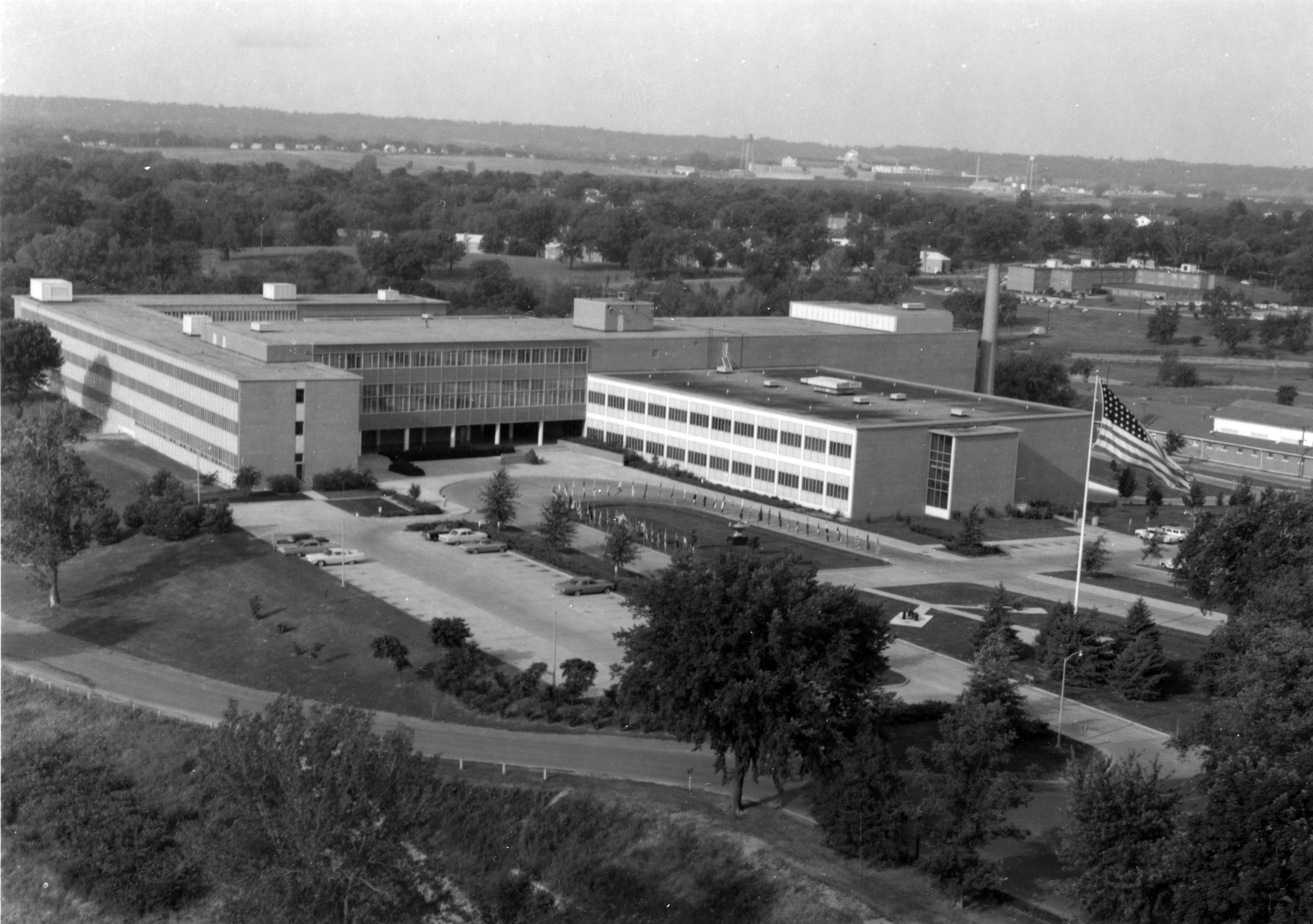
Fort Leavenworth
The Rookery still stands. Built between 1832 and 1834 as bachelor officer quarters, it is the oldest building in Kansas and once served as the first territorial capitol. Kansas Governor Andrew Reeder set up his executive offices inside it in 1854. That a building with such political significance doubles as a military relic tells you everything about Fort Leavenworth. Established in 1827 by Colonel Henry Leavenworth and 174 enlisted men of the 3rd Infantry Regiment, the post was conceived as a forward base to protect the Santa Fe Trail. It quickly became far more -- the eastern terminus for both the Santa Fe and Oregon Trails, a staging ground for the Mexican-American War, a birthplace of the Buffalo Soldiers, and, since 1881, the intellectual center of the United States Army.
Gateway to the West
Colonel Henry Leavenworth's orders were specific: ascend the Missouri River and find a site for a permanent cantonment near the mouth of the Little Platte River. He was supposed to build on the east bank, but the location was flood-prone. On May 8, 1827, he recommended a spot on the west bank, in the bluffs above the river. The cantonment's importance grew immediately. It became the jumping-off point for the Santa Fe Trail and the Oregon Trail, funneling thousands of soldiers, settlers, missionaries, and surveyors westward. After the Indian Removal Act of 1830, the fort's position west of the Missouri-Kansas border made it even more critical. In 1836, William Clark -- the same Clark of Lewis and Clark -- presided over the Platte Purchase at the fort, transferring Indian land across the river to the federal government. In 1839, Colonel Stephen W. Kearny assembled 20 companies of dragoons here, the largest U.S. mounted force ever gathered at that time. Throughout the Mexican-American War, Fort Leavenworth outfitted the Army of the West.
The Buffalo Soldiers Ride Out
On September 21, 1866, the 10th Cavalry Regiment was formed at Fort Leavenworth under the command of Colonel Benjamin Grierson. Congress had authorized four African-American regiments -- the 24th and 25th Infantry and the 9th and 10th Cavalry -- and Fort Leavenworth became the birthplace of a military legacy. Native American tribes nicknamed these soldiers 'Buffalo Soldiers,' a term eventually applied to all African-American regiments formed that year. Today, a statue of a mounted cavalryman stands at the fort in tribute to the 9th and 10th Cavalry. Just outside the post, the Richard Allen Cultural Center, housed in a former Buffalo Soldier's home, preserves their story. The fort also holds a darker chapter: in 1877, some 400 Nez Perce prisoners were shipped here after their capture in the Nez Perce War, held until being sent to Oklahoma in 1889.
Where Generals Learn Their Trade
In 1881, General William T. Sherman established the School of Application for Cavalry and Infantry at Fort Leavenworth. That school evolved into the United States Army Command and General Staff College, which has trained almost every Army major since. Every modern five-star general passed through these classrooms: George Marshall, Douglas MacArthur, Dwight Eisenhower, Henry 'Hap' Arnold, and Omar Bradley. The college's mission -- leader development, collective training, doctrine, and battle command -- earned the fort its enduring nickname as the 'Intellectual Center of the Army.' The campus also hosts the University of Foreign Military and Cultural Studies, which teaches Red Team methodology. Fort Leavenworth's National Cemetery, established by Abraham Lincoln on July 17, 1862, holds veterans dating to the War of 1812. Brigadier General Henry Leavenworth himself rests here, along with 10 Medal of Honor recipients and seven Confederate prisoners of war.
Behind the Walls
Fort Leavenworth houses the Military Corrections Complex, including the United States Disciplinary Barracks -- the Department of Defense's only maximum-security prison for military personnel of all branches. Established in 1875 under Lieutenant Colonel Edmund Rice, the prison has held some of the military's most notorious convicts. The first Protestant chapel on the fort, Memorial Chapel, was built by prison labor in 1878 from stone quarried on post. An inmate angry at his work boss intentionally installed the round window behind the front altar slightly askew -- a quiet act of rebellion preserved in stone for nearly 150 years. The chapel also features brass cannon embedded in its walls and photographs of officers from the fort's early history, including members of the Custer family. The Midwest Joint Regional Correctional Facility, a lower-security prison, operates alongside the Disciplinary Barracks.
Nearly Two Centuries of Continuous Service
The fort sprawls across 5,634 acres and contains a 213-acre National Historic Landmark District, established in 1974. Sherman Army Airfield serves the post, its runway shared with civilian aircraft under a joint agreement with the city of Leavenworth. The airfield has been flooded by Missouri River levee breaches three times -- in 1951, 1993, and 2011. Despite its long and eventful history, Fort Leavenworth has never been attacked by an enemy. In 1864, when Confederate General Sterling Price advanced through Missouri, earthworks called Fort Sully were hastily constructed on Hancock Hill. Price's forces never arrived, having been defeated at Westport near Kansas City. In 2006, the fort became part of Freedom's Frontier National Heritage Area. Two historic sites -- the Main Parade Ground and the Santa Fe Trail Ruts -- have been on the National Register of Historic Places since 1970. From fur traders and Oregon Trail emigrants to five-star generals and military prisoners, Fort Leavenworth has witnessed more of America's story than almost any other active military post.
From the Air
Located at 39.355°N, 94.921°W on the bluffs above the west bank of the Missouri River in Leavenworth County, Kansas. Sherman Army Airfield (KFNL) is on the post, with a shared-use runway accessible to civilian aircraft. Kansas City International (KMCI) is approximately 25 miles southeast. The fort's extensive grounds and parade fields are visible from moderate altitude, with the Missouri River bending along the eastern boundary. The Frontier Military Scenic Byway (US-69 and K-7 corridor) passes through. Best viewed from 3,000-5,000 feet where the fort's layout, the National Cemetery, and the distinctive river bluffs are clearly visible.