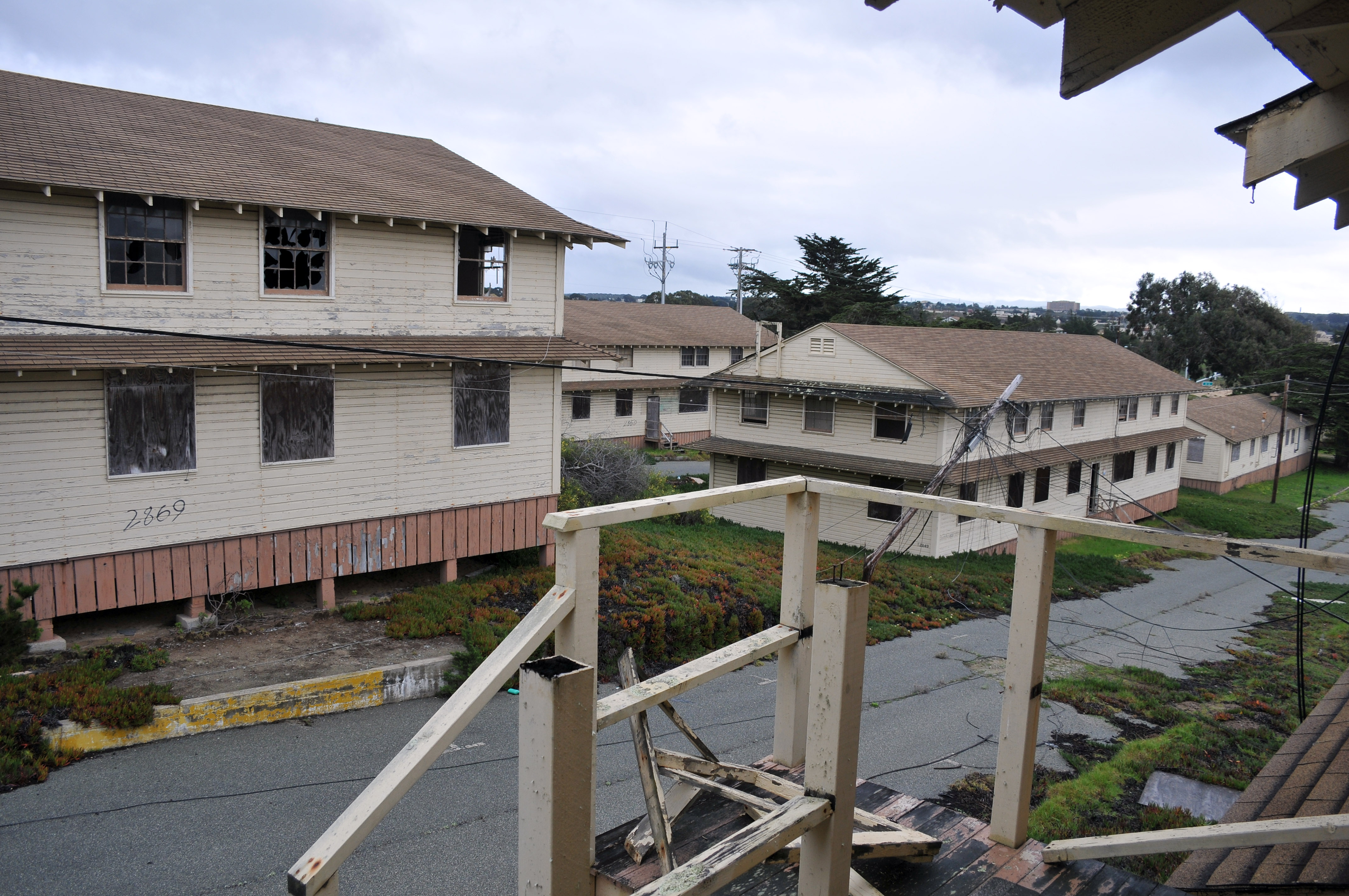
Fort Ord
In May 1961, a young soldier named James Marshall Hendrix arrived at Fort Ord for basic training, his guitar dreams temporarily shelved for military service. That same base had already shaped Jerry Garcia, the future Grateful Dead co-founder, and would soon process a young Clint Eastwood working as a swimming pool lifeguard. Fort Ord was never just another Army post. Perched on California's Monterey Bay with some of the best weather and most beautiful coastline of any military installation in the country, it became an unlikely crossroads where future icons passed through on their way to fame.
From Artillery Range to Infantry Factory
The land began its military life in 1917 as an artillery training field purchased by the War Department, known then as the Gigling Reservation. Horse cavalry units trained here through the 1930s until mechanization brought tanks and armored personnel carriers. By 1940, with war spreading across Europe, the 23-year-old camp expanded dramatically and was redesignated Fort Ord in honor of Union Army Major General Edward Otho Cresap Ord. The 7th Infantry Division arrived as the first major unit, and Pearl Harbor's shock on December 7, 1941, transformed the post into a massive training machine. At its Vietnam-era peak, Fort Ord held 50,000 troops preparing for deployment to Southeast Asia.
Hollywood on the Bay
Fort Ord's scenic beauty made it irresistible to filmmakers. David Niven starred in 1951's The Lady Says No here. Tab Hunter and Natalie Wood filmed The Girl He Left Behind in 1956. Jackie Gleason and Steve McQueen brought Soldier in the Rain to life on these grounds in 1963. But the real star-making happened in the barracks. Leonard Nimoy trained here before becoming Spock. Jamie Farr served before donning Klinger's dresses on M*A*S*H. The base's proximity to San Francisco and the emerging counterculture created an unlikely pipeline between military discipline and artistic rebellion.
The Magnificent Ruin
The Base Realignment and Closure Commission recommended shuttering Fort Ord in 1991, and the gates closed in 1994. What remained was extraordinary: thousands of acres of coastal land, abandoned barracks, crumbling infrastructure, and a unique ecosystem. The first nature reserve in America created specifically for an insect was established here to protect the endangered Smith's blue butterfly. California tiger salamanders and Contra Costa goldfields found sanctuary among the ruins. Stilwell Hall, a 52,000-square-foot soldiers' club built between 1940 and 1943, stood on a cliff above the Pacific until coastal erosion forced its demolition in 2003.
Second Acts
President Barack Obama signed a proclamation on April 20, 2012, establishing Fort Ord National Monument on 14,650 acres of former military land now managed by the Bureau of Land Management. California State University, Monterey Bay rose from the base's bones in 1994 as part of President Clinton's peace dividend initiative, enrolling over 6,700 students on former parade grounds. Fort Ord Dunes State Park opened in 2009, giving the public access to coastal bluffs once reserved for soldiers. The Veterans Transition Center continues serving those who served, while the historic Fort Ord Station Veterinary Hospital, built in 1941 for the 1,400 horses of the 76th Field Artillery Regiment, earned a place on the National Register of Historic Places in 2014.
Ghosts and Ordnance
Walking Fort Ord's trails today requires attention to warning signs. Decades of artillery practice left unexploded ordnance scattered across the landscape, and some areas remain fenced while cleanup continues. The Army's environmental restoration project works alongside the Fort Ord Reuse Authority to remediate contaminated soil and groundwater. Yet visitors hike, bike, and ride horses through over 80 miles of trails where the MythBusters once tested car stunts on abandoned streets. The Laguna Seca Raceway, carved from the post's eastern edge in 1957, hosts professional racing where soldiers once practiced maneuvers. Fort Ord endures as a place where military history, environmental restoration, and California's future continue to negotiate their boundaries.
From the Air
Located at 36.64N, 121.74W on Monterey Bay's eastern shore. The former base sprawls visibly across the coastal terrace, with California State University Monterey Bay campus, abandoned military structures, and the distinctive curves of Laguna Seca Raceway marking the landscape. Nearby airports include Monterey Regional (KMRY) and Marina Municipal (KOAR). Best viewed at lower altitudes approaching from the bay, where the contrast between developed areas and rewilding former military lands is striking.