Fort Polk
In the summer of 1941, half a million American soldiers divided themselves into two fictional countries -- Kotmk and Almat -- and went to war over navigation rights on the Mississippi River. The war was fake. The stakes were not. The Louisiana Maneuvers, staged across thousands of square miles of piney woods and bayou country, were the largest peacetime military exercises in American history, and Camp Polk sat at their heart. The lessons soldiers absorbed in the Louisiana heat -- about armor, mobility, and the terrifying promise of the tank destroyer -- would shape how the United States fought World War II. Eight decades later, Fort Polk is still teaching soldiers to fight wars that haven't started yet, though the name on the gate has changed three times since 2023.
Two Fake Countries and a Real Lesson
The 1941 Louisiana Maneuvers were born from a problem: the U.S. Army was still largely an infantry force with horse cavalry, and it needed to learn mechanized warfare before facing the Wehrmacht. Nineteen divisions and half a million troops spread across Louisiana in August and September 1941, playing out a scripted conflict between Kotmk (Kansas, Oklahoma, Texas, Missouri, Kentucky) and Almat (Arkansas, Louisiana, Mississippi, Alabama, Tennessee). The exercises tested a radical new doctrine stressing both mass and mobility. They also trialed the tank destroyer concept -- fast, aggressive guns held in reserve until enemy armor punched through friendly lines, then deployed at high speed to the flanks. Sixteen armored divisions were raised during World War II on the strength of what the Army learned in these piney woods. Thousands of wooden barracks sprang up at Camp Polk to house the trainees, and the installation became a permanent fixture of the Louisiana landscape.
Rommel's Men in the Cotton Fields
Camp Polk's strangest chapter began in July 1943, when the first German prisoners of war arrived -- men from Erwin Rommel's Afrika Korps, shipped across the Atlantic on otherwise empty troop transports. They were housed in a fenced compound on what is now Honor Field, the post's parade ground. The logic was simple: empty ships were sailing home anyway, escape from the American interior was nearly impossible, and guarding prisoners here was cheaper than maintaining camps in war-ravaged Europe. The POWs picked cotton, cut rice, harvested lumber, and sandbagged the raging Red River in the summer of 1944. Prisoners earned scrip for their labor, spending it on toothpaste and snacks at their own Post Exchange. As Bill Mauldin noted in his book Up Front, American GIs resented German POWs breathing stateside air while they fought through a devastated continent, but they understood the cold arithmetic.
The Road Through Tigerland
In 1962, Fort Polk converted to a basic training and advanced individual training center, and a dense, jungle-choked corner of the post earned a name that would haunt a generation: Tigerland. Louisiana's punishing heat, humidity, and rainfall were close enough to Southeast Asia's climate to serve as the final proving ground for infantry soldiers bound for Vietnam. For twelve years, more soldiers shipped to Vietnam from Fort Polk than from any other training base in America. Many never saw another stateside post -- they reported for basic training, stayed for infantry school at Tigerland, and flew straight to combat assignments. The training center closed in 1976, ending Fort Polk's Vietnam-era mission, but the name Tigerland endures in the memories of veterans who walked through those woods knowing where they were headed next.
A Name That Won't Stay Still
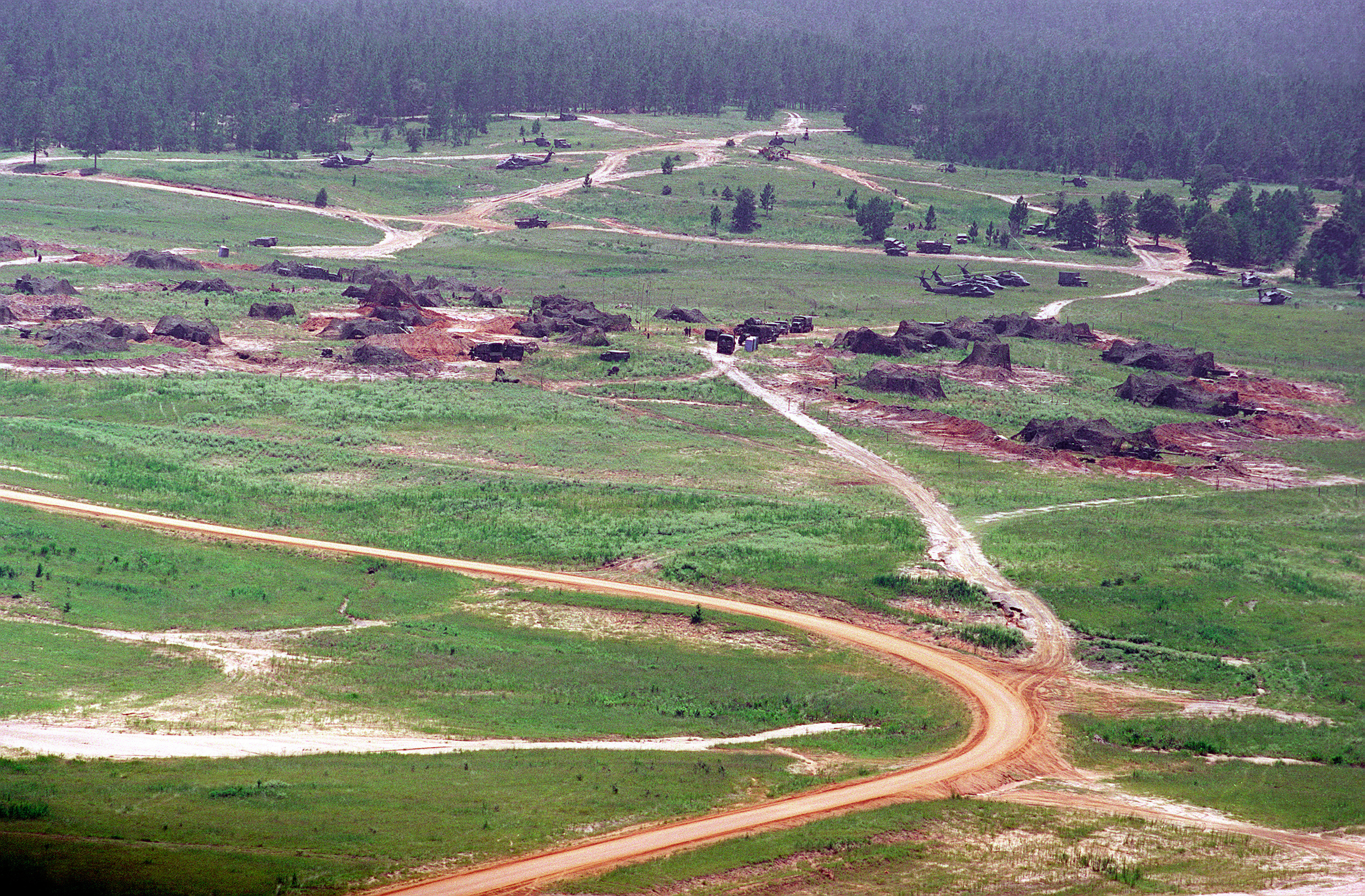
Fort Polk has cycled through identities faster than most bases cycle through commanding officers. Originally named for Confederate general and Episcopal bishop Leonidas Polk, the installation was redesignated Fort Johnson on June 13, 2023, honoring Sergeant William Henry Johnson of the Harlem Hellfighters -- a World War I hero who received the French Croix de Guerre and was posthumously awarded the Medal of Honor. The renaming came as part of a congressionally mandated effort to strip Confederate names from military installations. Then, on June 10, 2025, the Army announced it would revert the name to Fort Polk, this time honoring four-star General James H. Polk, a decorated officer whose career spanned from 1933 to 1971 and earned him the Silver Star, Bronze Star, and France's Legion of Honor. The redesignation took effect June 11, 2025. Today the post is home to the Joint Readiness Training Center, where brigade-sized units train in scenarios so realistic they include simulated insurgents, news media, and non-governmental organizations.
The Horses Nobody Expected
Amid the live-fire ranges and simulated villages, an estimated 700 to 750 feral horses roam the training lands on and around Fort Polk. Their presence is an open question the Army has been trying to resolve since it began removing them in 2017 -- a decision that drew protests from animal welfare groups and complicated an already delicate relationship between the post and surrounding communities. The horses share the landscape with the Kisatchie National Forest, whose lands the Army borrows for training, and with thousands of archaeological sites the service has spent years cataloguing. Fort Polk generates a $980 million annual payroll and supports the 3rd Brigade Combat Team of the 10th Mountain Division, the 1st Battalion of the 509th Infantry Regiment (which plays the enemy in training rotations), and the 115th Combat Support Hospital. It is a place where the past -- from POW camps to Vietnam-era jungles -- bleeds into a present still defined by preparation for the next conflict.
From the Air
Located at 31.07°N, 93.08°W in Vernon Parish, Louisiana. The installation covers a large area of piney woods east of Leesville, partially overlapping the Kisatchie National Forest. Look for cleared training areas, motor pools, and barracks complexes amid the dense forest. Nearest airports: KPOE (Polk Army Airfield, on-post), KAEX (Alexandria International Airport, 55 nm NE), KLCH (Lake Charles Regional Airport, 70 nm S). Note: active military airspace -- check NOTAMs before overflying. Best viewed from 4,000-6,000 ft AGL.