Fort Quitman
On the banks of the Rio Grande, hemmed in by mountain ranges on both sides, sits one of the most cursed military installations in American frontier history. Fort Quitman was established in 1858 to protect travelers on the San Antonio-El Paso Road, but it would spend most of its existence falling apart, getting abandoned, and being briefly reoccupied by soldiers who universally despised it. Adobe crumbled from the walls onto sleeping soldiers. Gardens failed in the alkaline soil. And in the end, it was not Apaches or Confederates who destroyed the fort, but an angry mob of Texans who burned it during a dispute over salt.
A Station on the Long Road
Fort Quitman was established on September 28, 1858, by units of the 8th Infantry Regiment under Captain Arthur T. Lee. The initial garrison of 86 officers and men had one primary mission: protect the San Antonio-El Paso Road, a vital artery connecting the settled parts of Texas to the far western frontier. The fort served as a station for the mail coaches of the San Antonio-San Diego Mail Line and later the famous Butterfield Overland Mail. Named for John A. Quitman, a former Mississippi governor who had served as a major general under Zachary Taylor during the Mexican-American War, the post represented American authority in one of the most remote corners of Texas. But its very remoteness would become its defining characteristic and its greatest curse.
The Civil War Comes West
By 1860, the garrison had been reduced to a skeleton crew: one officer, Second Lieutenant Zenas Bliss, and just 20 men. When Texas seceded and joined the Confederacy, Bliss and his soldiers were ordered to march to San Antonio with other federal troops evacuating West Texas. They expected to be shipped north. Instead, they were captured and held as prisoners of war. Bliss was eventually exchanged and rose to colonel of volunteers, though his time as a prisoner may have hindered his later career. Confederate forces under Brigadier General Henry Hopkins Sibley passed through Fort Quitman in December 1861 on their way to the disastrous New Mexico Campaign. The battered remnants of Sibley's army passed by again after their defeat, but no Confederate troops ever permanently garrisoned the crumbling post. Union troops from the California Column inspected the fort in 1863, found it worthless, and moved on.
Buffalo Soldiers in a Broken Fort
The Army returned to Fort Quitman in January 1868, this time sending Buffalo Soldiers of the 9th Cavalry Regiment and 42nd Infantry under Major Albert Payson Morrow. What they found was a disaster. Much of the post was in such poor condition that it was never fully restored. Soldiers complained that adobe from the walls fell into their bunks as they slept. One observer stated, 'No worse site for a military post could ever be conceived.' The fort was almost totally isolated from civilization, with mountain ranges running down both sides of the river. Attempts to cultivate gardens for supplemental food met with little success. Expeditions against Apache bands in the Sacramento Mountains were mounted from Fort Quitman, but they too achieved little. Gradually the garrison shrank to a single company of infantry.
Death by Fire and Railroad
The last regular unit, Company B of the 25th Infantry Regiment, departed Fort Quitman in January 1877. Later that year, an angry mob from San Elizario arrived and burned the post to the ground. The occasion was the San Elizario Salt War, a violent dispute over access to salt deposits that had previously been freely available to Mexican and Tejano communities. When federal authorities backed the Anglo faction claiming ownership of the salt lakes, the community rose in revolt. Fort Quitman, representing federal power, was destroyed in protest. The Army briefly reoccupied the site from 1880 to 1882 during Victorio's War, using it as a sub-post of Fort Davis. But by then, the Southern Pacific Railroad had been built through the mountain pass northwest of the post, effectively bypassing it. The railroad made the old road and its guardian fort obsolete. Today Fort Quitman is a ghost town, its adobe walls long since returned to the desert from which they came.
From the Air
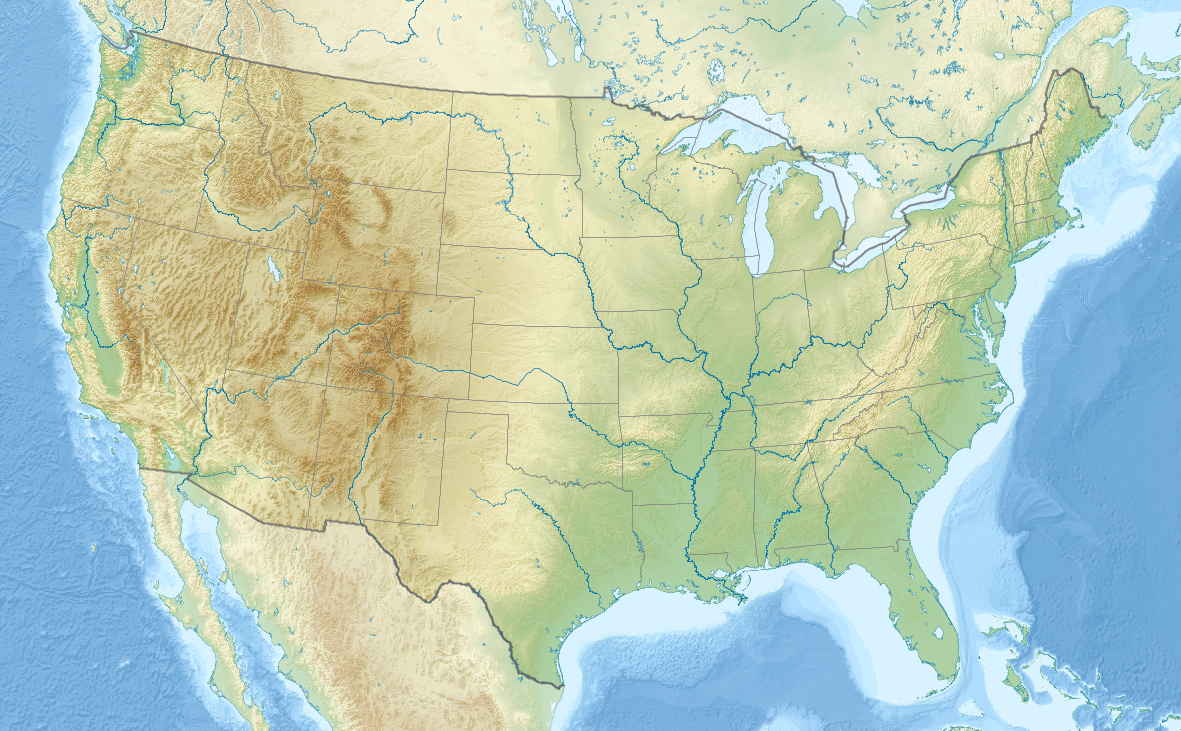
Fort Quitman's ruins lie at approximately 31.06N, 105.58W on the Rio Grande in southern Hudspeth County, Texas. The site is roughly 80 miles southeast of El Paso and about 8 miles south of present-day Sierra Blanca. From the air, the location is marked by the distinctive narrowing of the Rio Grande valley where mountain ranges press close on both sides, exactly the geographic curse that made the fort so miserable. The site is largely unmarked on modern maps, appearing as desert terrain near the river. Nearest significant airport is El Paso International (KELP), approximately 80 nm northwest. The isolation that defined the fort's existence is still apparent from altitude: this remains one of the most remote stretches of the Texas-Mexico border.