Fort Shaw
On July 4, 1885, soldiers from Fort Shaw rode into Great Falls for the town's first Independence Day celebration. By midnight, roaring drunk, they fired cannonballs down Central Avenue - the main street of the settlement they were ostensibly protecting. It was an appropriate summary of Fort Shaw's complicated relationship with the Montana frontier. Founded in 1867 and named for Colonel Robert Gould Shaw, the Civil War officer who commanded the all-black 54th Massachusetts Regiment, the fort served as a base for some of the most significant - and tragic - military campaigns of the Indian Wars. Its soldiers helped bury Custer's dead at Little Bighorn. They fought the Nez Perce at Big Hole. And after the Army left in 1891, the fort became an Indian boarding school where a team of Native American girls would earn the title of world basketball champions.
The Queen of Montana's Military Posts
Camp Reynolds, as it was first called, was established on June 30, 1867, by Major William Clinton and four companies of the 13th Infantry Regiment. The site on the Sun River, 24 miles west of present-day Great Falls, was chosen to guard the Mullan Road and protect mining settlements from Native American attacks. The post's name was changed to Fort Shaw on August 1, 1867, honoring the colonel who had died leading Black soldiers in the assault on Fort Wagner. The soldiers built their post around a square parade ground, constructing adobe-brick buildings that would be called 'the queen of Montana's military posts.' Life was hard - water had to be trenched from the river, fuel was scarce, and hay for horses had to be imported from the Missouri Valley. Disease was common. But mail came three times a week, and a telegraph connected the isolated garrison to the wider world.
Blood on the Marias
The land around Fort Shaw was a crucible of violence in the late 1860s. After two Piegan Blackfeet were murdered in broad daylight in Fort Benton in mid-1869 - one the brother of the leader Mountain Chief - a cycle of revenge killings left about 25 white settlers dead. General Philip Sheridan ordered a punitive expedition. On the morning of January 23, 1870, Major Eugene Baker, with cavalry from Fort Ellis and infantry from Fort Shaw, attacked a Piegan camp on the Marias River. But Baker struck the wrong band. Heavy Runner, a Piegan chief who had signed a peace agreement with the United States, ran from his tent waving his treaty document. He was shot dead. More than 173 Piegan Blackfeet died that morning, including 53 women and children. The Marias Massacre shocked even many frontier Americans.
From Little Bighorn to Big Hole
Colonel John Gibbon took command of Fort Shaw in 1870 and led its soldiers through the climactic battles of the Indian Wars. In 1876, Gibbon formed the 'Montana Column' for Sheridan's campaign against the Sioux and Northern Cheyenne. His 450-man force was supposed to rendezvous with Custer at the Little Bighorn. They arrived two days late, on June 27, to help bury the dead. The following year, Gibbon led Fort Shaw troops against the Nez Perce, who were fleeing toward Canada after refusing removal to a reservation. At the Battle of Big Hole on August 9-10, 1877, Gibbon attacked at dawn but his men were pinned down after Nez Perce sharpshooters killed 30 soldiers and captured his howitzer. The Nez Perce finally fled after losing 89 of their own, mostly women and children. Montana's last skirmishes with Native Americans came in 1878.
World Champions from a Boarding School
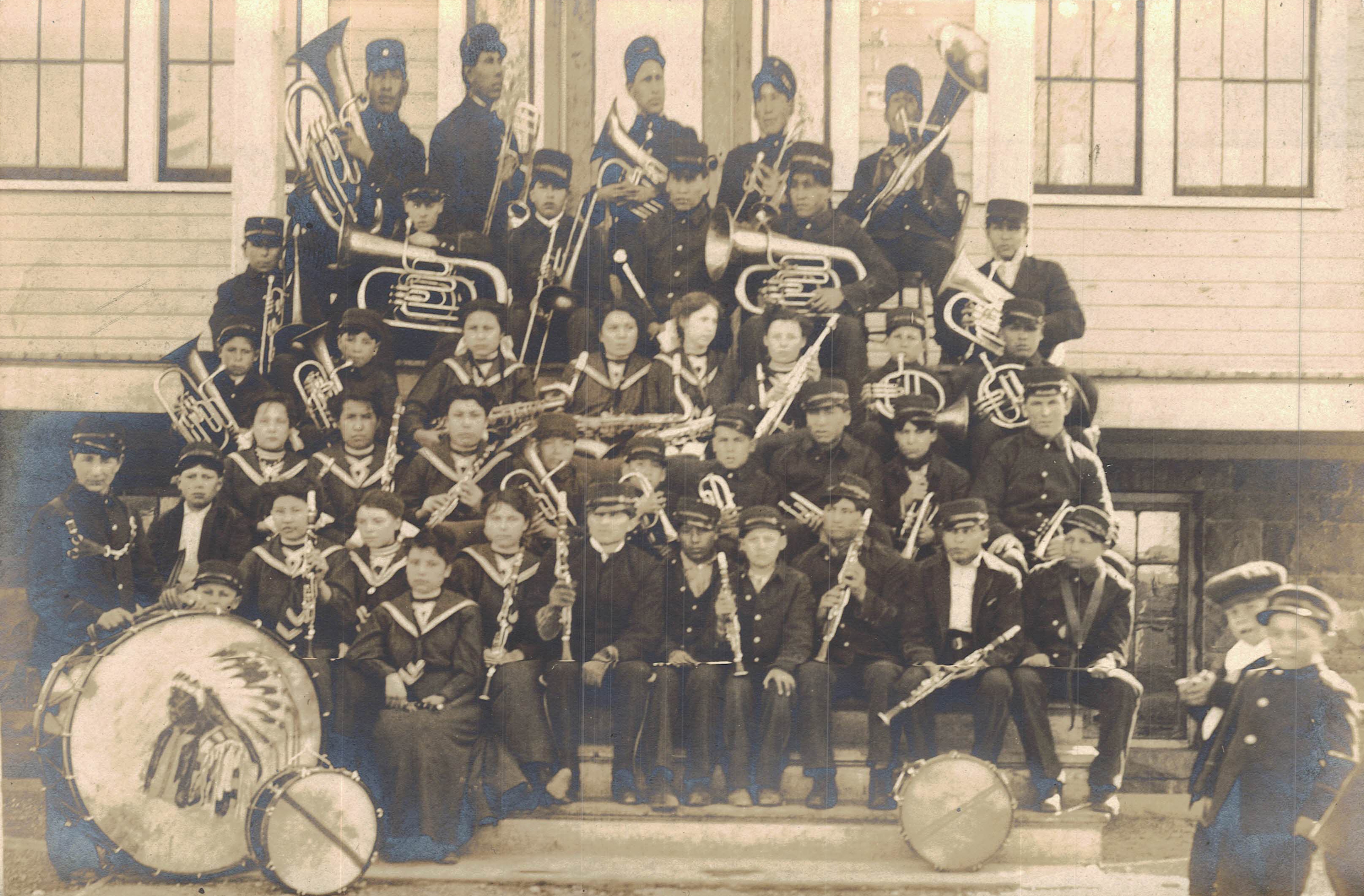
The Army abandoned Fort Shaw on July 1, 1891. The following year, the fort became the Fort Shaw Government Industrial Indian Boarding School. By 1898, it had 300 students from tribes across Montana, Idaho, Washington, and Wyoming. The curriculum was designed to strip away native culture and teach 'white' skills - girls learned to cook, sew, and make dairy products; boys learned farming, carpentry, and blacksmithing. But in 1902, superintendent Fred Campbell organized a girls' basketball team. The Fort Shaw girls defeated nearly every high school and college team in Montana - including several boys' teams. In 1904, Campbell sent his 11-player squad to the St. Louis World's Fair, where they lived at a Model Indian School and took on all challengers. They defeated every team they faced over five months, earning themselves the title of world champions. The school closed in 1910, but portions of the old fort survive today as a small museum run by the Sun River Valley Historical Society.
From the Air
Fort Shaw is located at 47.51°N, 111.82°W on the Sun River, 24 miles west of Great Falls, Montana. The historic site is visible from 2,000-3,000 feet AGL along the Sun River valley. Look for the remaining historic buildings and museum near the town of Fort Shaw. Great Falls International Airport (KGTF) lies 20nm to the east. The Sun River provides clear navigation reference running east to the Missouri. The fort is part of the Fort Shaw Historic District, added to the National Register of Historic Places in 1985. Shaw Butte rises prominently to the west of the fort site.