Fort Smith National Historic Site
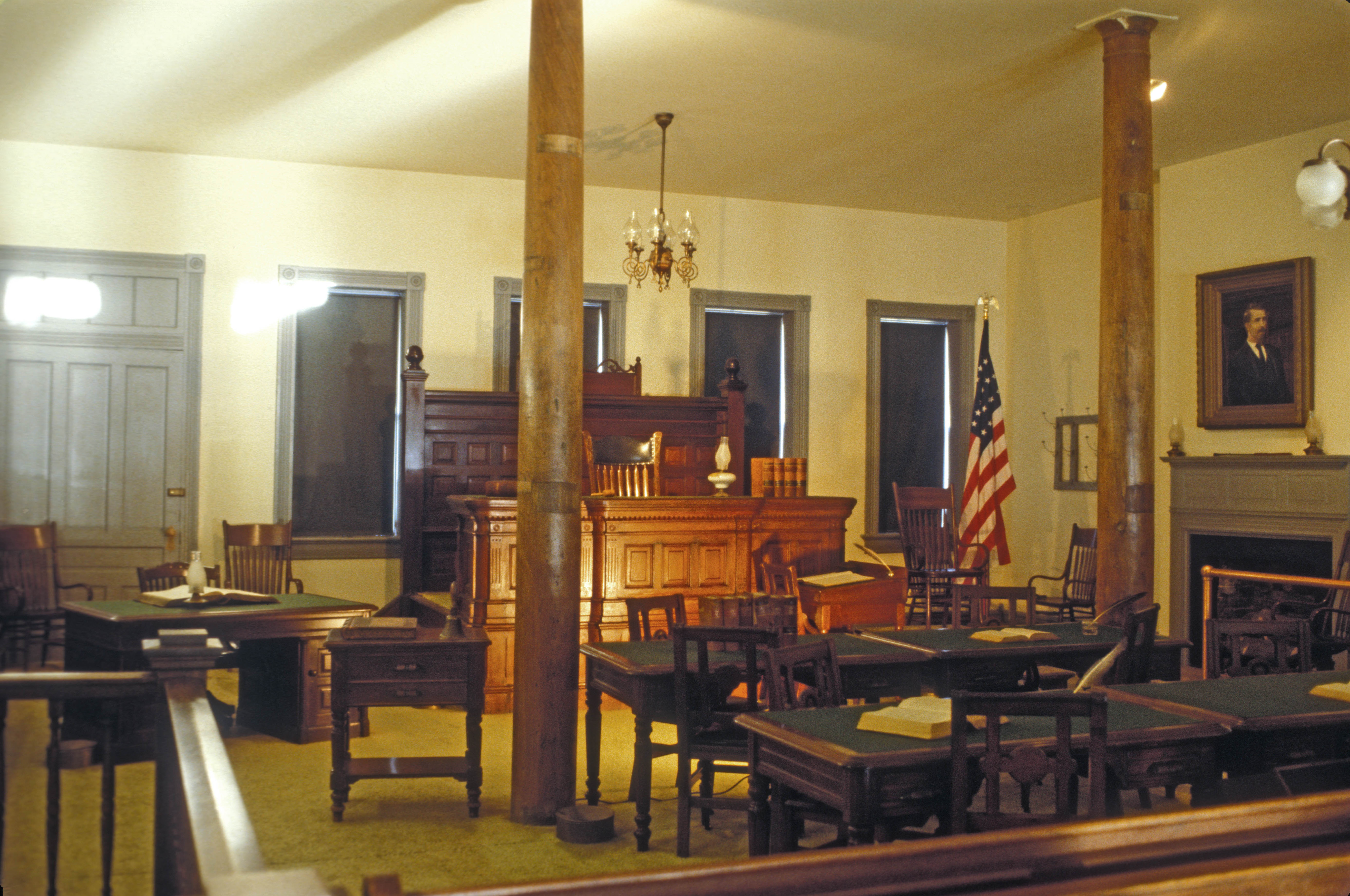
The 36-year-old judge opened court on May 10, 1875, barely a week after arriving in Fort Smith. He had been offered the position of chief justice for Utah Territory, but Isaac C. Parker saw something in the chaotic federal district on the Arkansas River that pulled him south instead. Over the next twenty-one years, his courtroom inside the old fort's barracks building would become the most feared seat of justice west of the Mississippi -- and the reconstructed gallows on the grounds would become one of America's most potent symbols of frontier law.
Christmas Day, 1817
The original fort was established on December 25, 1817, by Major William Bradford with a specific and urgent mission: to maintain peace between the local Osage Indians, who had long dominated the territory, and a band of Cherokee who had migrated west under pressure from European Americans. This "First Fort" period lasted until 1824, when the Army abandoned the site after constructing Fort Gibson farther west. But tensions only escalated after the Indian Removal Act of 1830 forced thousands of Cherokee, Choctaw, and other tribes along the Trail of Tears. Fort Smith was a major stop on that brutal journey, and the Army built a second fort in 1838 near the original ruins. Under General Zachary Taylor's command in the 1840s, the second fort became a supply depot for military posts throughout Indian Territory.
Parker's Iron Court
The fort's military life ended quietly in 1871, but its second act was anything but quiet. Federal court operations moved onto the old military reservation in late 1872 after a fire destroyed the Rogers building in downtown Fort Smith. The court had jurisdiction over all of Indian Territory -- a vast, lawless expanse where the only federal authority came from deputy marshals riding out of Fort Smith. When Isaac Parker took the bench in 1875, he inherited a district plagued by corruption: his predecessor Judge William Story had resigned under bribery charges, and U.S. Marshal Logan Roots had stepped down amid financial investigations. Parker brought order through relentless prosecution. His twenty years of iron-fisted justice cemented the legend of "Parker's Ironmen" and gave Fort Smith its unofficial nickname: Hell on the Border.
What the Grounds Hold
The National Historic Site, designated in 1961, preserves the layered history of this place. Visitors can see the foundation remains of the first fort from 1817, the commissary building dating to about 1838, and a reconstruction of the gallows used by the federal court. The old Barracks/Courthouse/Jail building now serves as the park visitor center, with exhibits on Fort Smith's military history, its role in westward expansion, Judge Parker and frontier justice, the U.S. Deputy Marshals and the outlaws they pursued, and the devastating impact of Indian Removal. A walking trail along the Arkansas River includes wayside exhibits on the Trail of Tears, connecting the story of forced migration to the physical landscape where it occurred.
The Border That Defined a Nation
Fort Smith sat precisely on the line between settled America and Indian Territory -- a border that was both geographic and moral. On one side, the institutions of federal law; on the other, a territory where those institutions barely reached. The site forces visitors to reckon with that duality: the same fort that processed thousands of displaced Native Americans along the Trail of Tears later became the headquarters for the judicial system that governed their new homeland. Congress authorized the acquisition of land across the river on the Oklahoma bank to preserve the historic viewshed, though the purchase has not yet been completed. The site remains a place where the stories of westward expansion, indigenous displacement, and frontier justice converge at a single bend in the Arkansas River.
From the Air
Located at 35.388N, 94.430W along the south bank of the Arkansas River in Fort Smith, Arkansas, right at the Oklahoma border. The site is visible from the air as a green space adjacent to downtown Fort Smith. Fort Smith Regional Airport (KFSM) is nearby. The Arkansas River and the state border provide prominent visual landmarks. Best viewed at 1,500-2,500 ft AGL.