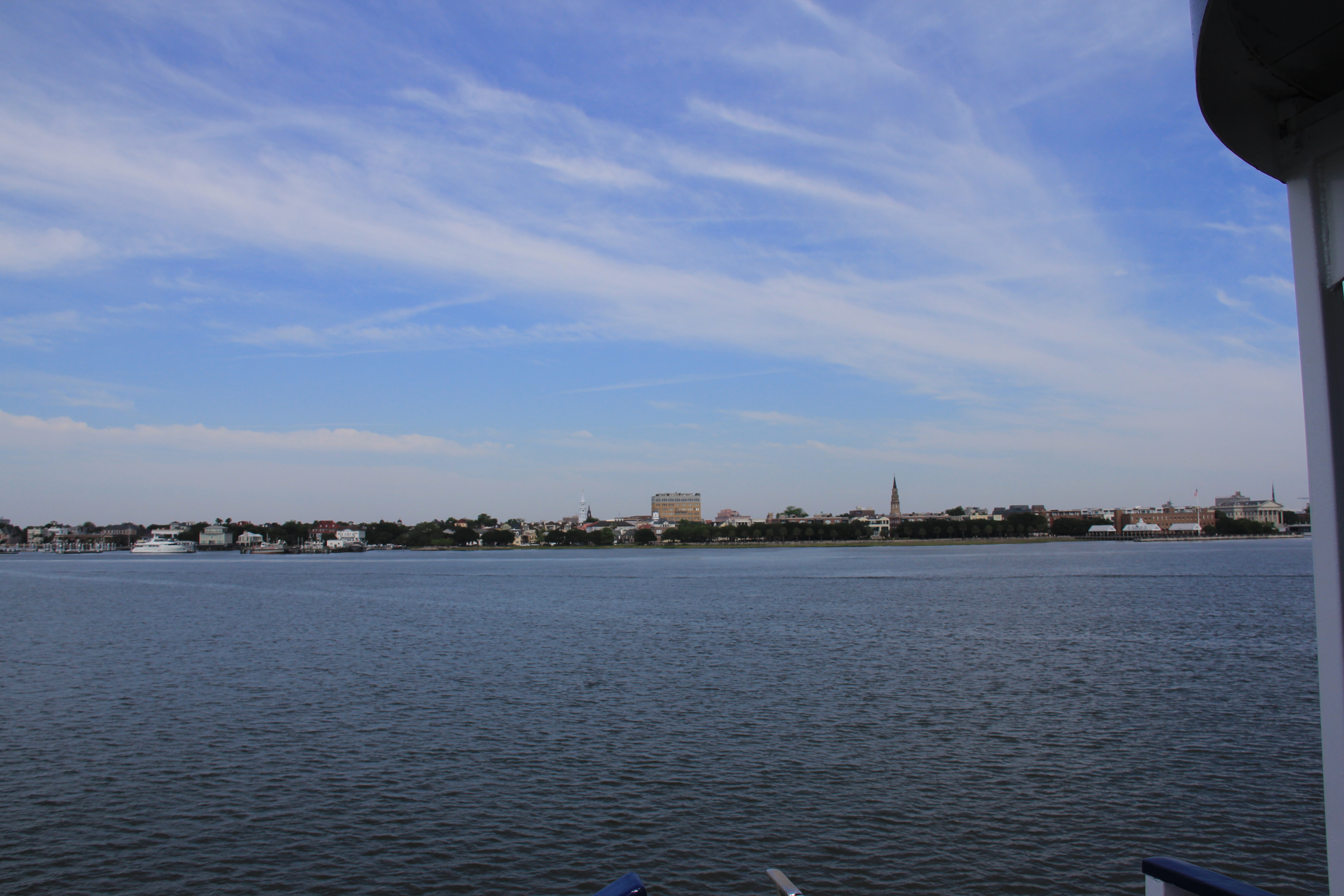
Fort Sumter
At 4:30 in the morning on April 12, 1861, Confederate batteries surrounding Charleston Harbor opened fire on Fort Sumter, a federal fortification on an artificial island at the harbor's mouth. Thirty-four hours later, the garrison surrendered. No one on either side had been killed by enemy fire - one Union soldier died during the surrender ceremony when a cannon exploded. Yet those first shots ignited a conflagration that would consume 620,000 American lives, destroy the institution of slavery, and transform the nation. Fort Sumter had become a symbol even before the shooting started. For months after South Carolina's secession, the question of whether to reinforce or abandon the small federal garrison had paralyzed both the outgoing Buchanan and incoming Lincoln administrations. When Lincoln sent supply ships rather than surrender the fort, Confederate President Jefferson Davis ordered the bombardment. The attack united the North as nothing else could. Fort Sumter, battered to rubble by subsequent bombardments, would remain in Confederate hands until nearly the war's end, when the same commander who had surrendered it returned to raise the flag again.
The Crisis
South Carolina seceded from the Union on December 20, 1860, six weeks after Lincoln's election. Major Robert Anderson, commanding U.S. forces in Charleston, faced an impossible situation. His main garrison at Fort Moultrie on the harbor's north shore was indefensible against land attack. On the night of December 26, Anderson secretly moved his men to Fort Sumter, a stronger position but still incomplete and undermanned. South Carolina demanded Sumter's surrender. President Buchanan, desperate to avoid war during his final months, refused both to reinforce Anderson and to evacuate him. An attempt to resupply the fort in January failed when the unarmed merchant ship Star of the West was driven off by shore batteries. For three months, Anderson's eighty-five men watched as Confederate forces erected batteries around the harbor, preparing for a bombardment the major knew his crumbling walls could not withstand.
Lincoln's Decision
President Lincoln inherited the crisis on March 4, 1861. Anderson had supplies for perhaps six weeks. Abandoning Sumter would signal acceptance of secession; reinforcing it militarily would mean starting a war. Lincoln chose a middle path: he would send supply ships carrying food and provisions, not troops or weapons. He notified South Carolina of his intentions, placing the burden of decision on the Confederacy. Jefferson Davis faced his own dilemma. Allowing resupply would make Confederate independence seem hollow. But opening fire would cast the South as the aggressor. Davis chose war. On April 11, Confederate General P.G.T. Beauregard demanded Anderson's surrender. Anderson refused but noted he would be starved out in a few days anyway. The Confederates would not wait. At 4:30 AM on April 12, the bombardment began.
The Bombardment
Edmund Ruffin, a sixty-seven-year-old Virginia secessionist, claimed to have fired the first shot. Forty-three guns and mortars pounded Sumter from positions around the harbor. Anderson's garrison, short of gunners and ammunition, returned fire sporadically. The officers' quarters caught fire; the men fought flames while shells exploded around them. Anderson refused Confederate offers to evacuate - he would hold out or surrender on his own terms. By April 13, with his ammunition nearly exhausted, his fort burning, and no relief in sight, Anderson agreed to surrender. The garrison marched out with colors flying and full military honors on April 14. As the men fired a fifty-gun salute to the flag, a cannon exploded, killing Private Daniel Hough - the first combat death of the Civil War, though technically the surrender ceremony had begun.
Symbol and Ruin
Fort Sumter remained in Confederate hands for nearly four years while Union forces besieged Charleston. The heaviest bombardment came in 1863, when Union artillery reduced the fort to rubble. Yet the garrison held on, sheltering in bombproofs while rebuilding walls from debris as fast as they were knocked down. The fort that had been 50 feet tall when the war began was barely visible above the water by 1865. Charleston itself fell not to assault but to Sherman's march through Georgia and the Carolinas. As Union forces approached overland, the Confederates evacuated on February 17, 1865. Two months later, on April 14 - exactly four years after the surrender - Major Anderson returned to Fort Sumter to raise the same flag he had lowered in 1861. That night, John Wilkes Booth shot Abraham Lincoln at Ford's Theatre. Anderson lived until 1871, his health broken by the strain of those months at Sumter.
Visiting Fort Sumter
Fort Sumter National Monument is accessible only by ferry from Liberty Square in downtown Charleston or Patriots Point in Mount Pleasant. The thirty-minute crossing provides views of Charleston Harbor's historic geography - Fort Moultrie, Castle Pinckney, and the city skyline. Rangers conduct tours explaining the fort's construction, the secession crisis, the bombardment, and the subsequent siege. The ruins preserve evidence of the massive bombardments: embedded shells, battered masonry, and the distinctive profile of a fortress reduced to a mound of rubble and rebuilt multiple times. A museum displays artifacts including the flag Anderson lowered in 1861. The fort's gun emplacements offer views across the harbor where it all began. Fort Moultrie, across the harbor on Sullivan's Island, provides complementary interpretation including exhibits on Charleston's role in the slave trade. Both sites are part of the national monument. Allow a full day to visit both forts. Ferries require advance reservations, especially in summer.
From the Air
Located at 32.75°N, 79.87°W on an artificial island at the mouth of Charleston Harbor, South Carolina. From altitude, Fort Sumter appears as a small pentagon-shaped fortification surrounded by water. The Charleston peninsula lies to the northwest with its distinctive church steeples. Fort Moultrie on Sullivan's Island is visible to the northeast. Charleston International Airport (CHS) is 12 miles northwest.