Fort Tiuna
Most military bases keep civilians out. Fort Tiuna keeps thousands of them in. Sprawling across the southern parishes of Caracas between the Valle-Coche Highway and the Regional Highway of the Center, this is not just Venezuela's principal military installation -- it is a small city unto itself, complete with housing blocks, sports facilities, financial offices, and a lagoon. The line between garrison and neighborhood blurs here in ways that reflect how deeply the military is woven into Venezuelan civic life.
A Garrison That Became a City
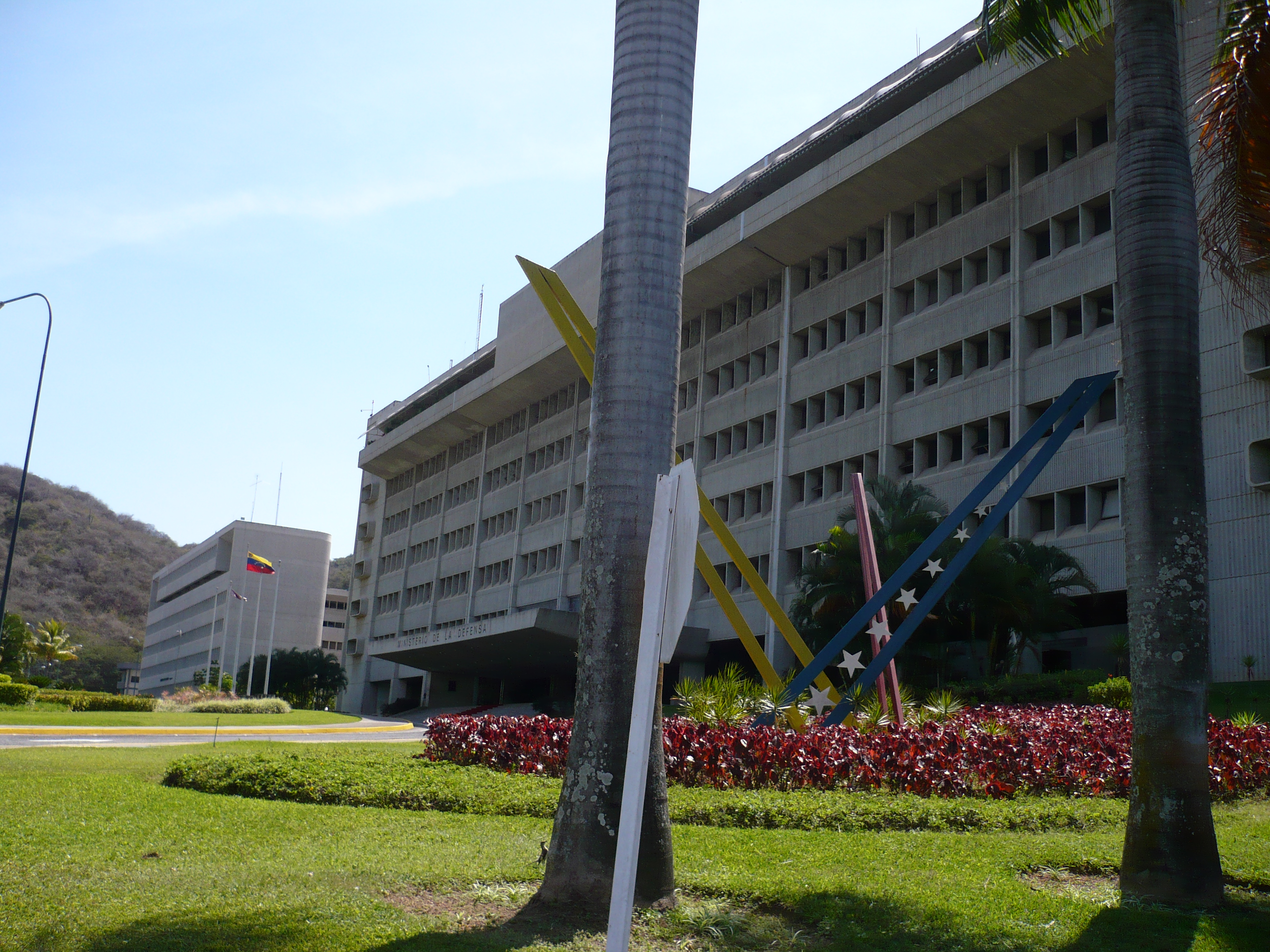
Formally known as the Military Complex of Fort Tiuna, the installation sprawls across land between the Coche and El Valle parishes in the Libertador Municipality, southwest of central Caracas. Within its perimeter sit institutions that define Venezuela's military apparatus: the headquarters of the Ministry of Popular Power for Defense, the General Command of the Army, the Escuela de Formacion de Oficiales de las Fuerzas Armadas de Cooperacion (EFOFAC), and units of the Venezuelan Military Academy. The Bolivar Battalion is garrisoned here, and El Libertador Shooting Range provides training grounds. But the base also contains the Caracas Military Circle -- a social club -- along with parks, sports complexes, and urban amenities that serve both military personnel and their families. La Vineta, the official residence of Venezuela's vice president, sits within the compound, placing the country's second-highest political office inside a military perimeter.
Tiuna City and the Residential Experiment
Perhaps the most unusual feature of Fort Tiuna is what happened to large portions of its land under the Bolivarian housing initiatives. The Tiuna City complex, built by the Ministry of Habitat and Housing, comprises thousands of residential units assigned primarily to military personnel and their families. The apartment blocks transformed sections of the base from parade grounds and barracks into something closer to a planned community, with schools, markets, and public spaces threaded between military structures. The result is a hybrid that defies easy categorization -- part fortress, part housing project, part government office park. Highways bracket the compound on two sides, and the entrances are gated and guarded, but behind those gates, daily life unfolds with a domesticity that sits in tension with the base's military identity. Families hang laundry on balconies overlooking parade grounds. Children walk to school past armored vehicle depots.
The Promenade of Heroes
Running through the complex is Paseo Los Proceres, a monumental promenade that honors the heroes of Venezuelan independence. The boulevard features statues, fountains, and ceremonial spaces that give the base a public, commemorative character unusual for a military installation. It serves as a site for state ceremonies and military parades, connecting the base's functional military purpose to Venezuela's national mythology. The promenade is one of the few areas within Fort Tiuna that has historically been accessible to the general public, drawing visitors who come for the monuments rather than the military. The contrast is deliberate -- the Bolivarian government has long sought to present the armed forces not as a separate caste but as an extension of the people, and the promenade's public accessibility reinforces that narrative. The lagoon at Fort Tiuna, visible in aerial views as a mirror of still water amid the surrounding concrete and greenery, adds an unexpected natural element to the landscape.
A Target in Changing Times
Fort Tiuna's prominence as Venezuela's central military nerve center has made it both symbolically and strategically significant. Every major political upheaval in recent Venezuelan history has involved the base in some capacity, whether as a staging ground for government authority or as a focus of political tension. In January 2026, Fort Tiuna was struck during the United States military intervention in Venezuela, alongside targets such as the Generalissimo Francisco de Miranda Air Base. The strike prompted an evacuation of the installation -- a dramatic moment for a complex where military operations and civilian life had become so deeply intertwined. The thousands of families living in Tiuna City's residential towers were forced to leave alongside soldiers. The event underscored a reality that the base's unusual hybrid character had always implied: when a military installation doubles as a neighborhood, the consequences of conflict reach far beyond the barracks.
From the Air
Located at 10.441N, 66.909W in southern Caracas, between the Coche and El Valle parishes. The complex is clearly visible from the air as a large, distinct zone south of the Caracas city center, bordered by the Valle-Coche Highway to the east and the Regional Highway of the Center to the south. Look for the long axis of Paseo Los Proceres cutting through the compound, the lagoon, and the dense residential blocks of Tiuna City. Simon Bolivar International Airport (SVMI) is approximately 25 km to the northwest. Generalissimo Francisco de Miranda Air Base (SVFM) is to the east of the city. The terrain is at roughly 900 meters elevation.