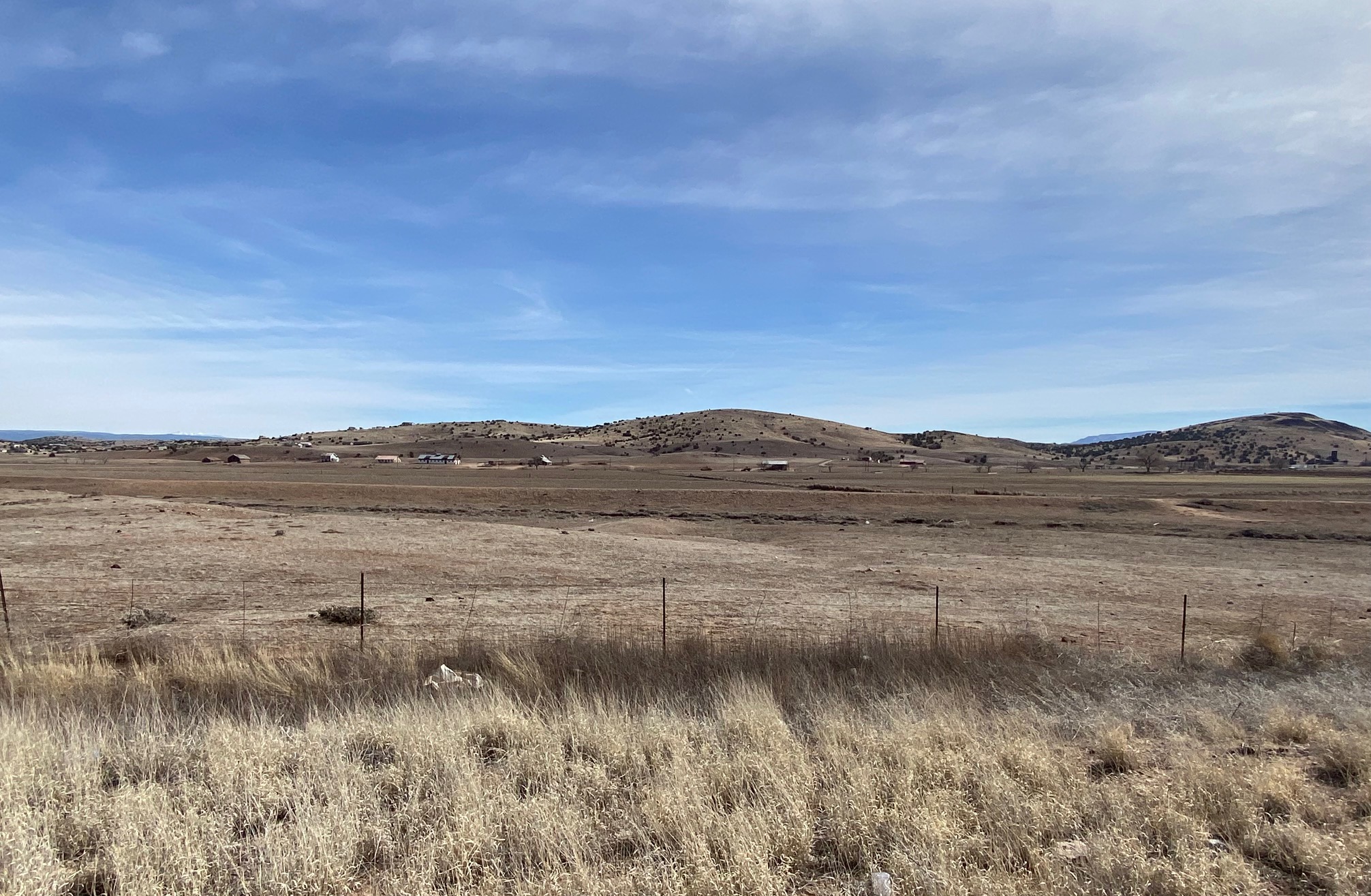
Fort Whipple, Arizona
Few places have reinvented themselves as thoroughly as Fort Whipple. Established in December 1863 as a cluster of tents and huts at Del Rio Springs, the post was named for Amiel Weeks Whipple, a topographical engineer who had surveyed the region a decade earlier and was mortally wounded at the Battle of Chancellorsville just months before. Within a year, the fort moved twenty-one miles south to higher ground near Granite Creek, and the town that grew beside it -- Prescott -- became the capital of Arizona Territory. Over the next 160 years, this single piece of ground would serve as frontier stockade, Indian Wars command center, Rough Rider mustering point, tuberculosis hospital, and veterans medical center.
A Capital Born from Pine Logs
Major Edward Banker Willis and Captain Nathaniel J. Pishon led Companies C and F of the First California Volunteers to Del Rio Springs on December 23, 1863, establishing the post under General Order #27 from General James Henry Carleton. The location was temporary from the start: no permanent buildings went up, just tents and huts. When the Governor's Party arrived on January 22, 1864, Governor John Noble Goodwin used the fort as his temporary headquarters while scouting for a permanent capital. By mid-May, Colonel Nelson H. Davis directed Willis to relocate the fort twenty-one miles south, near a miner's settlement on the east bank of Granite Creek. The new site offered higher ground, better access to lumber, and closer proximity to the miners and pioneers working the Bradshaw Mountains. The fort became a large rectangular pine-log stockade. Prescott, roughly a mile and a half west, was designated the permanent territorial capital. The town was named after historian William H. Prescott, at the suggestion of Secretary Richard Cunningham McCormick.
Frontier Command Post
From 1864 to 1886, Fort Whipple served as a tactical base for the American Indian Wars. It became headquarters of the Military Department of Arizona in 1870, and Colonel George Crook was assigned there to direct operations against Apache and Yavapai bands across central Arizona. Crook found the original stockade decrepit and had it razed between 1869 and 1872, overseeing new construction that continued until 1877. The fort's supply depot, Whipple Depot, burned in April 1872 and was rebuilt within three months. In 1878, the depot was renamed Prescott Barracks, and by 1879 the entire complex consolidated into Whipple Barracks. From May 1885 to July 1886, Colonel Benjamin Grierson and Troop B of the 10th Cavalry Regiment -- the Buffalo Soldiers -- were stationed at the fort. By 1895, the post was dilapidated and scheduled for deactivation.
Cowboys, Rough Riders, and a Trolley
War with Spain revived Whipple Barracks in April 1898. The Army reopened the post as a mustering point for Arizona volunteers. Two hundred men signed up and were called the Arizona Cowboy Regiment. They departed on May 4, 1898, for San Antonio, Texas, joining what became the 1st U.S. Volunteer Cavalry -- the Rough Riders -- and fought in Cuba. After the Spanish-American and Philippine-American Wars, the barracks reactivated in 1902 to house and treat returning troops. New construction between 1903 and 1908 brought modern barracks and quarters for roughly 500 soldiers. For six years, from 1905 to 1911, the Prescott and Mount Union Railway ran an electric trolley between downtown Prescott and the fort. When Arizona became a state in 1912, troops were reassigned elsewhere, and by 1913 Whipple Barracks was placed in caretaker status with a skeleton maintenance crew.
From Battlefield to Sanatorium
World War I gave Fort Whipple its most enduring identity. In 1918, the Army reactivated the barracks as U.S. Army General Hospital No. 20, designed to treat soldiers with respiratory illnesses, primarily tuberculosis. Prescott's dry, high-altitude climate made it ideal for TB treatment. In 1920, the U.S. Public Health Service took over operations, designating it Hospital No. 50. Executive Order 3669, signed on April 29, 1922, transferred the facility to the newly established U.S. Veterans Bureau, and it became one of the most complete tuberculosis sanatoriums in the country. In 1931, the property officially passed from the War Department to the new Veterans Administration. The main hospital building, Building 107, was constructed between 1938 and 1939 and opened to patients in October 1939. As tuberculosis declined, the VA re-designated the hospital for general medical and surgical care in 1959.
Still Serving
The fort's transformation continues into the present. Listed on the National Register of Historic Places in 1999 as the Fort Whipple/Department of Veterans Affairs Medical Center Historic District, the campus preserves buildings from the 1903-1908 construction era alongside modern medical facilities. In 2004, the complex was renamed the Bob Stump Department of Veterans Affairs Medical Center, after the Arizona congressman who chaired the House Armed Services Committee. Fort Whipple Museum, housed in a former officer's quarters painted light yellow and dark green, opened the same year, displaying medical instruments, Army weaponry, Buffalo Soldiers artifacts, maps, and photographs. A time capsule buried in 2005 near the main hospital building is scheduled to be opened in July 2030. In 2024, construction began on affordable housing for senior, homeless, and at-risk veterans on the campus grounds -- the latest chapter in a story that began with tents and huts in the Arizona wilderness.
From the Air
Fort Whipple is located at 34.555N, 112.453W on the eastern edge of Prescott, Arizona, at approximately 5,400 feet elevation. The campus is visible from the air as a cluster of historic and modern buildings adjacent to the town. The nearest airport is Prescott Regional Airport - Ernest A. Love Field (KPRC), approximately 5 nautical miles to the north. From 3,000 to 5,000 feet AGL, the Bradshaw Mountains rise to the south and the Granite Dells formation is visible to the north. The original Del Rio Springs site lies roughly 20 miles to the north near Chino Valley. Clear skies are common, though afternoon convective activity develops in summer months.