Fort Yellowstone
The world's first national park was dying. Fourteen years after Congress designated Yellowstone in 1872, the civilian superintendent lacked the resources and legal authority to stop the poaching, vandalism, and commercial exploitation that threatened to destroy everything worth protecting. Railroad interests, mining companies, and concessionaires circled like vultures. In August 1886, General Philip Sheridan dispatched Company M of the 1st U.S. Cavalry to Mammoth Hot Springs with a simple mission: save the park. The soldiers who rode in that day established policies that would define American conservation for generations to come.
From Canvas to Stone
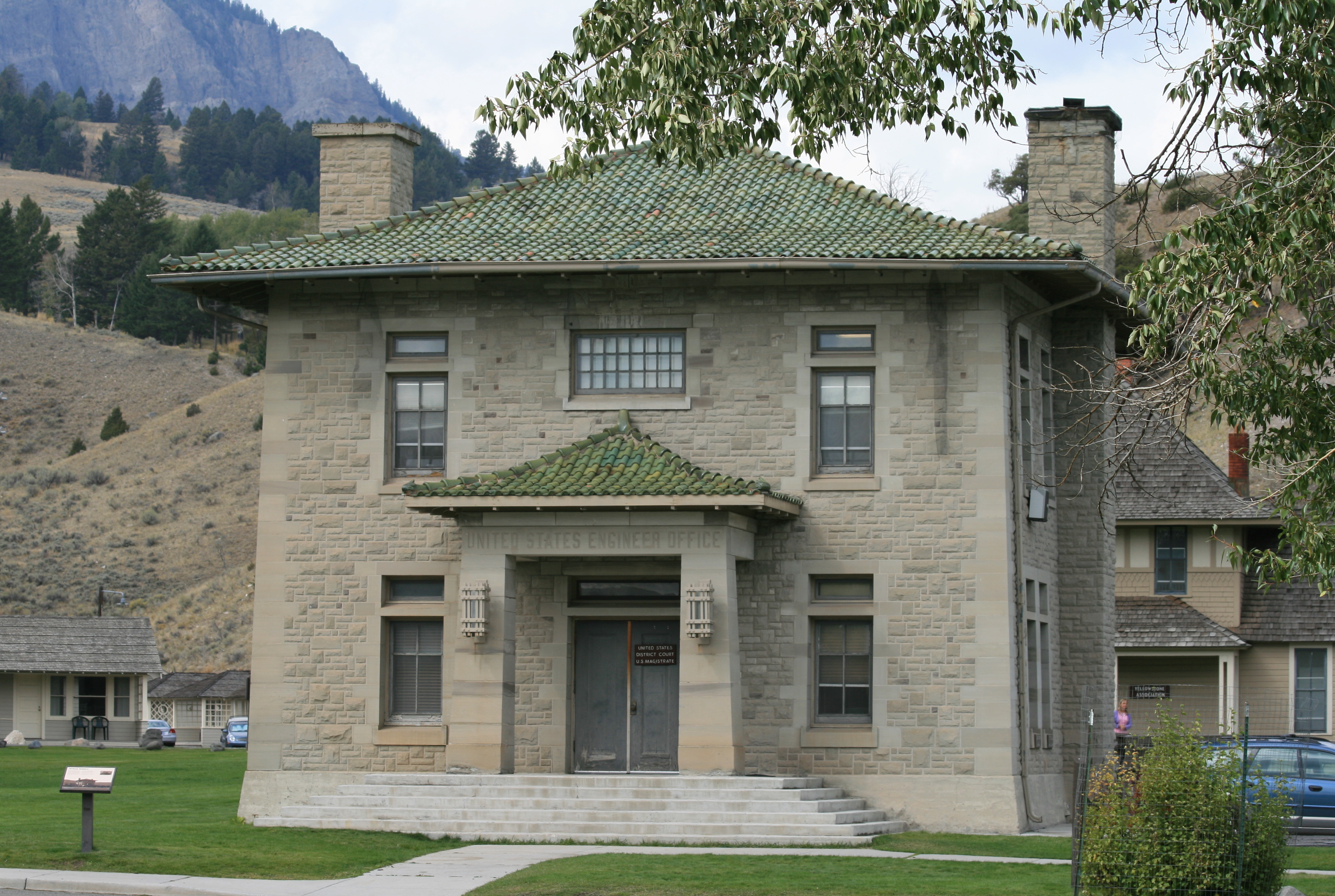
The cavalry initially pitched tents at the base of Capitol Hill, just east of the Mammoth Hot Springs travertine terraces. They called it Camp Sheridan after the general who sent them. The temporary facilities served for five years until Congress appropriated funds for a permanent post in 1891. On May 11, Camp Sheridan became Fort Yellowstone, and construction began on facilities designed to last. The first wave of building, from 1891 to 1897, produced wood-framed structures in what architects called "cottage style," some with Colonial Revival elements. A second construction phase from 1908 to 1913 added buildings of locally quarried sandstone that still anchor the landscape today. Of the 60 structures built by 1913, 35 remained standing a century later.
Inventing Park Management
The cavalry did more than build barracks. Without precedent to follow, the army commanders invented the systems that would govern national parks to this day. They established backcountry patrols, rotating small detachments through remote cabins to monitor vast wilderness areas. They implemented wildlife protection and management programs. They created educational programs that the later National Park Service would adopt wholesale. When poachers and vandals threatened park resources, the cavalry developed law enforcement priorities and a ranger force capable of prosecution and punishment. The soldiers patrolling Yellowstone's geysers and grizzlies were writing the rulebook for conservation management that remains largely unchanged.
Passing the Torch
For 32 years the cavalry maintained order in Yellowstone, from the rough initial encampment through the construction of a proper military post. When Congress created the National Park Service in 1916, the transition required two more years to complete. In October 1918, the army formally transferred control of both the park and the fort to the new civilian agency. The handoff included something beyond property and procedures. The National Park Service adopted a version of the campaign hat worn by cavalry soldiers during their final years at Yellowstone, creating the iconic silhouette that park rangers wear to this day. The flat-brimmed hat became a symbol of an institution born from military necessity and forged in this remote corner of Wyoming.
The Legacy in Stone
Fort Yellowstone never fired a shot in anger. Its battles were fought against those who would exploit or destroy America's natural heritage, and by that measure the cavalry won decisively. Today the sandstone buildings house the Yellowstone National Park headquarters, the Horace Albright Visitor Center, and staff accommodations. Visitors walk through the same spaces where cavalry officers once planned patrol routes across the Lamar Valley and debated how to protect bison from market hunters. The fort earned designation as a National Historic Landmark, recognition that these structures represent more than military architecture. They mark the birthplace of American park management, the place where soldiers without precedent created the systems that protect wilderness from Yellowstone to Yosemite to the newest additions to the national park system.
From the Air
Located at 44.98N, 110.70W at Mammoth Hot Springs in the northern section of Yellowstone National Park. The fort's orderly arrangement of historic buildings contrasts with the white travertine terraces immediately to the south. Best viewed at 6,000-8,000 feet AGL. Nearest airport: Livingston (KLVM) 30nm north, Yellowstone Regional (KCOD) 75nm southeast. The north entrance to Yellowstone via Gardiner, Montana is clearly visible.