Fortsberg
They smuggled the machetes inside bundles of firewood. On the morning of November 23, 1733, enslaved Akwamu people carried their loads up the steep hill to Fortsberg as they did every day -- except this time, when they reached the garrison, they drew the hidden blades and attacked. Five of the six Danish soldiers on duty were killed. A cannon was fired as a signal, and across St. John, enslaved people rose in coordinated revolt. Within hours, the Akwamu controlled the fort, the island's plantations, and the cannon that overlooked Coral Bay. The rebellion they launched from this hilltop would hold the island for six months.
A Fort Built by the People Who Took It
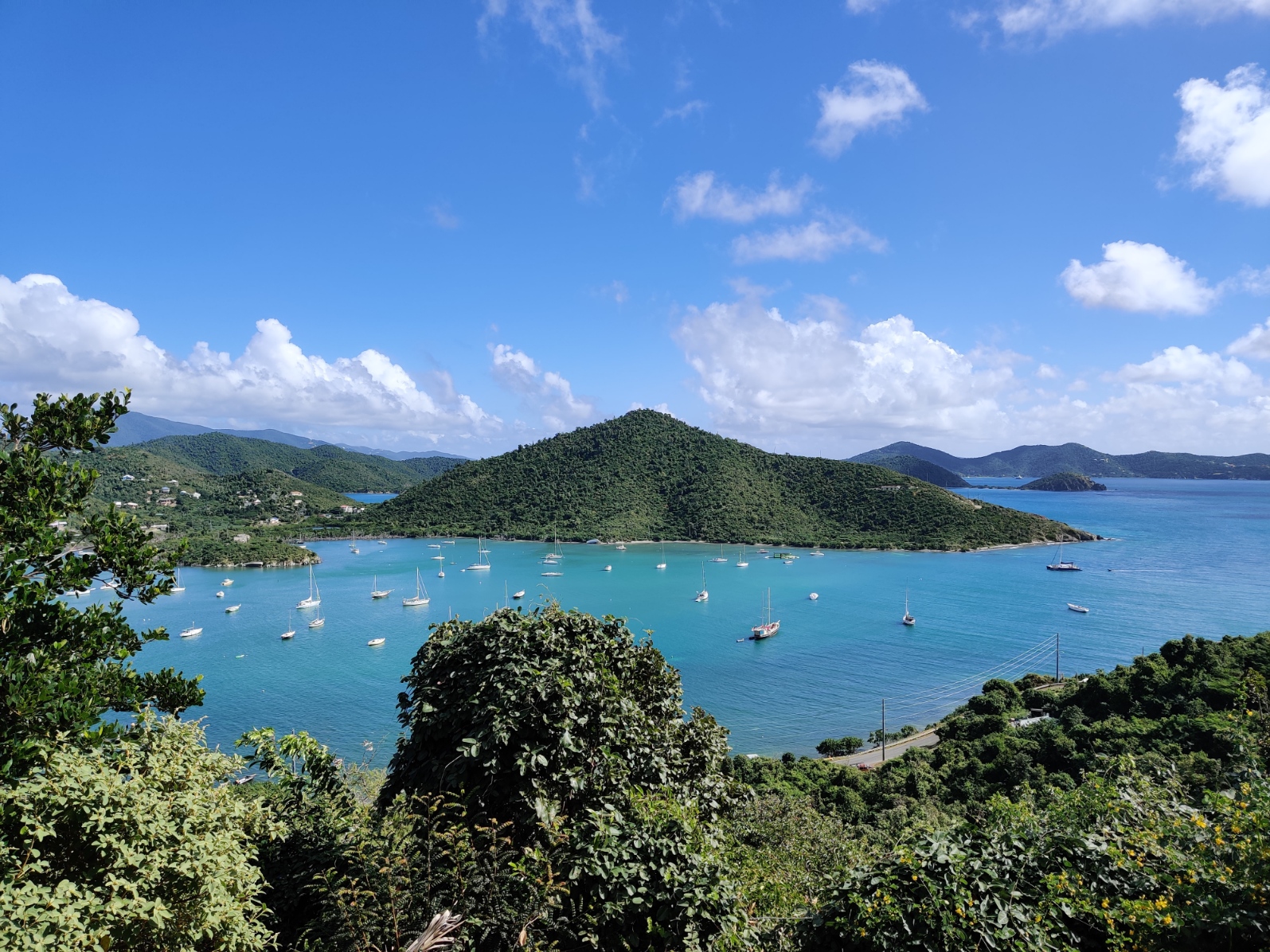
Fortsberg -- also called Frederiksvaern -- was built in 1717 when settlers from St. Thomas moved to the Coral Bay area of St. John. It sat 426 feet above sea level on a hill commanding views of the bay and the surrounding coastline, a defensive position meant to protect the Danish colony's eastern flank. The fort was constructed using the labor of enslaved people, the same population it was designed to control. That irony would prove more than symbolic. The Danish had claimed St. John the following year, in 1718, and the island was rapidly carved into sugar plantations worked by enslaved Africans -- many of them Akwamu people from the Gold Coast of West Africa. In their homeland, the Akwamu had been rulers, warriors, and merchants. Enslavement had not erased their knowledge of warfare or their capacity to organize.
Six Months of Freedom
The uprising was planned by leaders including King June, a foreman on the Sodtmann estate, and Breffu, an Akwamu woman who became known as the Queen of St. John. Their goal was not simply escape -- it was sovereignty. The Akwamu intended to seize the island, take control of its plantations, and govern it themselves. After taking Fortsberg, the rebels occupied most of St. John's plantations, killing or driving out the Danish planters. Plantation owners who survived fled to the Durlo estate at Caneel Bay, which was fortified and successfully defended. The Danes mounted two attempts to retake the island, and both failed. For six months, from November 1733 to May 1734, the Akwamu held St. John -- one of the longest and most successful slave revolts in the colonial Caribbean. Some historians have called it the first major slave rebellion in the Western Hemisphere.
The Suppression
Denmark could not retake the island alone. In April 1734, several hundred French and Swiss soldiers arrived from Martinique, sent by the French colonial governor. They encamped near Fortsberg and launched a systematic campaign to crush the rebellion. Outgunned and outnumbered by professional troops with superior weapons, the Akwamu resistance collapsed over the following weeks. Rather than submit to recapture and the punishment that awaited them, many of the rebels chose to take their own lives. The suppression was complete by the end of May 1734. The original fort, which the rebellion had damaged or destroyed, was demolished. The Danes rebuilt it in 1760 -- the stone ruins that remain on the hilltop today date from that reconstruction. The replacement fort was built to control the same population that had seized the original, a fact that gives the ruins their particular weight.
An Ironic Monument
Fortsberg has been called an "ironic monument" to a traumatic chapter in St. John's history. The ruins that visitors can hike to today are the ruins of the replacement fort -- built by the colonizers who crushed the revolt, on the same ground where the revolt succeeded. But the site has been reclaimed as a place of commemoration. Every November, St. John holds an observance at Fortsberg to honor the 1733 uprising and the courage of the Akwamu people who fought for their freedom. The ceremony recognizes what the Danish colonial record tried to minimize: that the people enslaved on these islands were not passive victims but agents of their own history, capable of organizing a military campaign that held an entire island for half a year. The fort was listed on the National Register of Historic Places in 1976. Its stone walls are crumbling, its cannon emplacements open to the sky. But the story it holds is not crumbling at all.
From the Air
Located at 18.35N, 64.71W on a hilltop overlooking Coral Bay on the eastern end of St. John, US Virgin Islands. The fort sits at 426 feet elevation, making the hill visible from the air though the ruins themselves are small. Coral Bay is recognizable as the large protected bay on St. John's eastern coast, distinctly different from the developed north shore bays. Nearest airport is Cyril E. King Airport (TIST) on St. Thomas, approximately 12nm west; St. John has no airport and is accessed by ferry. From the air, the Coral Bay settlement is visible around the harbor, with the Fortsberg hilltop rising to the south.