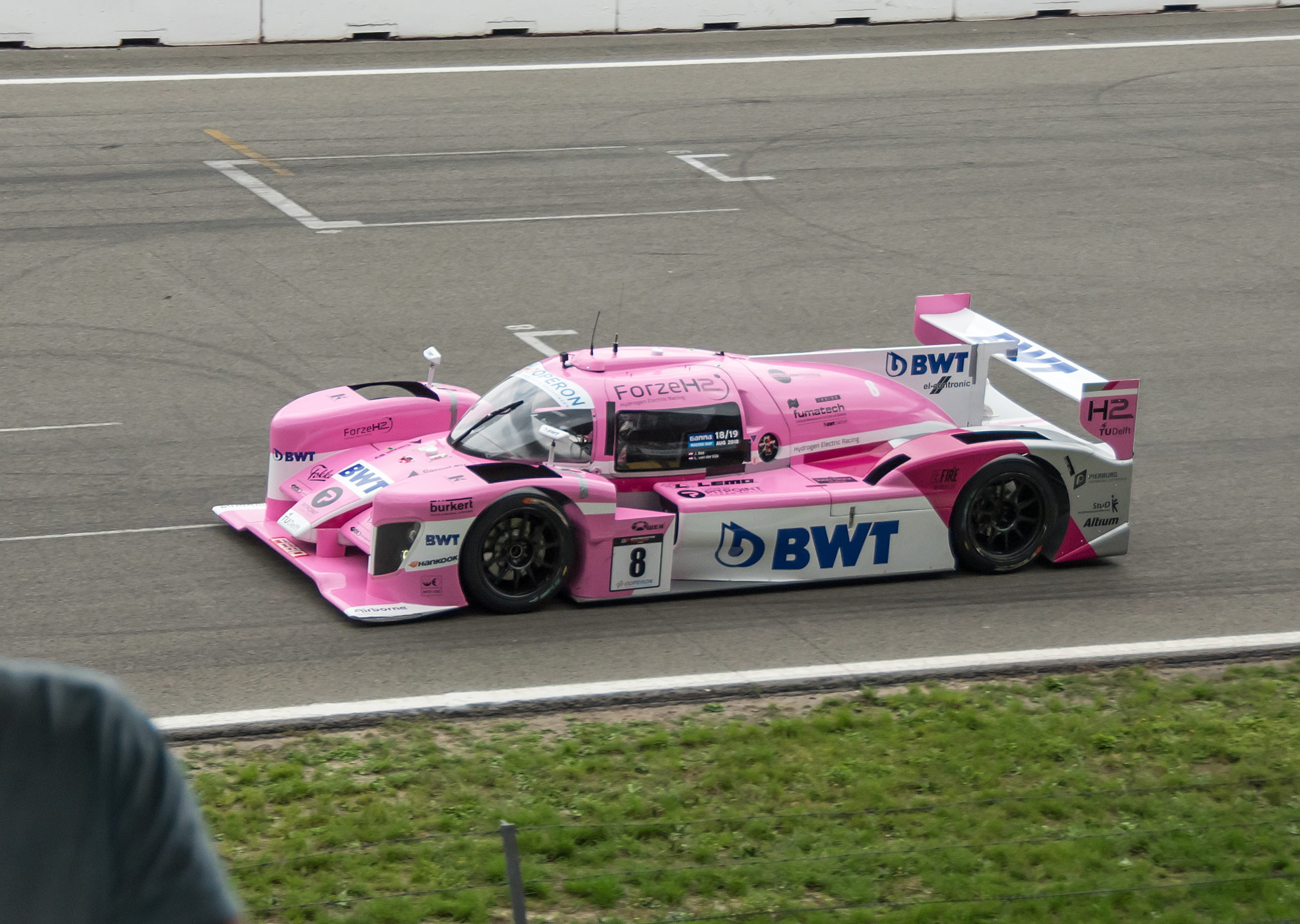
Forze Hydrogen Racing
In August 2019, on the long pit straight of TT Circuit Assen, something unprecedented happened in motorsport. A racing car powered by nothing but hydrogen and the air it drew through its intakes crossed the line in second place in the Sports division of the Supercar Challenge, behind a single petrol-burning competitor. The car's exhaust was water vapour. Its drivetrain had no engine in any conventional sense - just a fuel cell turning hydrogen into electricity, an electric motor, and a set of carbon-fibre wheels. The team that built it was made up of students. They had no salaries, no manufacturer's racing pedigree behind them. They had a workshop in Delft called the Schiehal and twelve years of stubborn iteration. And they had just made hydrogen racing a real thing.
The Founder and the Bet
Forze Hydrogen Racing was started in 2007 by a TU Delft student named Edgar van Os. The idea was simple and improbable: prove that hydrogen fuel cells could power high-performance race cars, not just slow demonstration prototypes. Hydrogen, after all, refuels in minutes where batteries take hours - exactly the kind of energy density a long-distance race demands. The first cars were go-karts. Van Os and his small team entered them in the 2008 Formula Zero Championship, the world's first hydrogen fuel cell racing series, beginning with a single race in the inner city of Rotterdam next to the Erasmus Bridge. The Formula Zero championship never grew into the league it promised to be. Forze didn't stop. They kept building, kept moving up. By 2025 they had produced eight increasingly serious hydrogen racing vehicles, and they remained, as far as anyone could verify, the only student team anywhere in the world using high-power automotive fuel cells.
How Hydrogen Racing Actually Works
Pop the bodywork on a Forze car and you find no fuel tank in the traditional sense. Instead, a high-pressure cylinder holds hydrogen gas. Lines feed it into a fuel cell stack where, through a controlled chemical reaction with oxygen drawn from the atmosphere, the hydrogen produces electricity and pure water. The electricity powers an electric motor with the instant torque any electric vehicle delivers. Fuel-cell systems run two to three times more efficiently than a combustion engine of the same power. They emit no carbon, no nitrous oxide, no soot. And critically for racing, a hydrogen tank can be swapped or refilled in the time a Formula 1 car spends in the pits. Batteries take far longer. This is why hydrogen looks attractive for endurance racing - the long road that ends at Le Mans, where the team eventually wants to compete in a Le Mans Prototype class.
Jan Lammers at the Nordschleife
In May 2015, Forze took the Forze VI - their first full-size hydrogen race car - to the most fearsome circuit in motorsport: the 20.8-kilometer Nürburgring Nordschleife in the German Eifel mountains. The driver was Jan Lammers, the former Formula 1 racer and Le Mans winner. He crossed the line in 10:42.58. The lap broke the existing fuel-cell record (previously held by the Nissan FCV X-Trail concept) by over a minute. As of late 2025 it remains the fastest fuel-cell lap ever recorded on the Nordschleife. That November, on Circuit Zandvoort, the same Forze VI driven by team member Kevin Schreiber put down a 2:04.519 - the fastest electric lap any car had ever set at the famous Dutch track, beating even the Tesla Roadster. The record stood until June 2017, when another Dutch team, InMotion, finally broke it. By then Forze had already moved on to their next car.
The Race That Changed What's Possible
In 2017, the Forze VII took on the Supercar Challenge at TT Circuit Assen. It was an FIA-licensed LMP3 chassis from German firm ADESS AG, but with a fuel-cell drivetrain in place of an internal combustion engine. In the 45-minute race the Forze VII set the third-fastest lap time in the Sports division. The car ran out of hydrogen at 30 minutes - not because of engineering failure, but because no one had ever needed to design a hydrogen tank for a 45-minute race-pace fuel burn before. The next year, the Forze VIII completed the full 60 minutes. In 2019 the Forze VIII came in second place. The dream, then, became Le Mans. In 2022 the team revealed the Forze IX, aimed at the GT Class of the Supercar Challenge, sponsored by Shell, designed by a rotating crew of bachelor and master students from across TU Delft. They will graduate. Replacements will arrive. The car will keep getting faster, and the exhaust will keep coming out as water.
From the Air
The Forze workshop is at the Schiehal in Delft, approximately 52.00°N, 4.38°E. Rotterdam The Hague Airport (EHRD) is about 12 km south-southeast; Schiphol (EHAM) is roughly 50 km north. The hydrogen-racing prototypes are road-trailered to circuits such as TT Circuit Assen (about 200 km northeast, near Assen, with grass airfield EHAS nearby) and Circuit Zandvoort (50 km north, just inland of the Dutch coast).