Fourth Battle of Tucson
Dawn had not yet broken over the Presidio San Augustin del Tucson on March 21, 1784, when five hundred Apache and Navajo warriors descended on the Spanish cavalry guards. Ensign Don Juan Carrillo's soldiers protected a livestock pen outside the walls, and the raiders wanted those horses. What followed was one episode in a conflict that would span generations, a fight for survival and dominance in a harsh land where the boundary between raid and warfare blurred into meaninglessness.
The attack that morning was the fourth major engagement the Spanish had faced at Tucson, part of a grinding series of battles that defined colonial life on this violent frontier. These were not random skirmishes but calculated military operations, conducted by skilled warriors against fortified positions. The Spanish had built their presidio system precisely to counter such threats, but the reality of frontier defense proved messier than any strategic plan.
The Corral Fight
Ensign Carrillo's sentries faced a force that vastly outnumbered them. Hundreds of mounted Apache and Navajo warriors swept down on the livestock pen, their goal clear: capture the cavalry garrison's horses and vanish into the desert before reinforcements could arrive. The Spanish soldiers had other ideas.
The defenders held their ground at the corral, fighting with the desperate efficiency of men who understood that losing their mounts meant losing their ability to patrol and protect the settlement. But numbers and tactics eventually overwhelmed position. After prolonged fighting, the attackers succeeded in stampeding the herd and driving off thirteen horses. The engagement left five Spanish soldiers dead and one wounded. The Apache and Navajo lost three warriors killed, with an unknown number wounded.
The Pursuit
Two soldiers rode into the presidio with news of the battle almost before the dust had settled. Lieutenant Tomas Equrrola wasted no time organizing a pursuit force. He gathered every available man and sent runners to the neighboring Pima communities at Tupson and San Xavier. Thirty Pima scouts answered the call, their knowledge of the terrain invaluable for tracking warriors who knew this country intimately.
The combined force numbered forty-nine men: Spanish soldiers, Pima scouts, and five civilian volunteers. They added the twelve survivors from the original remount herd guard, giving them enough strength to risk a confrontation. Then they rode out, following the trail of retreat northward toward the mountains that marked the horizon.
Blood at the Catalina River
The pursuit lasted only forty-five minutes. Lieutenant Equrrola's force caught the Apache and Navajo raiders at the base of the Catalina Mountains, near the Catalina River. The warriors had not expected such swift pursuit, and the battle that followed proved decisive.
The Spanish and Pima fighters killed fourteen warriors in the engagement, including the raid's commander, Chief Chiquito. His death dealt a significant blow to Apache leadership in the region, though the larger conflict would continue for decades. The stolen horses were presumably recovered, though the historical record focuses on the human cost rather than the livestock that sparked the entire affair.
A Frontier Without Peace
The Fourth Battle of Tucson fits into a pattern that repeated across the Spanish colonial frontier. The Apache Wars and Navajo Wars stretched across centuries, fought with varying intensity from the earliest Spanish settlements through American territorial control. The presidio system that anchored Spanish defense in Arizona represented an acknowledgment that peaceful coexistence had failed, that military force alone would maintain their tenuous foothold.
The Pima scouts who rode with Lieutenant Equrrola represented a different approach to frontier survival. Their alliance with the Spanish against Apache raiders reflected complex tribal politics that predated European arrival. In this harsh country, alliances shifted according to immediate threats, and yesterday's enemy might become tomorrow's ally against a common foe. The Fourth Battle of Tucson was one morning's violence in a conflict that would reshape the entire Southwest.
From the Air
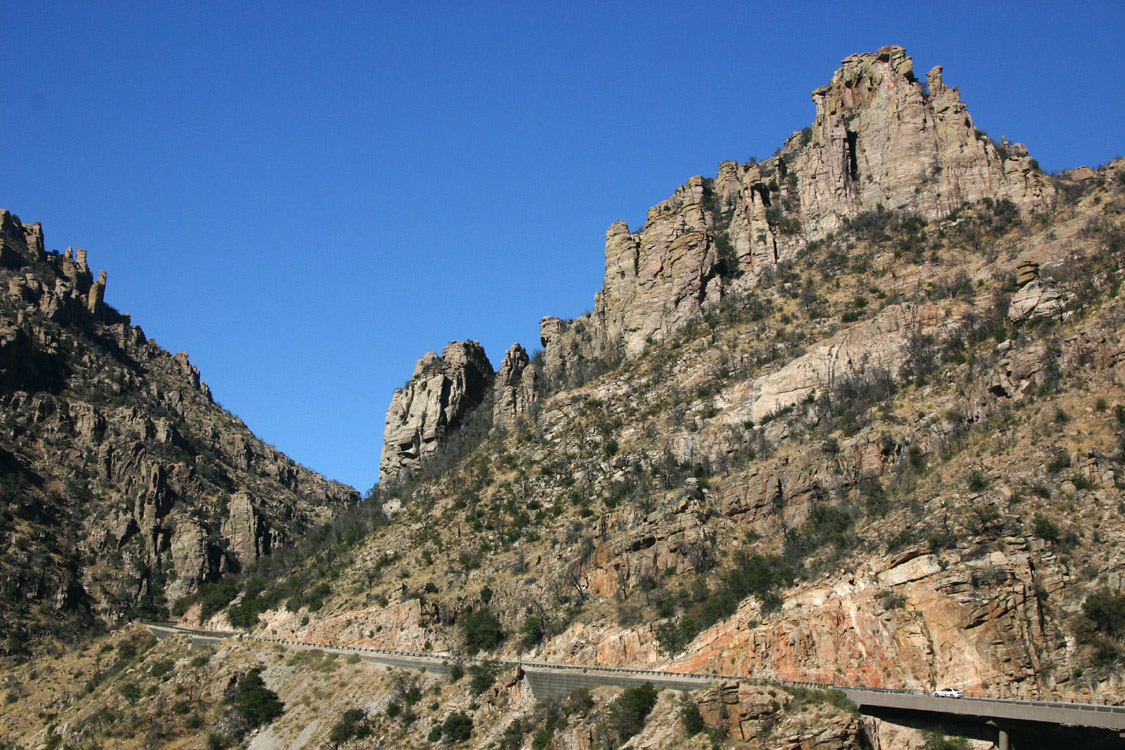
The battle site lies near modern Tucson at approximately 32.35°N, 110.94°W. The Presidio San Augustin del Tucson occupied the area near present-day downtown Tucson. The pursuit route led north toward the Catalina Mountains, the prominent range visible north of the city. The Catalina River (now often dry) runs along the base of these peaks. From altitude, the terrain shows the natural corridor between the presidio site and the mountains that the raiders and pursuers traversed. Nearest major airport is Tucson International (KTUS). The Catalina Mountains rise dramatically north of the city, their slopes clearly visible from any approach.