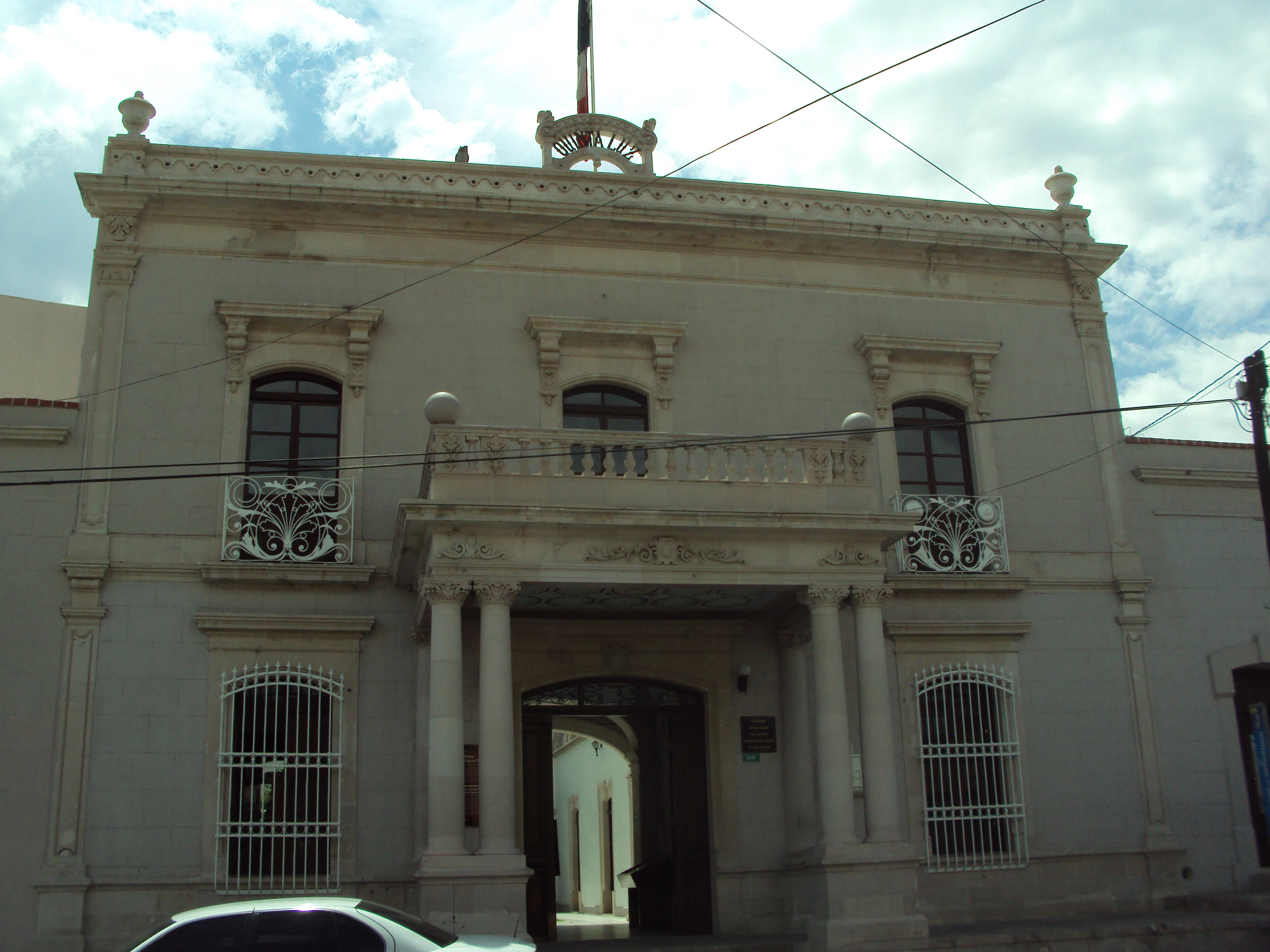
Francisco Villa Museum
The pistol still hangs from the headboard. In the master bedroom of Quinta Luz, the firearm dangles exactly where Francisco "Pancho" Villa left it, a reminder that even in his own home, the revolutionary general never truly rested. This elegant residence in Chihuahua City, built between 1905 and 1907 and expanded when Villa briefly served as governor in 1914, now preserves the intimate details of a man whose legend towers over Mexican history. Villa named the estate "Quinta Luz" in honor of his wife, Luz Corral, who would outlive him by nearly six decades and spend her final years receiving visitors from her bed, too frail to rise but still fierce in her devotion to his memory.
The Centaur's Last Ride
In the museum's courtyard sits the centerpiece of this collection: a 1919 Dodge roadster punctured by bullets, the very automobile in which Villa met his violent end. On July 20, 1923, in the city of Hidalgo del Parral in southern Chihuahua, assassins ambushed the general and his bodyguards. The car, frozen in time with its bullet holes still visible, brings visitors face-to-face with the brutal reality of revolutionary Mexico. Villa earned the nickname "Centaur of the North" for his legendary horsemanship, and his McClellan saddles are displayed here too, the same reliable military design developed by General George Brinton that could fit any horse and carried Villa's Division del Norte across the desert campaigns.
Weapons and Ghosts
The second floor houses five showrooms, each revealing a different facet of Villa's violent era. The Hall of Arms displays the instruments of revolution: revolvers, rifles, machine guns, cavalry sabers, and brass-fitted leather cases. A photograph commemorates Rafael Mendoza, a native of Maderas, Chihuahua, who invented the first air-cooled machine gun during the Mexican Revolution, capable of firing 250 rounds per minute. But it is the Tragic Room that leaves the deepest impression. Here, visitors encounter Villa's death mask, cast just three hours after his assassination, along with a map tracing his final route through Parral. The mask captures the face of a man who rode through revolution, served as governor, fled to America, and returned to die in the land he fought for.
A Widow's Vigil
Luz Corral waited five years in the United States after her husband abandoned this house in 1915, fleeing the chaos of civil war. She returned because she missed her homeland, and Villa followed. After his death in 1923, she remained at Quinta Luz for nearly sixty more years. Near the end of her life, too ill to maintain the sprawling estate, she stipulated that upon her death the property would become a museum honoring her husband. She died on July 6, 1981, at age 89. The Mexican Ministry of Defense accepted her final wish, and after extensive restoration by the National Institute of Anthropology and History, the house reopened as the Francisco Villa Museum on November 17, 1982. The domestic spaces remain arranged as the family lived them, with period furniture and utensils on the first floor giving way to the revolutionary's more dramatic artifacts above.
Echoes of Revolution
Beyond Villa's personal effects, the museum holds documents and souvenirs relating to other revolutionary leaders, creating a broader portrait of the Mexican Revolution that convulsed the nation from 1910 to 1920. Photographs line the walls, capturing moments of triumph and turmoil. The house itself tells stories through its architecture, the work of Santo Vega, Hilario Berumen, Manuel Portillo, and Italian painter Mario Ferrer who transformed the modest structure into the three-section estate: main house, back house, and courtyard. Villa's remains reportedly rest in the Monumento a la Revolucion in Mexico City, but his spirit lingers here, in the bedroom where his pistol still waits.
From the Air
Located at 28.6267°N, 106.0685°W in Chihuahua City, Mexico. The museum sits in the Colonia Santa Rosa neighborhood at 3010 Calle 10a. From altitude, look for the urban grid pattern of central Chihuahua. The nearest major airport is General Roberto Fierro Villalobos International Airport (MMCU/CUU), approximately 12 km northeast of the city center. Best viewed at 3,000-5,000 feet AGL for urban context.