
Frank Hann
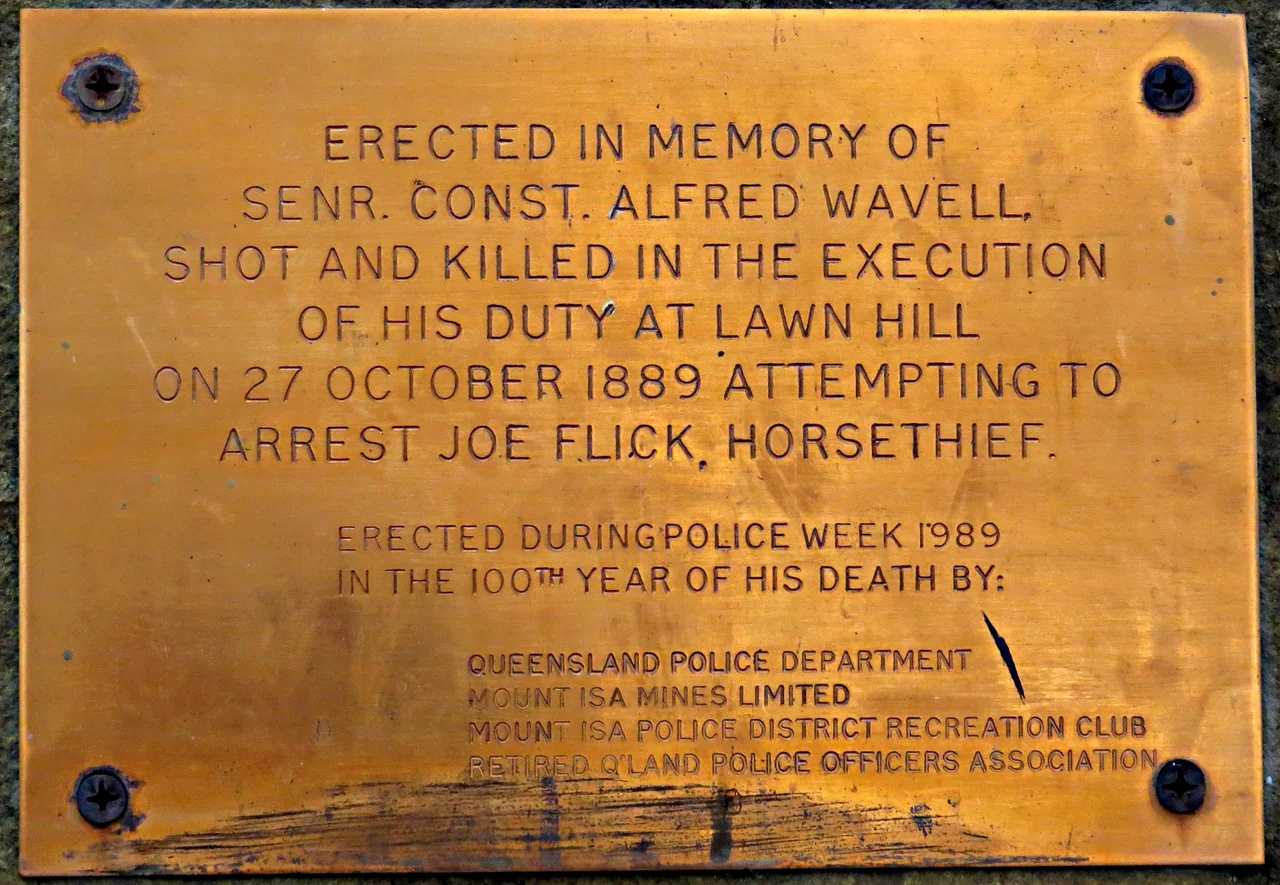
When an Aboriginal man named Joe Flick shot Frank Hann in the chest at close range in 1889, Hann had just returned from a punitive expedition — what the colonial records called "hunting the blacks." The bullet didn't kill him. Flick, cornered by police the following morning, was not so fortunate. The incident encapsulates everything difficult about Frank Hann: the violence he participated in, and the violence that came back to find him in his own home.
From Wiltshire to the Far North
Frank Hugh Hann was born in Wiltshire, England on 19 October 1846, the younger brother of explorer William Hann. The family emigrated to the Western Port area of Victoria in 1851, then moved north to the Burdekin River district of Queensland in 1862. When both parents died in 1864 — father in January, mother in June — Frank and William assumed control of the family's pastoral holdings while Frank was still a teenager. By 19, Frank was managing Lolworth Station. By his early thirties he had stocked Lawn Hill Station in far north Queensland with wild cattle, spending twenty years supplying beef to goldfields scattered across Queensland and the Northern Territory.
Discovery and Violence in the Same Hands
In 1881, Hann acted as guide for a survey of a proposed transcontinental railway through northern Queensland. In the course of that work he identified silver and lead deposits near Lawn Hill — finds that would lie dormant for a century before becoming the Century Mine. Two years later, in 1883, Hann and a man named Jack Watson conducted a punitive massacre of Indigenous people on Waanyi country, nailing the ears of forty people to the outside of the Lawn Hill homestead. The archive holds both stories simultaneously: the prospector who spotted what became a major mine, and the man who participated in one of the colony's many acts of deliberate terror against Aboriginal communities. Neither cancels the other out.
Talbot
Amid this history, one figure stands apart. Hann maintained a long association with an Aboriginal man named Talbot, from Normanton. Daisy Bates, who knew Hann well, recalled years later: "Talbot was as well educated as Frank Hann, and stayed with him, on terms of equality, at all hotels. Talbot was a Normanton native, and a very well mannered man." The relationship defies easy categorisation within the brutal racial hierarchy of the era. Whether Talbot was employee, companion, or something the language of the time had no word for, he seems to have moved through Hann's world in a way few Aboriginal men of that generation were permitted to do.
The Western Australia Years and a Complicated Legacy
Hann eventually moved to Western Australia, where he continued to explore and work pastoral country across the Kimberley region. In 1918 he was injured in an accident that left him on crutches, and he retired to Perth, where he died on 23 August 1921. He was buried at Karrakatta Cemetery; a memorial plaque was added to his gravesite in October 1986. The landscape carries his name in several ways: Frank Hann National Park, Hann River, and Mount Hann all commemorate a man whose life contained genuine discoveries alongside documented atrocities. The places named for him sit in country that Aboriginal Australians have lived in for tens of thousands of years — long before Hann arrived, and long after his passing.
From the Air
Coordinates: 15.84°S, 125.82°E — the approximate location in the Kimberley region associated with Hann's explorations. Frank Hann National Park lies further south in Western Australia near Norseman. Lawn Hill Station in Queensland, the site of Hann's pastoral operations and the 1883 massacre, is in the Gulf Country near the Queensland–Northern Territory border. Nearest major airports to the Kimberley region: Kununurra (YPKU) and Broome (YBRM).
Nearby Stories
- Gibb River Road 39 km away
- Axis Naval Activity in Australian Waters 65 km away
- Charnley River–Artesian Range Wildlife Sanctuary 65 km away
- Drysdale River National Park 81 km away
- Camden Sound 82 km away
- Montgomery Reef 98 km away
- Horizontal Falls 130 km away
- The Speewah 145 km away