Fraterville Mine Disaster
"Dear Mabel, I am dying for air. I will soon be gone. Meet me in heaven." Frank Sharp scratched those words onto a piece of slate deep inside the Fraterville Mine because he had no paper. It was May 19, 1902, and somewhere behind him in the darkness, 215 other men were already dead or dying. The methane explosion that ripped through the mine at 7:20 that morning would kill every miner underground, making it the worst mining disaster in Tennessee's history and, at the time, the deadliest in the United States. Sharp's message to his wife, recovered with his body, became one of the most wrenching artifacts of American industrial tragedy.
A Valley Built on Coal
The Fraterville Mine sat in the Coal Creek Valley, a narrow corridor slicing through the Cumberland Mountains of western Anderson County, Tennessee. Walden Ridge rose to the east, Vowell Mountain to the west, and between them, coal seams drew families to a cluster of mining communities linked by what is now Tennessee State Route 116. The Coal Creek Coal Company, organized by Knoxville businessman E.C. Camp, began working the Fraterville Mine in 1870. Unlike many operators of the era, Camp's company paid its miners in cash rather than scrip and refused to participate in Tennessee's controversial convict leasing system, which allowed the state to rent prison laborers to private mines. That decision spared Fraterville from the violent upheaval of the Coal Creek War in the early 1890s, when armed miners in neighboring communities rose up against convict labor. The Fraterville Mine developed a reputation as one of the safest and fairest operations in the region.
Seven-Twenty in the Morning
The explosion came just after the morning shift descended. At 7:20 a.m. on May 19, 1902, black smoke and debris shot from the mine's mouth and ventilation shaft with enough force to be noticed by men working at the nearby Thistle Mine, who initially mistook the plume for smoke from a ventilation furnace. George Camp, the superintendent and son of the company's founder, arrived at the entrance to find the mine collapsed. The cause was never conclusively determined, but investigators concluded that methane gas had likely seeped from an adjacent, unventilated mine and been ignited by an open flame. Of the 216 men working underground that morning, not a single one survived. Officials identified 184 of the dead. Locals have long maintained the true death toll was higher, since many miners worked unregistered and some bodies were never recovered or identified.
The Miners' Circle
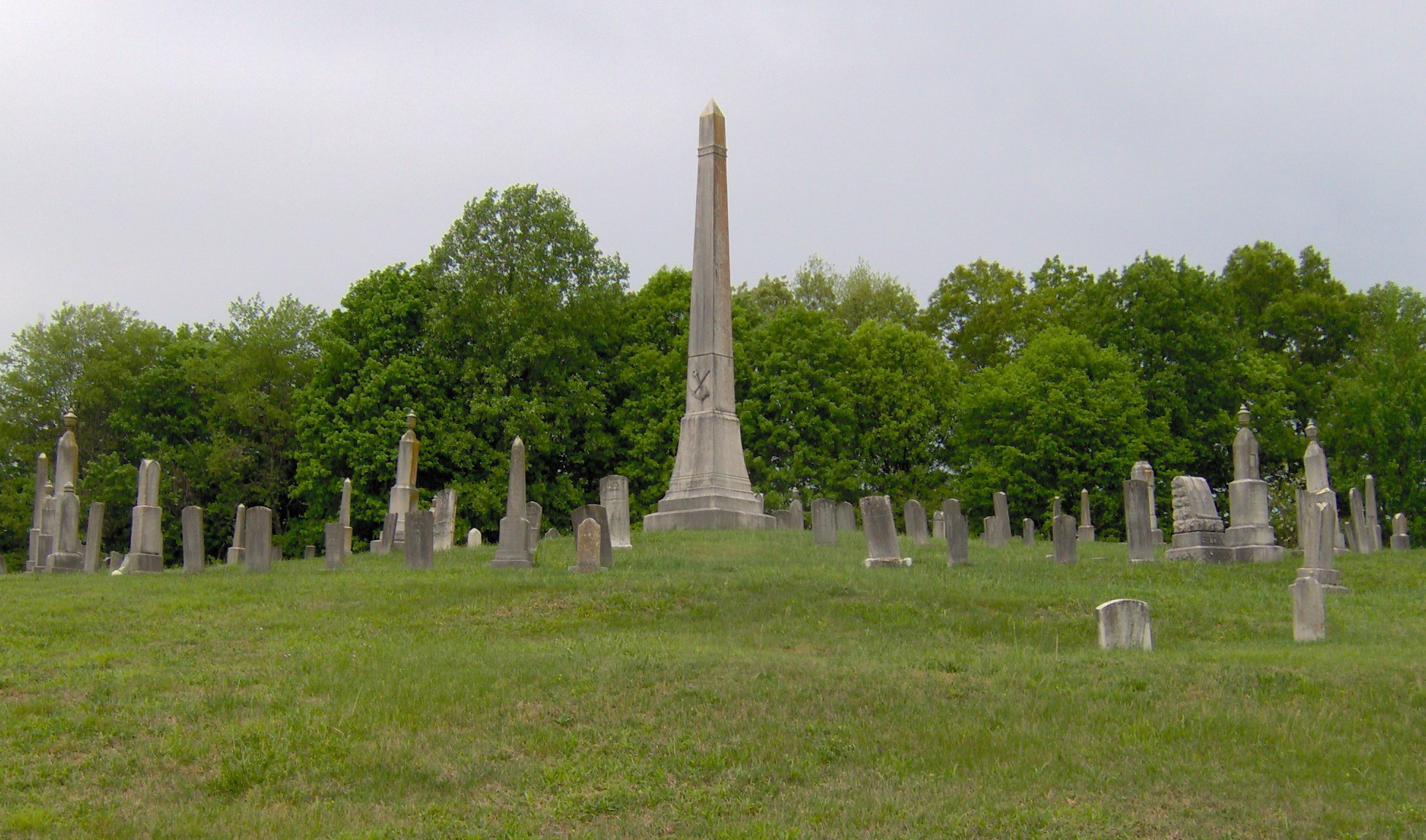
The community buried its dead in concentric waves. Eighty-nine of the 216 victims were laid to rest in a single circular arrangement at Leach Cemetery in the nearby town of Coal Creek, now known as Rocky Top. The formation, called the Fraterville Miners' Circle, radiates outward from a central monument inscribed with the names of all 184 identified miners. Other victims were buried at Longfield Cemetery on U.S. Route 441 just east of Rocky Top. The disaster hollowed out the valley. Nearly every family in Fraterville lost a father, son, or brother. The stretch of State Route 116 connecting Fraterville with Briceville and Rocky Top was later renamed the Fraterville Miners Memorial Highway. On May 19, 2005, exactly 103 years after the explosion, the Miners' Circle was added to the National Register of Historic Places.
Words Written in the Dark
Among the most haunting details of the Fraterville disaster are the final messages miners left for their families. Frank Sharp's slate letter to his wife Mabel has endured as a testament to the human cost of industrial mining. He wrote in the suffocating darkness, with no hope of rescue, asking her to take care of their children and meet him in heaven. Other miners left similar notes, scrawled on whatever surfaces they could find as the air ran out. These letters, preserved in archives including the Tennessee State Library, remain some of the most personal documents to survive any American mining disaster. They speak not of anger or blame, but of love, faith, and the quiet acceptance of men who knew they would not see daylight again.
What the Mountains Remember
The Coal Creek Valley still carries the weight of May 19, 1902. The cemetery circles remain intact, the gravestones arranged in their deliberate formation behind Clear Branch Baptist Church just off U.S. 25W. The memorial highway signs line the route through the valley. Coal mining eventually faded from Anderson County, and the town of Coal Creek reinvented itself as Rocky Top, but the disaster's legacy persists in local memory and in the archives that preserve the miners' final words. The Fraterville Mine disaster stands as a reminder of the era when Appalachian communities sent their men into mountains that sometimes did not send them back.
From the Air
Located at 36.20°N, 84.17°W in the Coal Creek Valley of Anderson County, Tennessee, within the Cumberland Mountains. The narrow north-south valley between Walden Ridge and Vowell Mountain is visible from altitude. Leach Cemetery and the Miners' Circle are near Rocky Top, just off U.S. 25W. Nearby airports include Knoxville McGhee Tyson Airport (KTYS) approximately 35 miles south. Recommended viewing altitude: 4,000-5,000 feet MSL. The valley's tight profile and surrounding ridgelines make it distinctive terrain from the air.