Fred Jones Jr. Museum of Art
A Pissarro painting of a shepherdess guiding her flock through a twilit field hung for years in Norman, Oklahoma, thousands of miles from the Paris apartment where Nazis had seized it during the German occupation of France. That painting -- Shepherdess Bringing in Sheep -- made the Fred Jones Jr. Museum of Art the unlikely center of a decade-long international legal battle touching on Holocaust restitution, museum ethics, and the question of who truly owns a stolen masterpiece. But the story of this museum on the University of Oklahoma campus is far richer than any single controversy, rooted in nearly a century of art collecting that brought French Impressionism, Native American masterworks, and Cold War-era political art to the heart of the Great Plains.
From a Professor's Vision to a World-Class Collection
The museum traces its origins to 1936, when OU art professor Oscar Jacobson founded what was then called the Oklahoma University Museum of Art and served as its first director until his retirement in 1950. The collection grew steadily, earning a permanent home in 1971 when Mr. and Mrs. Fred Jones of Oklahoma City donated funds for a dedicated building, named in honor of their son who died in a plane crash during his senior year at the university. The institution was renamed the Fred Jones Jr. Museum of Art in 1992. The real transformation began when OU president David Boren arrived in 1994 and launched an ambitious campaign to expand the collections. In 2000, the Weitzenhoffer Collection of French Impressionism arrived, bringing works by Monet, Renoir, Van Gogh, Degas, Pissarro, Gauguin, and Toulouse-Lautrec to a museum that now holds over 20,000 objects spanning from sixteenth-century graphics to contemporary art.
Architecture That Keeps Growing
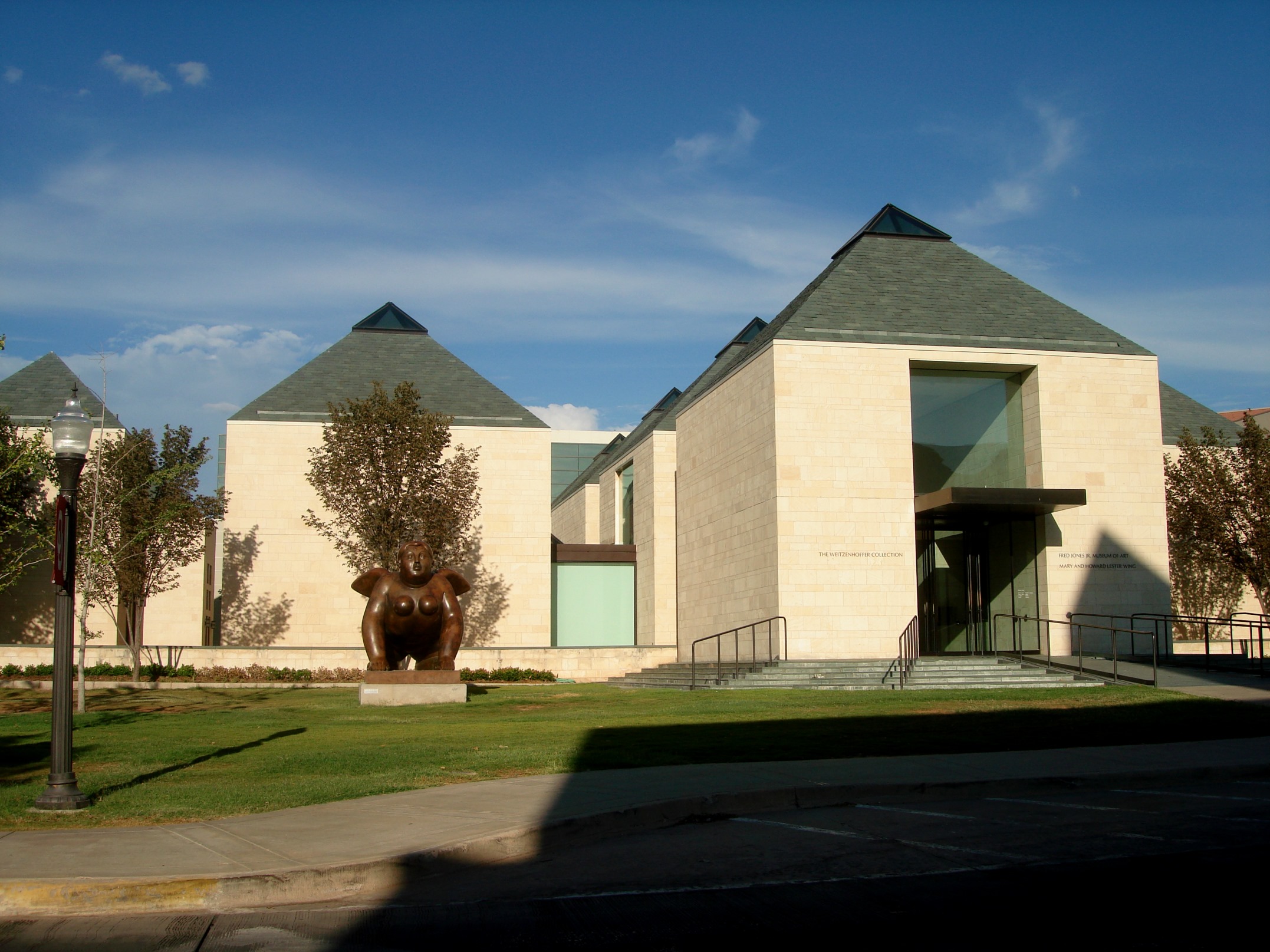
The museum has expanded three times to accommodate its swelling collections. In 2003, Washington, D.C.-based architect Hugh Jacobsen designed a new wing that doubled the museum's footprint, completed in 2005 and named for Mary and Howard Lester of San Francisco. Then in 2007, the museum and the Philbrook Museum of Art in Tulsa were jointly named stewards of the Eugene B. Adkins Collection. To house OU's share, architect Rand Elliott designed the Stuart Wing, an 18,000-square-foot addition that opened in October 2011 atop the original 1971 structure. Outside, a monumental bronze Sphinx by Colombian artist Fernando Botero greets visitors with the sculptor's signature voluptuous proportions, an unexpected sentinel on a campus better known for football. The total exhibition space now encompasses galleries for photography, Native American art, the Adkins Collection, and the celebrated Impressionist works.
The Pissarro Saga
The museum's most contentious chapter began with Camille Pissarro's 1886 painting Shepherdess Bringing in Sheep. Before the war, it belonged to Raoul and Yvonne Meyer, heirs to the Galeries Lafayette department store fortune. Nazis seized it during the occupation of France. After the war, Meyer's attempts to recover the painting in Switzerland failed, and it eventually found its way into the Weitzenhoffer Collection and then to Norman. In 2014, Meyer's adopted daughter Leone-Noelle Meyer sued for its return. An Oklahoma state representative called on the American Association of Museums to review the museum's accreditation for its refusal to restitute the work. In 2016, a settlement created an unusual shared custody arrangement: the painting would rotate between Oklahoma and Paris's Musee d'Orsay every few years. Meyer challenged this in French court, and the university countersued. On June 1, 2021, after years of litigation, Meyer abandoned her ownership claim. The painting hangs in Norman today.
Where the Great Plains Meet Great Art
Beyond the Impressionist headlines, the Fred Jones Jr. Museum holds collections that reflect Oklahoma's cultural crossroads. The James T. Bialac Native American Art Collection, donated in 2010, contains approximately 2,600 paintings and works on paper, over 1,000 kachinas, and some 400 pieces of ceramics and jewelry representing Pueblo, Navajo, Hopi, Plains, and Southeastern tribal traditions. Works by Native artists including Fred Kabotie, Allan Houser, and Fritz Scholder fill the galleries. The Thams Collection offers thirty-two paintings by the Taos Society of Artists, while the Fleischaker Collection features over 350 pieces of Native American and southwestern art, including works by Russian Taos painters Leon Gaspard and Nicolai Fechin. Perhaps most remarkable is the State Department Collection, purchased in 1948 from the controversial Advancing American Art exhibition -- a Cold War cultural program dismantled by Congress for allegedly portraying an unflattering image of America. It includes works by Georgia O'Keeffe and Edward Hopper.
From the Air
The Fred Jones Jr. Museum of Art sits at 35.22N, 97.44W on the University of Oklahoma campus in Norman, Oklahoma. It is on the west side of the North Oval area of the main campus. Nearest airports: University of Oklahoma Westheimer Airport (KOUN) approximately 2 miles north, and Will Rogers World Airport (KOKC) about 15 miles north in Oklahoma City. Best viewed as part of the broader OU campus, identifiable by the distinctive oval layouts and stadium complex. The museum is not individually distinguishable from cruise altitude.