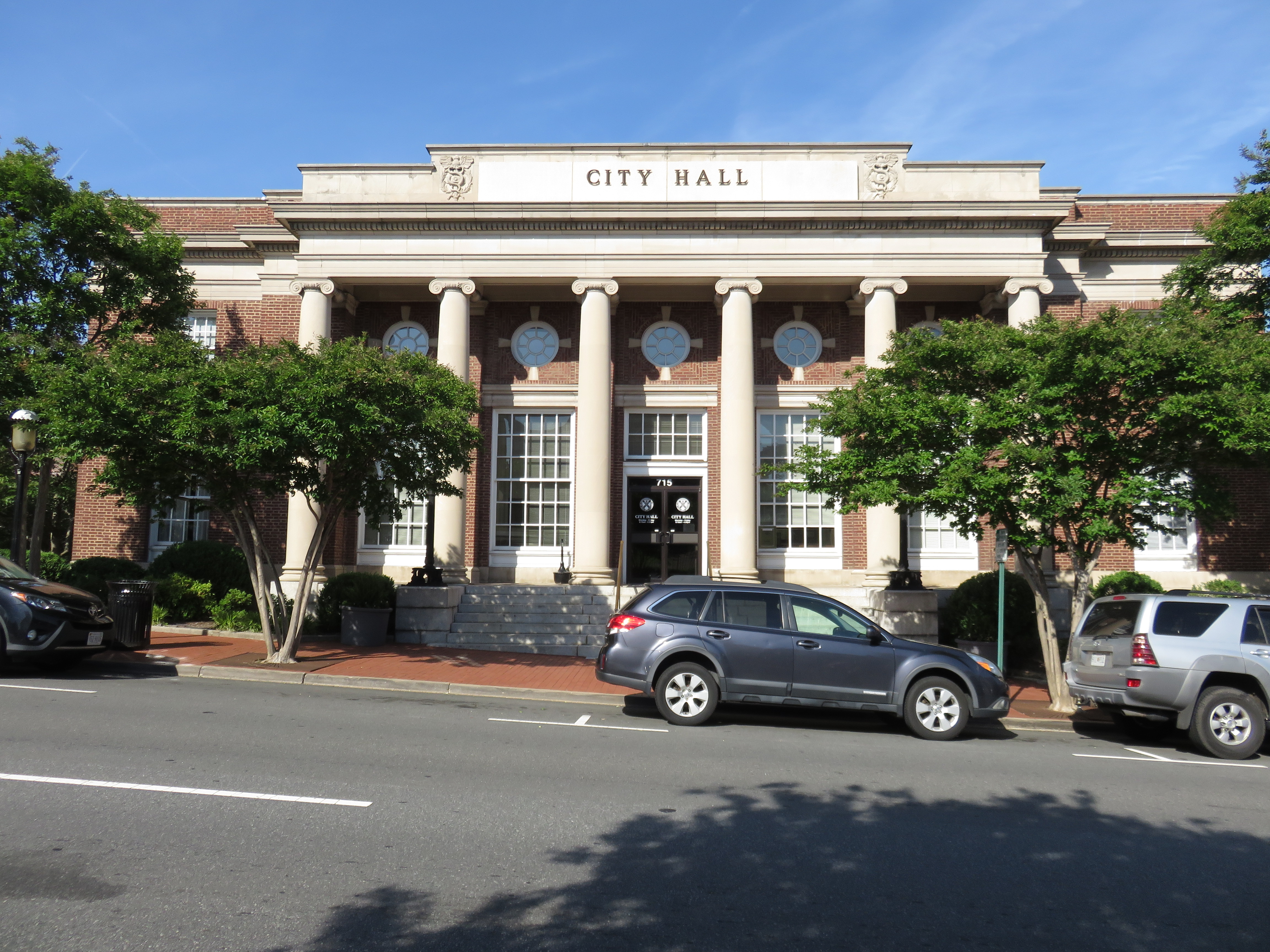
Fredericksburg, Virginia
In 1958, in a small Fredericksburg dance hall, musician Link Wray punched holes in his amplifier speaker with a pencil, cranked up the volume, and played a menacing instrumental he called "Rumble." The distorted sound that roared out became the power chord -- the foundation of modern rock guitar. That a city best known for Civil War carnage also birthed one of rock music's defining innovations captures something essential about Fredericksburg, Virginia. This small independent city on the Rappahannock River, named in 1728 for Frederick, Prince of Wales, has always been a place where history collides, where the old world and the new grind against each other at the fall line where tidewater meets piedmont.
Where the River Breaks
Fredericksburg exists because of geography. The Rappahannock River crosses the Atlantic Seaboard fall line here -- the geological boundary where coastal plain meets the harder rock of the Piedmont, creating rapids that stopped ocean-going vessels from traveling farther inland. That made this spot a natural transfer point for goods, and in 1728, the Virginia General Assembly established a formal trading center. Before English colonists arrived, Siouan-speaking Manahoac people lived here in a village they called Mahaskahod. The colonial town quickly became a tobacco port and regional hub. Augustine Washington purchased nearby Ferry Farm in 1738, and the Washington family's presence shaped the town's identity. George Washington's mother Mary lived her final years in the city. His sister Betty and brother-in-law Fielding Lewis built Kenmore, a plantation house that still stands. Thomas Jefferson drafted the Virginia Statute for Religious Freedom here. James Monroe practiced law on a site now housing his museum. Revolutionary War generals Hugh Mercer and George Weedon called it home, as did naval hero John Paul Jones.
The Crossing at the Rappahannock
Fredericksburg's geography -- midway between Washington and Richmond, the opposing capitals of the Union and the Confederacy -- made it a fulcrum of the Civil War. The Battle of Fredericksburg from December 11 to 15, 1862, devastated the town with bombardment and looting. But the most remarkable story belongs to the roughly 10,000 enslaved people who left area plantations and city households that year, crossing the Rappahannock to reach Union lines and claim their freedom. John Washington, a literate enslaved man from Fredericksburg, was among them. He later wrote about watching Union troops approach across the river: "No one could be seen on the street but the colored people, and every one of them seemed to be in the best of humors." His manuscript, lost for over a century, was rediscovered in the 1990s and published in two books. The Second Battle of Fredericksburg followed in May 1863. The Fredericksburg and Spotsylvania National Military Park now preserves portions of four major battlefields, and the Fredericksburg National Cemetery on Marye's Heights holds more than 15,000 Union burials.
Forty Blocks of Living History
The 40-block Fredericksburg Historic District contains more than 350 buildings and sites from the 18th and 19th centuries. The 1852 courthouse was designed by James Renwick, the architect behind the Smithsonian Castle in Washington and St. Patrick's Cathedral in New York. The 1816 town hall and market house now operates as the Fredericksburg Area Museum. Four 18th-century sites are managed as Washington Heritage Museums: the Mary Washington House, the Rising Sun Tavern, the Hugh Mercer Apothecary Shop, and the St. James House. At the corner of William and Charles Streets stood the Slave Auction Block, a large stone outside the former Planter's Hotel where enslaved people were sold at auction from the 1840s through 1862. After nearly a century of debate, the city removed it in 2020 and placed it in the Fredericksburg Area Museum. The block stands as one of the district's most direct confrontations with the full scope of American history.
A City Between Two Magnets
Modern Fredericksburg sits along Interstate 95, about 50 miles south of Washington, D.C. and 60 miles north of Richmond. That in-between position defines its present as much as its past. Many of its nearly 28,000 residents commute north to jobs in Northern Virginia and the capital, using I-95 or the Virginia Railway Express commuter rail line established in the 1980s. The University of Mary Washington, founded in 1908 as a women's teaching school, became coeducational in 1970 and anchors the city's educational life. Four military installations ring the area: Marine Corps Base Quantico, Fort Belvoir, the Naval Surface Warfare Center at Dahlgren, and Fort A.P. Hill. Tourism draws approximately 1.5 million visitors annually to the battlefields, museums, and historic district. Fredericksburg has grown and changed, absorbing waves of development and diversification, but the Rappahannock still runs through its center, and the fall line still marks the spot where the navigable world once ended and the frontier began.
From the Air
Fredericksburg sits at 38.302N, 77.471W on the south bank of the Rappahannock River. Shannon Airport (KEZF) is 2 miles south of the city center. Stafford Regional Airport (KRMN) is 8 miles north. From 2,000-3,000 feet AGL, the compact historic downtown is visible along the river, with I-95 running north-south through the western part of the city. The Fredericksburg and Spotsylvania National Military Park battlefields are visible as preserved green spaces south and west of town. The Rappahannock River crossing and fall line rapids are clearly identifiable from the air.