Free State of Galveston
Not a single bank failed. During the Great Depression, while bread lines stretched through American cities and unemployment ravaged the nation, the island city of Galveston, Texas kept its economy humming, its nightclubs packed, and its casinos running wide open. The locals called it the Free State of Galveston, a tongue-in-cheek name for a place where Prohibition was a joke, gambling was a public institution, and even city hall looked the other way. For three decades, this barrier island on the Gulf of Mexico operated as something close to an independent republic of vice, attracting celebrities, tourists, and gangsters to a glittering world built on bootleg liquor and green felt tables. It was, by nearly any measure, the most openly lawless city in America.
Wall Street of the Southwest
Before the casinos, Galveston was legitimate wealth. By 1900, the island city was the largest in Texas, its port rivaling New York as a cotton exporter, its downtown earning the nickname 'Wall Street of the Southwest' for its concentration of financial power. The city boasted one of the highest per capita incomes in the country. Then, on September 8, 1900, the deadliest hurricane in American history killed between 6,000 and 12,000 people and flattened the island. Galveston rebuilt, constructing the Hotel Galvez in 1911 and the fastest interurban rail line in the country to connect to Houston. But the opening of the Houston Ship Channel in 1915 redirected commerce inland. By 1930, mapmakers showed Houston as the major city on the Texas coast. Galveston needed a new economy, and it found one in the very vices that respectable society was trying to stamp out.
Two Barbers from Palermo
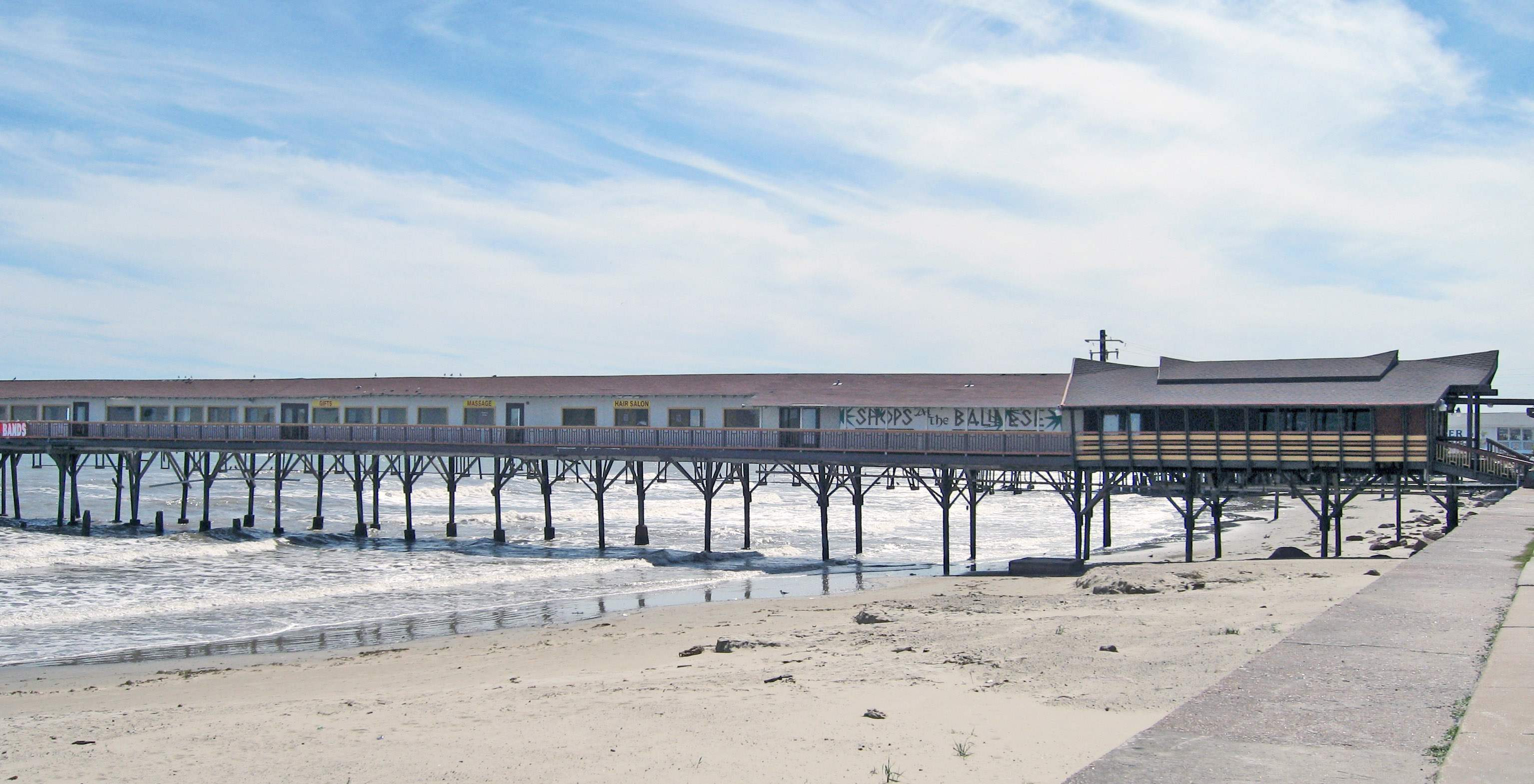
The Maceo brothers arrived from Sicily via Louisiana and opened a barbershop. When Prohibition hit in 1919, Rosario and Salvatore Maceo started giving customers gifts of smuggled wine. The side hustle grew. They allied with the Beach Gang, invested in gambling, and opened the Hollywood Dinner Club, the first venue in America to combine high-class gaming, dining, live entertainment, and air conditioning under one roof. Guy Lombardo played the opening night. A young Walter Cronkite introduced Ben Bernie's orchestra during one of the nation's first remote radio broadcasts. Sam Maceo's smooth personality made him the public face of an empire that soon controlled most of the gambling and liquor on the island. Their other landmark venture, the Balinese Room, opened in 1929 as a casino built on a pier stretching over the Gulf. The Maceos cultivated relationships with establishment families like the Moodys, Sealys, and Kempners, and their influence held for nearly three decades.
A Republic of Revelry
The Free State economy was staggering in scale. A 'rum row' of ships from Cuba, Jamaica, and the Bahamas anchored offshore, supplying liquor that Galveston distributed to Houston, Dallas, Denver, St. Louis, and as far north as Detroit. The island's red-light district on Postoffice Street was so extensive that one in every 62 residents was a prostitute, working in more than fifty bordellos. The city required health inspections for sex workers to protect their clients. The annual Pageant of Pulchritude, which became the first international beauty contest, tripled the island's population each time it ran. Mardi Gras brought extravagant spring celebrations. Not a single Galveston bank failed during the Depression, and unemployment was almost unheard of. As Texas Monthly writer Gary Cartwright observed, 'Galveston's red-light district may have been the only one in the country that thrived with the blessings of both city hall and the Catholic church.'
The Neon Fades to Desert Sand
By the late 1940s, the Maceos saw the writing on the wall. State investigations were closing in, and a new entertainment destination was rising in the Nevada desert. The brothers became major investors in the Desert Inn, the largest casino resort on the Las Vegas Strip when it opened in 1950. Their Galveston empire passed to the Fertitta family. Without the Maceos' iron hand, darker elements moved in. The New Orleans crime syndicate ran guns to Cuba through the island. Fugitives used it as a safe haven. Texas Rangers raided the Balinese Room in an undercover operation, though locals claimed most gaming equipment had already been shipped to Las Vegas before authorities arrived. By 1957, the Free State was effectively gone.
The Morning After
When the vice industries collapsed, everything else went with them. Tourism dried up. The city's television station relocated to Houston. The telephone company headquarters left. The three establishment families had unrivaled control of a stagnating island. For decades, Galveston drifted, its grand buildings aging, its economy muted. The era left behind a rich residue in popular culture: novels, a ZZ Top song about the Balinese Room, and a musical theater production about the Maceo brothers that opened at the Strand Theatre in 2003. Gambling has returned in a sanitized form, aboard cruise ships departing from the port. But the Free State itself belongs to a vanished world where a barrier island in the Gulf ran by its own rules, answering to no one but the tide and the next shipment of Caribbean rum.
From the Air
Located at 29.28°N, 94.83°W on Galveston Island, a narrow barrier island off the Texas Gulf Coast. From altitude, the island stretches about 27 miles long and no more than 3 miles wide, with the Galveston Seawall visible along the Gulf side. The Strand historic district and former casino areas are concentrated on the eastern end. Nearest airports: Scholes International at Galveston (KGLS) on the island, and William P. Hobby Airport (KHOU) in Houston, about 50 miles northwest. The Houston Ship Channel is visible tracking northwest from Galveston Bay toward downtown Houston.