Freedom Riders National Monument
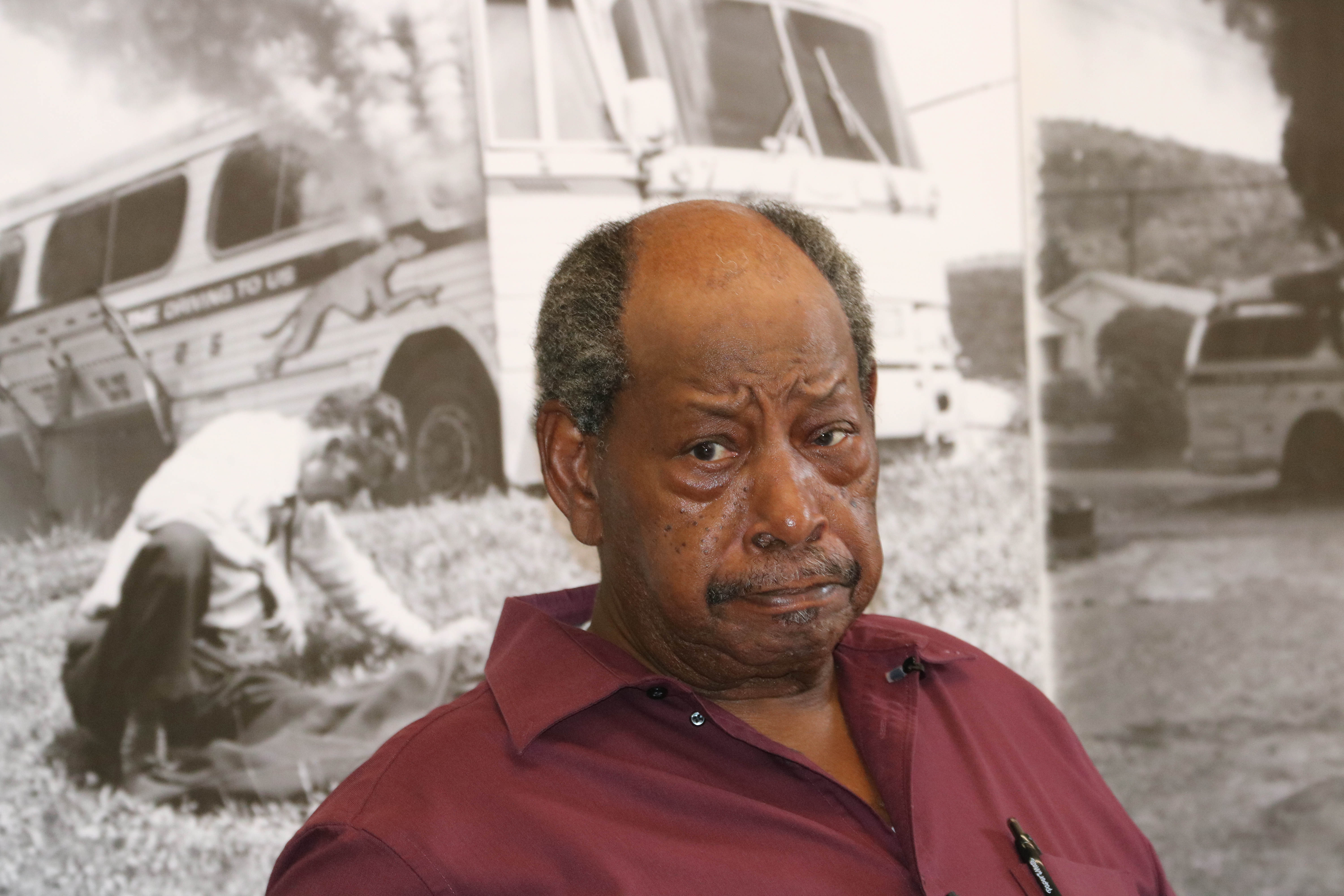
The photograph is seared into American memory: a Greyhound bus engulfed in black smoke on a rural Alabama highway, flames pouring from its windows while a crowd watches. It was taken on May 14, 1961, outside Anniston, Alabama, and it showed the nation exactly what happened when Black and white Americans tried to sit together on a bus through the Deep South. The Freedom Riders National Monument preserves two sites from that day - the Greyhound bus station downtown where the violence began, and the stretch of highway where it reached its terrible crescendo. Together they tell the story of ordinary people who boarded a bus knowing they might not get off alive.
Mother's Day, 1961
The Freedom Riders were testing a simple legal principle: the Supreme Court had ruled that segregation in interstate bus travel was unconstitutional. On May 14, 1961 - Mother's Day - an integrated group of Black and white riders pulled into the Greyhound bus depot at 1031 Gurnee Avenue in Anniston. A mob was waiting. They slashed the bus's tires, threw rocks, and smashed its windows. When the driver pulled away from the station, the mob followed in cars and pickup trucks. The bus limped along Old Birmingham Highway with its shredded tires until it could go no further. Then someone threw a bundle of flaming rags through a broken window. Seconds later, the bus exploded into flame. The riders scrambled out into the arms of their attackers. Local police, who had known about the planned ambush, were nowhere to be seen.
The Image That Changed Everything
Joe Postiglione's photograph of the burning bus ran on front pages across the country and around the world. It became one of the defining images of the civil rights movement - concrete, undeniable proof of the violence that segregation required to sustain itself. The Freedom Riders had set out from Washington, D.C., expecting confrontation, but the ferocity of the Anniston attack exceeded anything they had anticipated. A second group of riders arriving at the Trailways station in Anniston later that same day faced similar violence. The images from Anniston forced the Kennedy administration to act, ordering federal marshals to protect subsequent Freedom Rides and pushing the Interstate Commerce Commission to enforce desegregation of bus terminals. The riders had bled for it, but the strategy worked: putting their bodies on the line had made the invisible visible.
Two Sites, One Story
The monument, designated by President Barack Obama on January 12, 2017, comprises two locations. The first is the former Greyhound bus depot on Gurnee Avenue, where murals and educational panels now line the adjacent building's wall. The station is open to visitors on Wednesdays and serves as part of the Anniston Civil Rights and Heritage Trail, one of nine stops that trace the city's civil rights history. The second site lies along Old Birmingham Highway, State Route 202, where the bus burned. An Alabama Historical Marker erected in 2007 stands at the spot. Five acres of surrounding land were donated to Calhoun County in 2010 for development as a memorial park. The Freedom Riders National Monument was one of three civil rights monuments Obama designated that same day, alongside the Birmingham Civil Rights National Monument and what would become the Reconstruction Era National Historical Park.
Memory Against Forgetting
At the dedication ceremony on May 13, 2017 - the day before the fifty-sixth anniversary of the attack - visitors came from as far away as Denmark. Hank Thomas, a Freedom Rider and the last living survivor of the bus burning, delivered a speech. An interim visitor center was established in the reception area of Anniston City Hall, complete with a National Parks passport stamp station. The site of the burning itself sits surrounded by private residences, an ordinary stretch of road that gives no outward sign of what happened there. A memorial sign erected in 2012 was vandalized shortly after it went up, then quickly repaired. The National Park Service, Calhoun County, and the Freedom Riders Memorial Committee continue to develop the site. The monument stands as a landmark of the United States Civil Rights Trail - a reminder that the most consequential acts of courage often happen not on battlefields but on buses, at lunch counters, and in the streets of small Southern towns.
From the Air
Located at 33.635N, 85.908W in Anniston, Alabama. The monument comprises two sites: the former Greyhound Bus Station in downtown Anniston (1031 Gurnee Avenue) and the bus burning site along Old Birmingham Highway/State Route 202 outside of town. From the air, downtown Anniston is identifiable by its grid street pattern. The bus burning site lies to the west along SR 202. Anniston-Calhoun County Airport (KANB) is approximately 4 miles south of the downtown site. Best viewed at 2,000-3,000 ft AGL. The area features rolling Alabama piedmont terrain between the Appalachian foothills and the coastal plain.