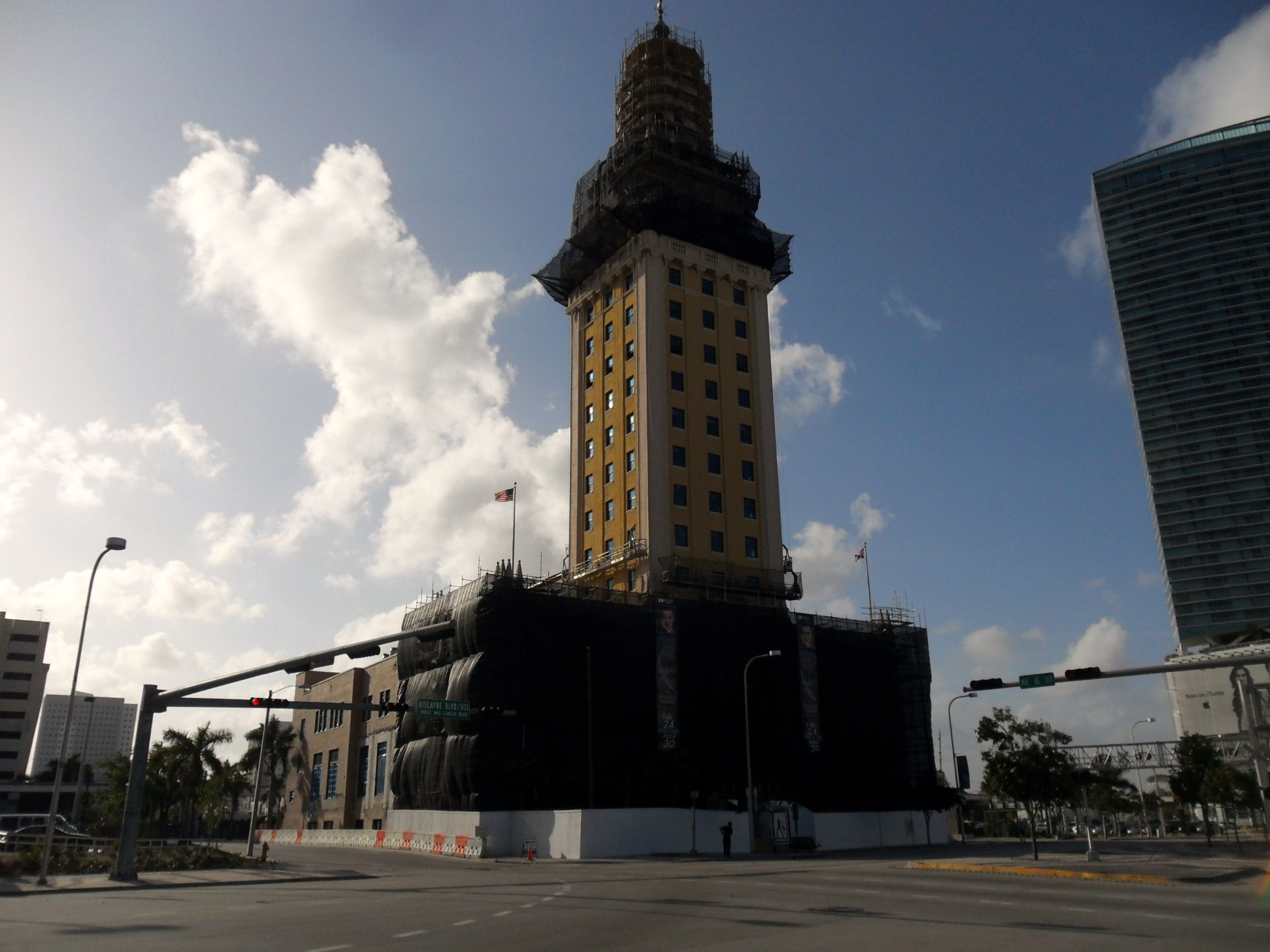
Freedom Tower: Miami's Ellis Island of the South
They called it the Giralda of Miami. When the architectural firm Schultze and Weaver completed the building at 600 Biscayne Boulevard in 1925, they had borrowed freely from the famous bell tower of Seville's cathedral, capping their creation with a decorative beacon atop a 255-foot tower. The Freedom Tower was built to house The Miami News and its printing presses -- a Mediterranean Revival showpiece for a young city that wanted to announce itself to the world. But the building's first life as a newspaper headquarters would prove to be just the opening chapter. After Fidel Castro's revolution swept Cuba in 1959, the U.S. government converted the tower into a processing center for the flood of refugees crossing the Florida Straits. For the Cuban exile community, the Freedom Tower became what Ellis Island was for an earlier generation of immigrants: the first stop in a new country, the place where a new life began.
Through the Tower's Doors
Throughout the 1960s, the federal government used the Freedom Tower to process and document Cuban refugees, providing medical and dental services to families arriving with little more than what they could carry. The tower became the administrative heart of one of the largest refugee resettlements in American history. Cubans of every social class passed through its doors -- former professors and sugar farmers, doctors and fishermen -- all entering the machinery of immigration processing in a building originally designed to publish a newspaper. When the major era of refugee arrivals ended, the government sold the building to private buyers in 1974. The tower sat vacant and deteriorating, its grand halls echoing with absence rather than the bustle of new arrivals.
Rescue and Restoration
In 1979, the Freedom Tower was added to the National Register of Historic Places, but recognition did not prevent decay. The building languished until 1997, when the family of prominent Cuban-American businessman Jorge Mas Canosa purchased it for $4.1 million. The Mas family restored the tower to its original condition and converted it into a memorial for the refugees who had passed through its halls. It housed a museum, library, meeting hall, and the offices of the Cuban American National Foundation. When salsa legend Celia Cruz died in 2003, more than 200,000 people came to the Freedom Tower to pay their respects -- a testament to how deeply the building was woven into the fabric of Miami's Cuban community.
A Living Monument
In 2005, the Freedom Tower was donated to Miami Dade College, which now operates it as a museum, cultural center, and education center. The MDC Museum of Art + Design occupies the second floor, offering free exhibitions to the public. Inside the Grand Hall, a mural called New World Mural 1513 -- painted in 1988 by a group known as The Miami Artisans -- recreates a ruined original from 1926 that was commissioned by the tower's developer, former Ohio Governor James M. Cox. The center of the mural features a poem by Edwin Markham, the poet laureate who spoke at the Lincoln Memorial. On October 6, 2008, the tower was designated a U.S. National Historic Landmark specifically for its role in hosting Cuban refugees. The American Institute of Architects' Florida Chapter placed it on its list of Florida Architecture: 100 Years, 100 Places.
Still a Stage for History
The Freedom Tower continues to attract figures seeking the symbolic weight of its history. In April 2015, Cuban-American Senator Marco Rubio chose the tower as the venue to announce his presidential campaign, citing its significance as a beacon of freedom. That same year, King Felipe VI of Spain received the Presidential Medal from Miami Dade College inside the building -- a moment that connected the tower back to the Seville architecture that inspired it. In 2022, Governor Ron DeSantis announced a $25 million investment to preserve and enhance the tower. And in 2025, President Donald Trump announced plans to build his presidential library on an adjacent 2.63-acre parcel of land owned by Miami Dade College, keeping the Freedom Tower at the center of Miami's evolving story.
From the Air
Located at 25.78°N, 80.19°W on Biscayne Boulevard in downtown Miami, directly on the waterfront. The 255-foot tower with its distinctive Mediterranean Revival cupola is visible from altitude against the downtown skyline. The building sits on Miami Dade College's Wolfson Campus, east of the Government Center area. Miami International Airport (KMIA) is approximately 6 nautical miles west-northwest. The Port of Miami and MacArthur Causeway are nearby visual references. Best viewed at 2,000-4,000 feet AGL, where the tower's height and cupola are distinguishable among the surrounding modern high-rises along Biscayne Boulevard.