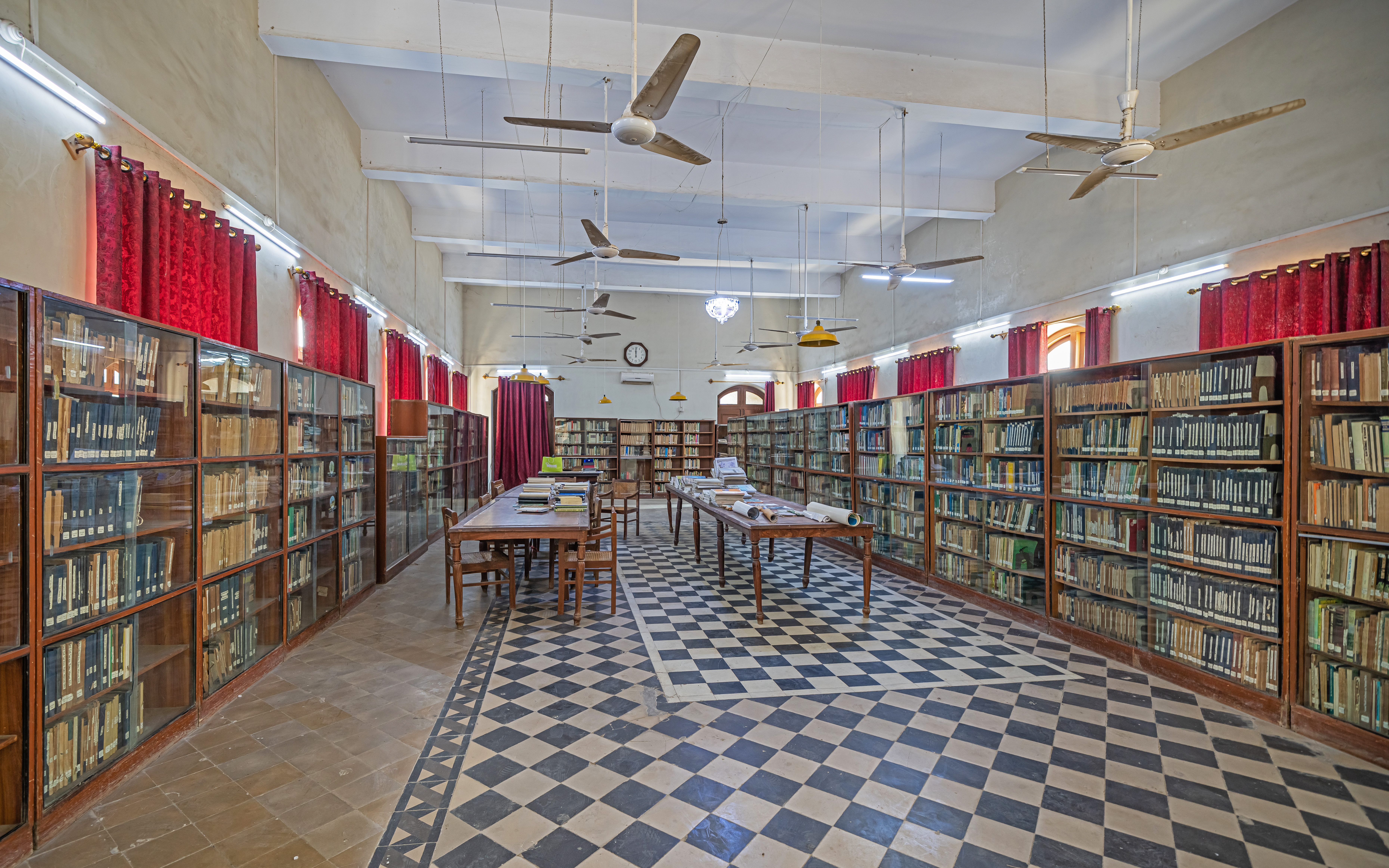
Freemasons Lodge Building (Karachi)
The locals called it jadoo ghar -- the House of Sorcery. On Molana Din Muhammad Wafai Road in Karachi, near the D.J. Sindh Government Science College, a yellow sandstone building constructed in 1914 once hosted gatherings that most of the surrounding neighborhood could only speculate about. Men entered through its heavy doors and did not explain what happened inside. The Freemasons Lodge of Karachi was never a place of magic, of course. It was a fraternal meeting hall for members of one of the world's oldest secret societies. But in a predominantly Muslim city, secrecy itself was suspicious enough.
A Lodge in the Empire
Freemasonry arrived in the Indian subcontinent with the British Empire, and lodges were established in major colonial cities as gathering places for administrators, military officers, merchants, and their local allies. The Karachi lodge was built by the Freemason's Trust in 1914 from yellow sandstone, a material that gave the building a warm, golden tone quite unlike the whitewashed structures around it. For decades, it served its intended purpose: a venue for Masonic rituals, fraternal meetings, and the networking that characterized colonial social life. The building's architectural character -- its wooden staircase, library, and exhibition spaces -- reflected the lodge's aspirations to respectability and permanence.
Banned and Repurposed
In 1972, President Zulfikar Ali Bhutto banned Freemasonry in Pakistan. The ban reflected a broader political hostility toward organizations perceived as secretive, Western-aligned, or potentially subversive to the Islamic state's values. The government seized the lodge building. For nearly two decades it sat in bureaucratic limbo. In the early 1990s, it was allocated to the Sindh Wildlife Department, and it now serves as the headquarters of the Sindh Wildlife Fund. Around 2001, the building was declared a protected heritage site under the Sindh Cultural Heritage Act of 1994. The transition from secret society meeting hall to wildlife conservation office is one of the more unlikely second acts in Karachi's architectural history.
Sandstone and Secrets
The lodge building today retains much of its original character. A wooden staircase near the entry leads to upper floors. A small library occupies one room. Exhibition spaces display wildlife-related materials where Masonic regalia once hung. The yellow sandstone exterior, though weathered by more than a century of Karachi's heat and monsoon humidity, still distinguishes the building from its neighbors. For Karachiites who pass it daily, the jadoo ghar is a curiosity -- a relic of colonial social networks that have no modern equivalent in the city, housing a department that protects the animals of a province most residents never visit. The building is, in its quiet way, a layered artifact: British imperial ambition, Masonic ritual, nationalist reaction, and bureaucratic pragmatism, all stacked in yellow stone.
From the Air
Located at 24.853°N, 67.026°E in central Karachi, near D.J. Sindh Government Science College. A small heritage building not individually distinguishable from altitude. Jinnah International Airport (OPKC) is approximately 11 km to the north. The building is in Karachi's educational and institutional district.