French Algeria
Algeria was not, in the eyes of French law, a colony. It was France. Three departements organized in 1848 made the territory as administratively French as Provence or Brittany. Children in Algerian schools studied the same curriculum as children in Paris. The fiction was elaborate, total, and sustained for 132 years -- from the invasion of 1830 to the war-torn independence of 1962. That it required the deaths of an estimated 825,000 Algerians by 1875 just to establish, and an eight-year war that killed hundreds of thousands more to dismantle, reveals the distance between the legal construct and the lived reality.
Conquest and Settlement
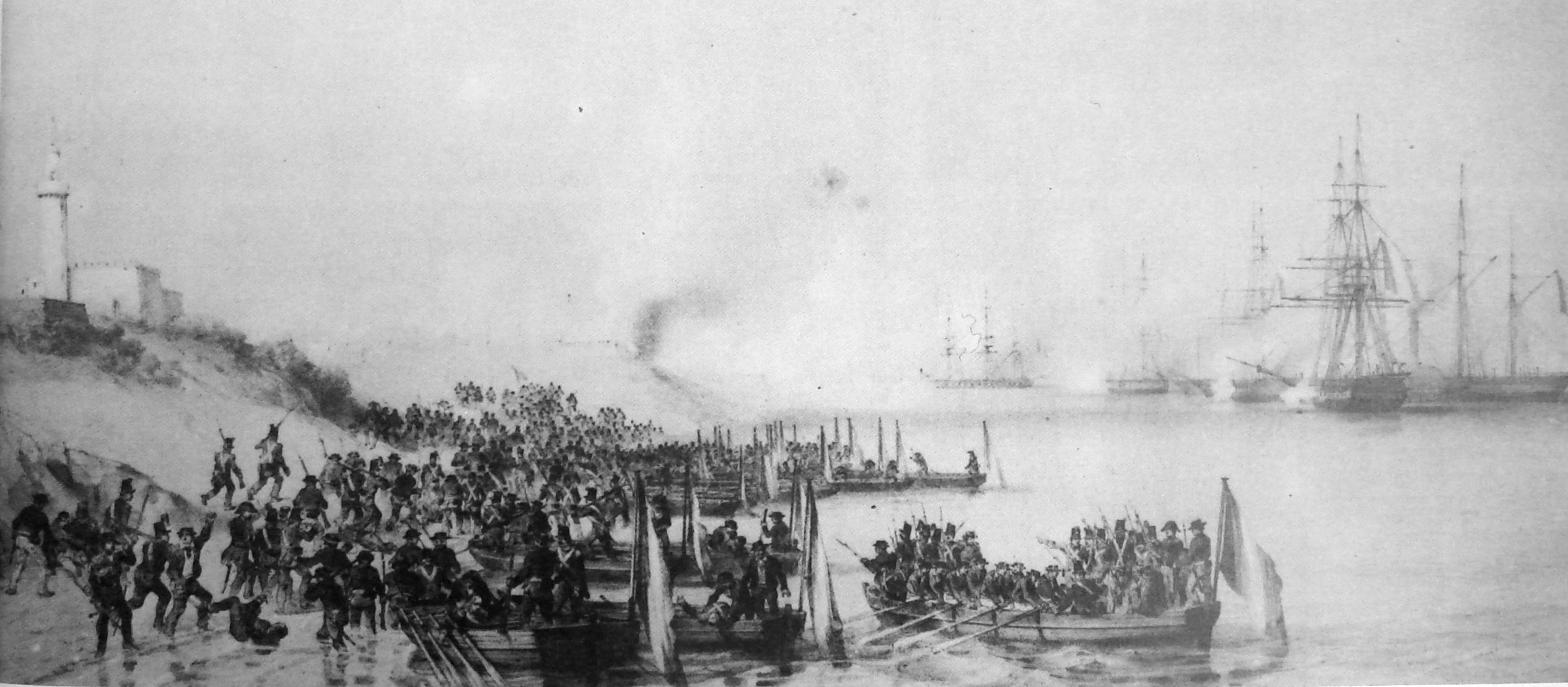
The French conquest began with the 1830 invasion of Algiers, which toppled the Ottoman-backed Regency. But "conquest" is too neat a word for what followed: a brutal forty-five-year campaign of pacification that met resistance from figures like Emir Abdelkader, Ahmed Bey, and Lalla Fatma N'Soumer. Even after military control was nominally established, the project of making Algeria French was far from complete. Hundreds of thousands of European settlers -- first called colons, later known as Pieds-Noirs -- arrived from France, Spain, Italy, and Malta. By the mid-twentieth century, roughly a million Europeans lived in Algeria, forming about ten percent of the population. They dominated economic and political life. The Muslim majority, which always constituted about ninety percent of the population, was denied citizenship unless they renounced Islamic personal law -- a condition virtually none accepted.
Two Algerias in One Country
The paradox of French Algeria was that its legal framework of equality concealed a rigid system of inequality. European settlers controlled the best agricultural land, held political power, and benefited from a modern economy. The native Muslim population was governed under a separate legal regime, the Code de l'Indigenat, which restricted their movement, political activity, and legal rights. France attempted to address growing unrest with reforms -- the Blum-Viollette proposal in 1936 would have granted citizenship to a small Muslim elite without requiring renunciation of personal status -- but settler opposition blocked every meaningful change. The Setif and Guelma massacre of 1945, in which French forces killed thousands of Algerian civilians following VE Day celebrations, marked what many historians consider the point of no return in Franco-Algerian relations.
The War That Ended an Empire
On November 1, 1954 -- a date Algerians call Toussaint Rouge -- the National Liberation Front launched coordinated attacks across Algeria, igniting the Algerian War. What made this conflict uniquely destructive was precisely the legal status France had created: because Algeria was constitutionally French, the war was not a colonial retreat but an amputation. A million European settlers considered Algeria their homeland. The French Army committed itself with ferocity, deploying paratroopers, practicing systematic torture during the Battle of Algiers, and relocating millions of rural Algerians into controlled settlements. The FLN responded with guerrilla warfare and terrorism. The war consumed the French Fourth Republic, bringing Charles de Gaulle back to power in 1958. Even de Gaulle, initially ambiguous, eventually concluded that Algerian independence was inevitable.
The Departure
The Evian Accords of March 1962 ended the war and confirmed Algerian independence. In the months that followed, nearly a million Pieds-Noirs fled to France, most in a frantic exodus during the summer of 1962. They left behind farms, businesses, homes, and cemeteries. The Organisation armee secrete, a settler paramilitary group, pursued a scorched-earth campaign in its final months, burning libraries, destroying infrastructure, and attacking Algerians in a last spasm of violence. Algeria declared independence on July 5, 1962 -- 132 years to the day after French troops had entered Algiers. The new nation inherited a ravaged landscape, a traumatized population, and the complex legacy of a colonial project that had insisted, until the very end, that Algeria was not a colony at all.
From the Air
Located at 36.776N, 3.059E in central Algiers. French Algeria's administrative heart was in Algiers, where the Government Palace, European boulevards, and the port complex remain visible. The city's dual character -- the medieval Casbah rising above French-built Haussmannian quarters -- illustrates the colonial overlay from the air. Nearest airport: Houari Boumediene Airport (DAAG), approximately 16 km southeast. The farmland of the Mitidja plain south of Algiers, once the heartland of European agriculture, stretches toward the Atlas foothills.