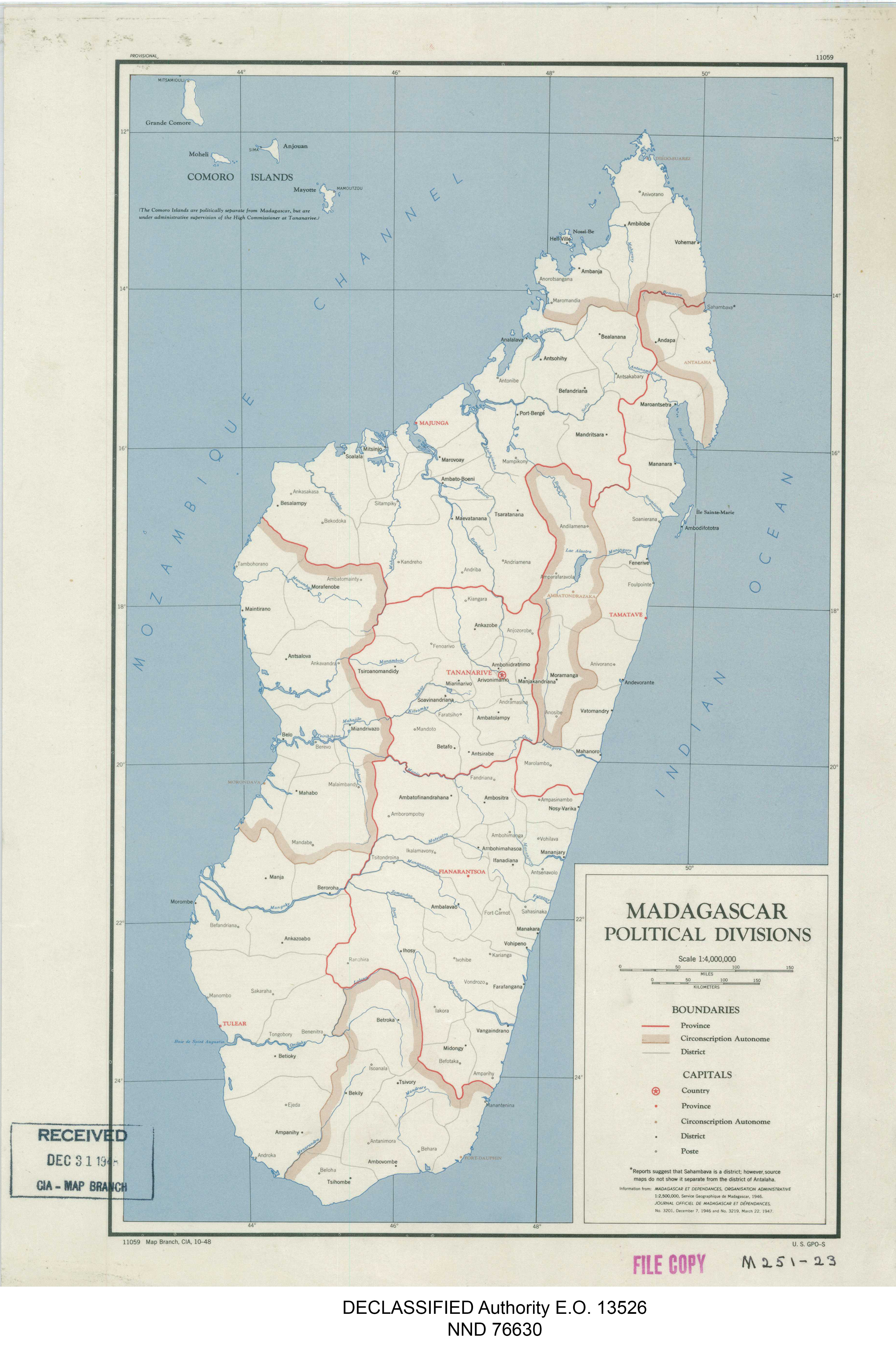
French Madagascar
On 17 December 1885, Queen Ranavalona III signed a treaty that made Madagascar a French protectorate. She did not sign willingly. For years she had worked to prevent exactly this outcome, navigating between British and French imperial ambitions with the limited leverage a small island kingdom could muster. Within a decade, France would exile her to Reunion, abolish the monarchy entirely, and absorb Madagascar into its colonial empire -- a status that would persist for sixty-one years and leave wounds the island still carries.
A Queen's Resistance
The path to colonization ran through decades of diplomatic maneuvering. Britain had been Madagascar's ally, and in 1862 its foreign secretary instructed diplomats to help keep the island free of foreign powers. But European priorities shifted. In 1882, France began occupying Madagascar's northern and western territories. The Franco-Hova Wars of 1883 brought inconclusive fighting between the French military and the Merina Kingdom. Queen Ranavalona III, even as she accepted the Legion of Honour from France in 1888, worked to hold her country together. It was a losing struggle. In September 1895, French forces took the capital, Antananarivo. By 1897, the queen was exiled and Madagascar was a colony. France abolished slavery upon taking control, freeing over 500,000 enslaved people -- though many remained in their former masters' homes as servants, and freedom on paper did not translate to freedom in practice.
Iron and Stone
Resistance did not end with the queen's exile. Among Merina intellectuals in Antananarivo, nationalist sentiment coalesced around Pastor Ravelojoana, a Protestant clergyman inspired by Japan's rapid modernization. In 1913, a secret society named Vy Vato Sakelika -- Iron and Stone Ramification -- formed to affirm Malagasy cultural identity. The French suppressed it brutally, but the movement planted seeds. Malagasy veterans returning from service in France during World War I brought back more than military experience. They brought exposure to socialist and anti-colonial thought, and figures like Jean Ralaimongo channeled that energy into labor organizing and demands for political equality. Through the 1920s and 1930s, underground trade unions formed, the Communist Party of the Region of Madagascar emerged, and the colonial administration grew increasingly nervous.
The Revolt of 1947
On 29 March 1947, Malagasy nationalists rose against French rule. The uprising spread across a third of the island before French reinforcements arrived from the metropole. What followed was devastating. The French military responded with summary executions, torture, forced relocations, and the burning of villages. In a particularly horrific tactic of psychological warfare, suspects were thrown alive from aircraft to terrorize villagers below. Casualty estimates among the Malagasy range from 11,000 to as many as 90,000 dead. French military courts executed twenty leaders of the revolt and convicted between 5,000 and 6,000 others. The MDRM, the political party suspected of organizing the uprising, was outlawed, its leadership imprisoned. For the Malagasy people, the Revolt of 1947 became a defining moment -- proof that the desire for self-determination could survive any attempt to crush it.
The Long Road to Independence
Reform came slowly and unevenly. The 1946 French constitution made Madagascar an overseas territory with nominal citizenship for the Malagasy, but the assimilationist framework clashed with demands for full independence. The 1956 Loi Cadre introduced universal suffrage, which transformed Madagascar's political landscape by giving the coastal peoples -- the cotiers, who outnumbered the highland Merina -- a democratic majority for the first time. Two competing visions emerged: Philibert Tsiranana's Social Democratic Party favored self-rule with close French ties, while the Congress Party for the Independence of Madagascar, led by Richard Andriamanjato, demanded complete sovereignty and the "Malagachisation" of society away from French language and customs. In 1958, the colonial administration was finally abolished. Madagascar became the autonomous Malagasy Republic, though full independence would not arrive until 1960 -- more than six decades after Queen Ranavalona III was shipped into exile.
From the Air
Located at 18.93S, 47.52E. The story of French Madagascar centers on Antananarivo and its surroundings on the central highland plateau. Ivato International Airport (FMMI) serves the area. From altitude, the city of Antananarivo sprawls across ridgelines with the Rova hilltop visible at the highest point. The broader landscape of central Madagascar -- terraced rice paddies and red laterite roads -- reflects the agricultural economy that colonial administration reorganized.