French war planning 1920-1940
The Dyle is not a particularly impressive river. It rises near the Brabant village of Houtain-le-Val and runs north through Flanders to join the Rupel near Mechelen, eventually reaching the sea via the Scheldt. A traveler crossing it on a country road today might not notice. Yet for the entirety of the late 1930s, this modest waterway was the spine of French strategic thinking. The French Army, the British Expeditionary Force, and the Belgian Army were all supposed to converge on its banks at the first sign of a German invasion, dig in, and hold the line. On 10 May 1940 they did exactly that. They reached the Dyle in good order, occupied the positions they had been preparing for years, and were perfectly ready to fight a battle that the Germans had no intention of giving them.
The Geography Trap
Every French strategic decision between the wars came back to the same map. The Treaty of Versailles in 1919 had returned Alsace and Lorraine to France. By the 1930s, those two provinces and the corner of northeastern France around them held a hugely disproportionate share of national industry, coal, and population. In 1914, the French Army had bought time by retreating across this country and trading territory for mobilization. In any future war, the High Command concluded, that would be impossible. Lose Lorraine in the first weeks and France would lose the war. The Supreme War Council, revived on 23 January 1920, accepted this calculus as fundamental. From that moment on, French planning had to begin from one assumption: the next war could not be fought on French soil. It would have to be fought somewhere else. Belgium was the only somewhere else available.
The Maginot Line and the Belgian Hinge
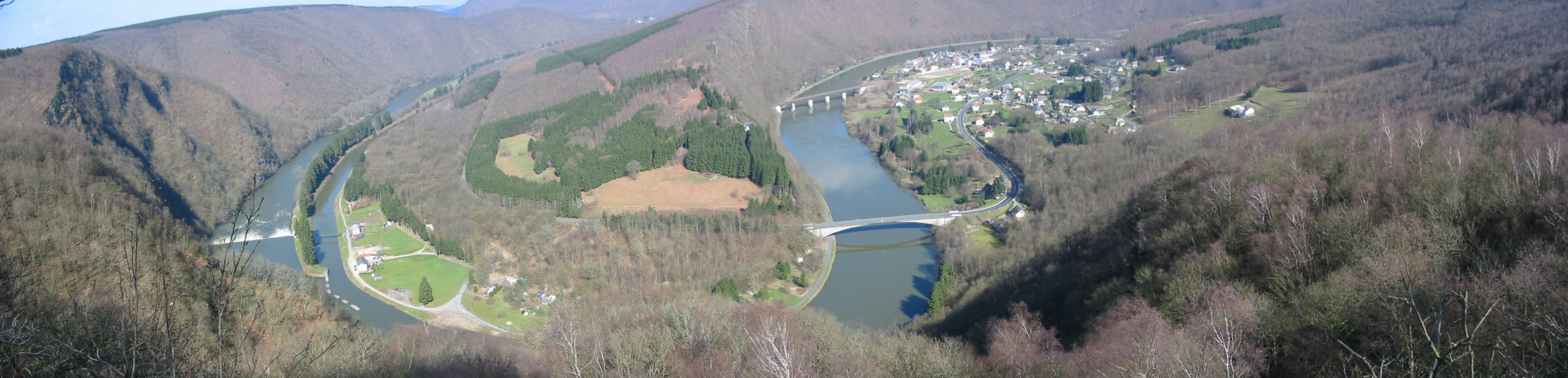
By the mid-1920s, French planners had divided the eastern frontier into three zones. The northeastern border with Germany, from the Swiss frontier to the Luxembourg corner, would be sealed with the Maginot Line: continuous concrete from Belfort through Lauter and the Moselle valley to the great forts around Metz. André Maginot, war minister three separate times in the 1920s and early 1930s, secured the funding. Construction began in 1929. The fortifications were designed to hold for three weeks, long enough for the rest of the French army to mobilize. The Ardennes, the wooded hills connecting the Maginot Line to Belgium proper, was considered easy to defend with felled trees and roadblocks. The Guillaumat Commission concluded in 1927 that the narrow serpentine roads could be blocked easily. In 1934, Marshal Pétain himself called the Ardennes "not dangerous." That left the open Belgian plain as the only invasion route worth seriously preparing for. The Maginot Line did not extend along the Belgian border partly because the high water table made deep fortifications impossible and partly because building it there would have insulted Belgium, an ally.
The 1936 Repudiation
The 1920 Franco-Belgian Accord had locked in the plan: at the first sign of German aggression, French troops would race across the border to take up positions on the Belgian-German frontier, making Belgian territory the main line of resistance. Then on 7 March 1936, Hitler reoccupied the Rhineland. The Wehrmacht was suddenly on Belgium's eastern border. Belgium responded by tearing up the 1920 accord and declaring strict neutrality. France could no longer plan jointly with Belgian staff. French divisions could not enter Belgium until invited, and the invitation would arrive only after the Germans had already crossed. The French response was to develop three fallback plans: Plan E along the Scheldt, the shorter Plan D along the Dyle, and the line of the French border itself. General Maurice Gamelin, commander-in-chief, initially preferred the cautious Plan E. By November 1939, having improved his estimate of the Belgian Army's holding power, he switched to Plan D.
The Breda Variant
Then Gamelin did something his subordinates begged him not to do. In March 1940, he added the Breda variant to Plan D. The French Seventh Army, containing some of the most mobile divisions in the French strategic reserve, would race not just to the Dyle but all the way into the southern Netherlands, hooking up with the Dutch Army at Breda or Tilburg. The reasoning was political as much as military: pulling the Dutch into the alliance would add ten divisions to the order of battle and secure the Scheldt estuary for resupplying Antwerp. General Alphonse Georges, commander of the Northeast Front, warned that committing the reserve this far north would leave nothing behind to respond to a German surprise elsewhere. He requested that the Seventh Army be replaced by two divisions and returned to reserve. Gamelin overruled him. The historian Robert Doughty would later observe that Gamelin, an officer with a reputation for caution, had taken a gamble greater than the one the German planners were about to take.
The Mechelen Incident
On 10 January 1940, a German aircraft made a forced landing near Vucht in the municipality of Maasmechelen, in Belgian Limburg — an incident that came to bear the name Mechelen, after the municipality's common shorthand. Its passenger, a Luftwaffe officer, was carrying the plans for Case Yellow, the German invasion of the Low Countries. Belgian authorities seized the documents and passed them to Allied intelligence. Most analysts assumed they were a plant. The Germans, however, had reason to believe their plans were now compromised. The Mechelen incident pushed the German High Command toward a radical rewrite by General Erich von Manstein: instead of the main thrust through central Belgium, the panzer schwerpunkt would shift south, through the supposedly impassable Ardennes, while a smaller force in the north drew the Allies forward into a trap. On 24 February, twenty divisions including seven panzer and three motorized were transferred from Army Group B in the north to Army Group A facing the Ardennes. French intelligence detected some of the redeployment but never grasped its significance. No French contingency plan anticipated a German attack through the Ardennes.
Six Weeks
On 10 May 1940, the German army invaded. The Dyle plan executed exactly as designed. The Seventh Army reached Breda on 11 May. The British Expeditionary Force and the French First Army dug in along the Dyle from Louvain through Wavre to Gembloux. At Hannut on 12 to 14 May, French armored divisions actually defeated German panzers in the first tank-on-tank battle of the war. The First Army held the Battle of Gembloux on 14 to 15 May. None of it mattered. While the best French divisions were fighting brilliantly in central Belgium, seven panzer divisions of Panzergruppe von Kleist were emerging from the Ardennes onto the Meuse at Sedan. The 55th Division collapsed under eight hours of Luftwaffe bombing on 13 May. By 14 May the Germans had three bridgeheads across the river. The 1st Armored Division, sent piecemeal toward the breakthrough, was caught refueling by the 7th Panzer Division and destroyed. By 20 May German forces had reached Abbeville on the Channel coast, cutting off the northern armies. The Belgian capital, Brussels, fell on 17 May. The plan that had structured twenty years of French defense thinking had been outflanked in nine days.
From the Air
The Dyle line ran from Antwerp at roughly 51.22°N, 4.40°E south through Louvain, Wavre, and Gembloux to Namur at 50.46°N, 4.87°E. The Ardennes breakthrough at Sedan is at 49.70°N, 4.94°E. Brussels Airport (EBBR) lies near the center of the historical battle area. From cruising altitude the wooded ridges of the Ardennes are clearly visible to the southeast of Brussels, and the agricultural plain of central Belgium that the Dyle plan was designed to defend opens out to the north.