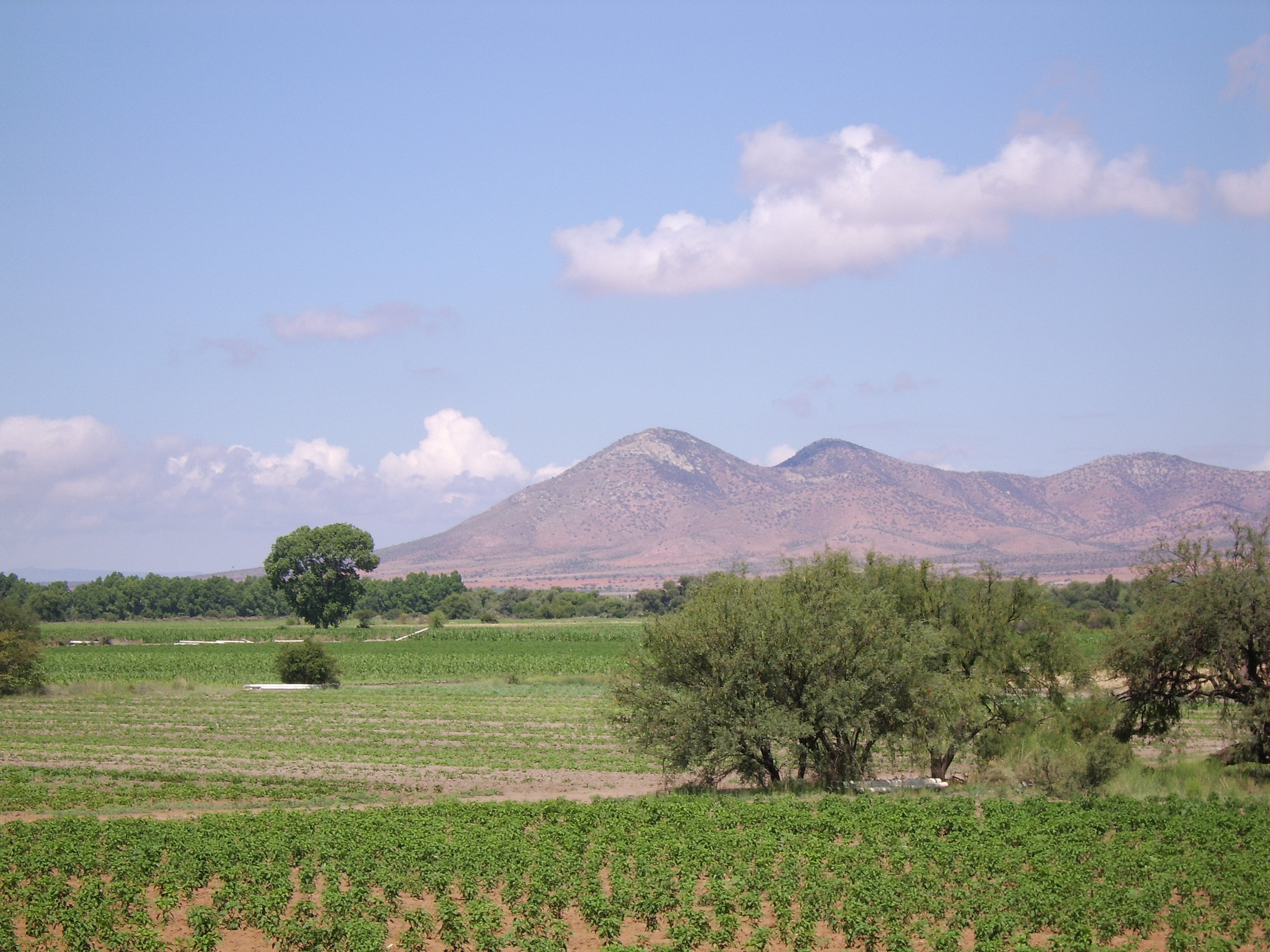
Fresnillo
On September 2, 1554, a fifteen-year-old named Francisco de Ibarra led his expedition to a freshwater spring at the edge of an arid plateau. A small ash tree grew at its margin -- a pequeno fresno -- and that night the young explorer wrote a name in his journal: Ojo de Agua del Fresnillo, spring of the small ash. The name stuck. Nearly five centuries later, the silver that drew Ibarra and his predecessors still flows from the earth here, making Fresnillo home to one of the richest silver mines on the planet.
A Hill Forgotten and Found
Before Ibarra arrived, another Spaniard had already glimpsed what lay beneath this ground. Between 1551 and 1552, Diego Fernandez de Proano explored the Zacatecas region, searching for a legendary mineral-rich hill. He found one -- not the hill of legend, but a promising prospect he named Cerro de Proano. He reported his discovery to the Viceroy in Zacatecas, but the response was indifference. Proano's Hill was forgotten for years. When mining finally began in earnest, the hill proved his instincts right: between 1682 and 1757, the mines on Proano's foothills produced steadily. Then the shafts reached fifty meters and groundwater flooded in. Unable to pump the mines dry, the owners defaulted on loans to the Spanish Crown, which seized the properties and appointed new administrators. The mines sat idle. It would take new technology and new capital to reopen what the water had claimed.
Soldiers, Saints, and Silver
The early decades after Fresnillo's founding were violent. Guachichil warriors -- nomadic and formidable -- raided the settlement repeatedly, inflicting heavy losses. The Viceroy Martin Enriquez de Almanza ordered the construction of a presidio, assigning Captain Rodrigo Rio de Loza and eight soldiers to defend the town. The military outpost stood where the municipal palace stands today. But Fresnillo's enduring fame owes less to its soldiers than to its saints. In the nearby mining town of Plateros, Spanish miners in the late 1690s reportedly found a silver crucifix in a wooden crate, its origin unknown. Devotion to the find led to the cross-Atlantic transport of a statue of Our Lady of Atocha, depicting the Virgin Mary holding the infant Jesus. That infant figure became the Santo Nino de Atocha -- the Holy Child of Atocha -- and pilgrims have traveled to Plateros to pray before it ever since.
Miracles and the Miners' Guardian
Believers attribute miracles to the Holy Child. Those who feel their prayers were answered return with gifts of gratitude -- so many gifts that in 1883 a separate building was constructed to house them. The shrine at Plateros remains one of the most visited pilgrimage sites in Mexico, drawing families from across the country who attend mass and offer devotion to the small statue they consider a guardian of miners. The tradition reflects something essential about Fresnillo: this is a city where the sacred and the industrial have always been intertwined. The coat of arms tells the same story -- the Virgin of Candlemas on one side, weapons of conquest on the other, and at the bottom the spring and the ash tree, with Proano's Hill rising beneath September clouds. The Latin inscription reads: Orat Atque Laborat Ab Urbe Condita. Since its founding, a city that works and prays.
Silver and Shadows
The Mina Proano, now operated by the Penoles mining company, remains one of the world's most productive silver mines. Agriculture -- corn, peppers, tomatoes -- supplements the mining economy, and surrounding villages send their harvests to Fresnillo's markets. But modern Fresnillo carries shadows alongside its silver. In 2013, the city made history by electing Mexico's first openly gay mayor, Benjamin Medrano, in a region not known for progressive politics. In 2020, the murder of a twelve-year-old girl sparked protests that burned the municipal palace. By 2021, surveys found that 96 percent of Fresnillo's residents felt unsafe, a figure driven by cartel violence that the New York Times documented under the headline 'We're Living in Hell.' The city that works and prays now also endures -- its centuries-old resilience tested by pressures its founders could not have imagined.
From the Air
Fresnillo is located at 23.17N, 102.87W in the state of Zacatecas, on the high central Mexican plateau. The nearest major airport is General Leobardo C. Ruiz International Airport (ICAO: MMZC) in Zacatecas, approximately 60 km to the southeast. The terrain is semi-arid plateau with scattered mining operations visible from altitude. Cerro de Proano and the Mina Proano complex are identifiable landmarks. Best viewed at 3,000-5,000 ft AGL. The nearby town of Plateros and its shrine are approximately 5 km to the southeast.