Fryske Akademy
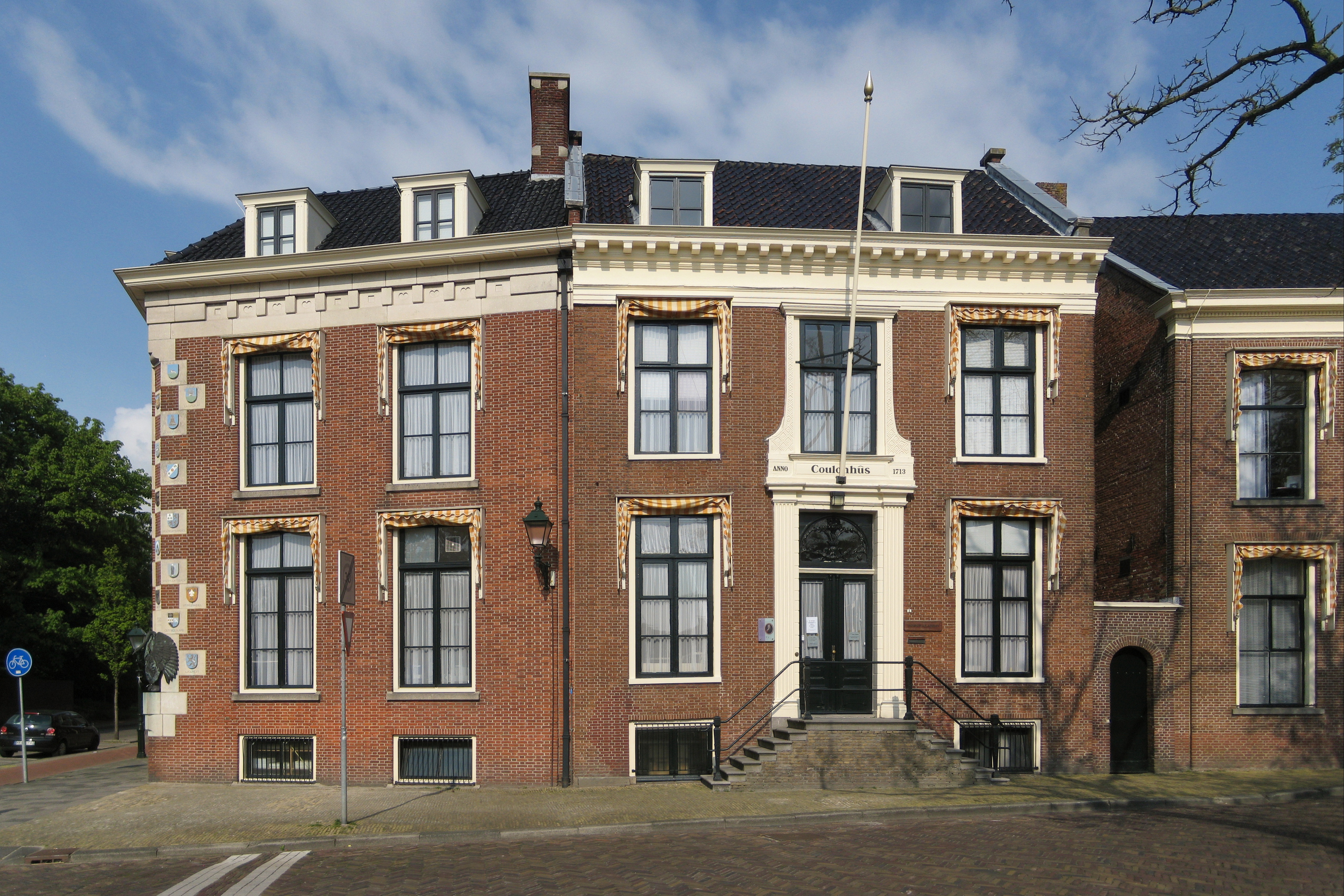
Twenty-five volumes. That is how much of the West Frisian language fits between covers when the Fryske Akademy is doing the cataloguing. The dictionary it has been compiling - the Wurdboek fan de Fryske Taal - is the principal authority on a language spoken by fewer than half a million people on Earth. The Akademy works out of a seventeenth-century house called the Coulonhus in central Leeuwarden, and it has been doing this kind of careful, defiant scholarship since 1938 - the year a small group of pro-Frisian politicians and scientists decided their people deserved their own academy.
Heirs to a Lost University
The story starts not in 1938 but in 1811, when Napoleon shut down the University of Franeker. Franeker had been one of the great Protestant academies of Europe since 1585 - a small Frisian town with a university that drew students from across the continent. Its closure was a wound the Kingdom of the Netherlands never repaired; the government never reopened it. For more than a century afterwards, two Frisian learned societies kept the embers warm: a society for Frisian history, archaeology and linguistics, and a society for the Frisian language and book knowledge. They considered themselves Franeker's intellectual heirs. When the Fryske Akademy finally took form in 1938, with the support of the historian Geart Aeilco Wumkes and the theologian Titus Brandsma, it inherited the same conviction. The Akademy still considers itself a successor to the lost university.
Cataloguing a Language
About sixty people work at the Akademy day to day. Another three hundred scientists - some professionals, many gifted amateurs - take part in its scientific societies. The Genealogical Society traces Frisian families across centuries. The Archaeological Society sifts through the terp mounds - the artificial hills early Frisians piled up against the sea. The Biological Society studies the natural life of the province. Around three thousand donors fund the work at a minimum of twenty-five euros a year each, an unusually personal financing model for a research institute. Since its founding the Akademy has published nearly a thousand scientific books and thousands of articles, on everything from medieval Frisian law to the conjugation of irregular verbs.
Beyond the Dictionary
The Wurdboek is the headline project, but it is not the only one. The West Frisian to English dictionary opens the language outward, to readers who do not come through Dutch first. The Historical Geographical Information System - HISGIS - links centuries of land registry records to maps and parish registers, making it possible to trace who owned what field, when, going back generations. The Mercator European Research Centre on Multilingualism and Language Learning, hosted by the Akademy, studies minority languages across Europe and is partly funded by the Council of Europe, the province of Friesland and the municipality of Leeuwarden - a small institution doing continental work. The Akademy also developed the first Frisian-language speech therapy test, so bilingual children would no longer be assessed only in Dutch and judged delayed when they were merely speaking the wrong language for the form.
Brandsma's Shadow
One of the founders deserves a paragraph of his own. Titus Brandsma was a Carmelite friar, a philosophy professor at Nijmegen, and a passionate advocate of Frisian language and Catholic press freedom. He helped bring the Fryske Akademy into existence in 1938. Three years later, when the Nazi occupation tried to force Dutch Catholic newspapers to print German propaganda, Brandsma travelled from editor to editor urging them to refuse. He was arrested in January 1942. He died in Dachau in July of that year, killed by lethal injection in the camp infirmary. He was canonized a saint of the Catholic Church in 2022. The Akademy he helped found does not advertise his memory at its door, but his combination of scholarly rigour and quiet courage is part of the institutional DNA - a Frisian intellectual who believed his small language mattered enough to be defended at any cost.
Coulonhus and the City
From cruising altitude the Akademy is hard to pick out - the Coulonhus and its adjacent buildings are just one tile in the dense brick fabric of central Leeuwarden, north of the Wilhelminaplein and east of the Oldehove tower. But the city itself is unmistakable from above: the Oldehove leans north, the Eewal canal threads through the old centre, and the entire compact mediaeval core is wrapped by a ring of canals. The Akademy occupies a Renaissance townhouse on the Doelestraat, one of the streets that runs between the canal grids. To fly over Leeuwarden and look down on the Coulonhus is to look at the place where a language is being kept alive, file by file, volume by volume, for the next century of Frisians.
From the Air
Located at 53.20 N, 5.79 E in central Leeuwarden, capital of Friesland, Netherlands. The Coulonhus sits on the Doelestraat in the historic core, a few hundred metres east of the leaning Oldehove tower. Nearest airfields: Leeuwarden Air Base (EHLW) 3 km west, Groningen Airport Eelde (EHGG) 50 km east, Amsterdam Schiphol (EHAM) 105 km south-southwest. Best altitude for spotting Leeuwarden from above is 3,000 to 5,000 feet - look for the unmistakable leaning Oldehove tower and the ring of canals around the old centre. The Akademy's building is in the dense brick centre just east of the tower; the open Wilhelminaplein with the Fries Museum sits to its south.